
Beetles in Phoenix: Species and Identification Guide
TLDR: Several beetle species are common in the Phoenix area, including the iconic palo verde beetle, destructive carpet beetles, pantry-invading grain beetles, and clumsy June beetles. Understanding each species’ life cycle and behavior helps you identify what you’re dealing with and take the right preventive steps.
Why Are Beetles So Common in Phoenix?
Beetles (order Coleoptera) are the most diverse group of insects on Earth, and the Sonoran Desert supports a wide variety of species adapted to arid and semi-arid conditions. Phoenix’s irrigated urban environment (with its mix of native desert plants, ornamental trees, turf grass, and residential structures) creates a range of microhabitats that different beetle species exploit for food, moisture, and shelter.
Most beetles you encounter in and around Phoenix homes are nuisance pests rather than structural threats, but some species can damage stored food, fabrics, or landscaping if left unchecked.
How to Identify the 4 Most Common Beetles in Phoenix
Palo Verde Beetle (Derobrachus hovorei)
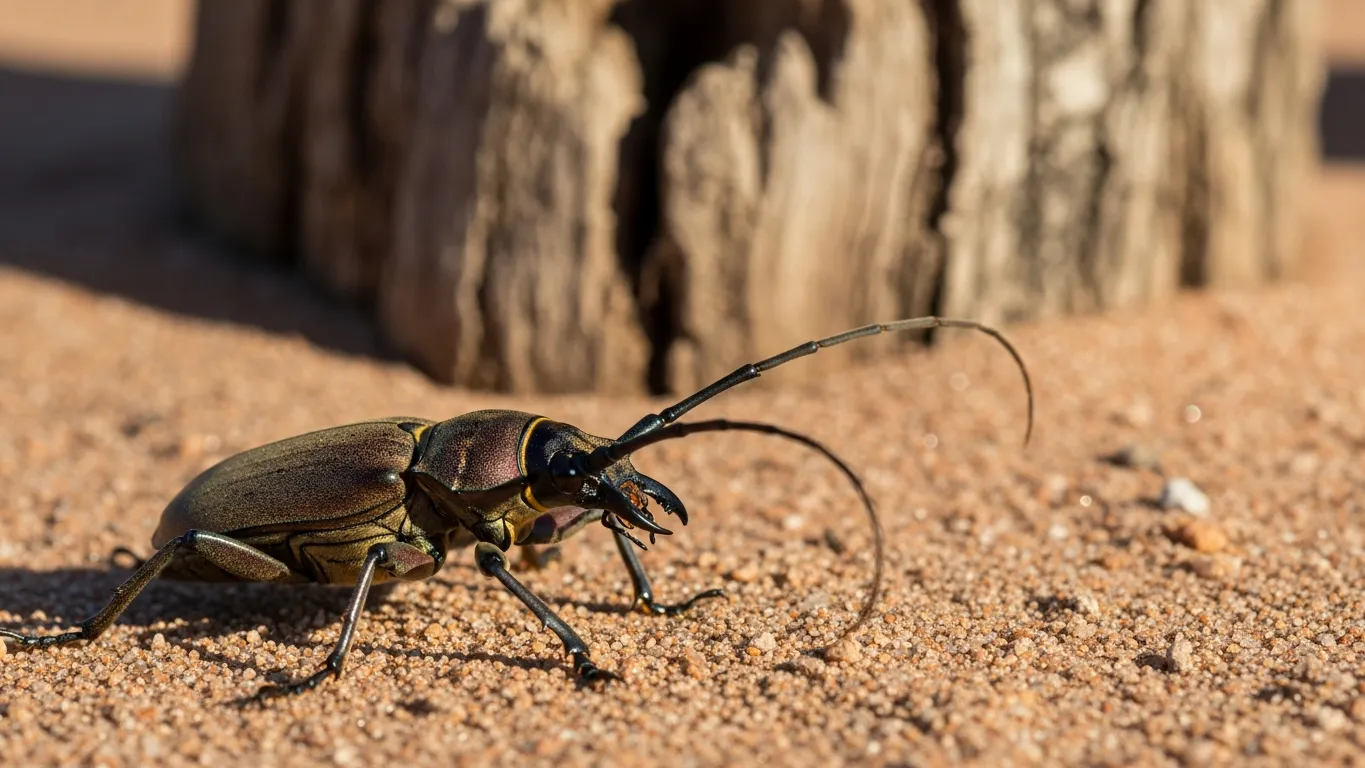
The palo verde beetle is one of the most dramatic-looking insects in Arizona. Adults are large (75 to 100 mm (3 to 4 inches) long) with a dark brown to black body, long segmented antennae, and spiny thorax. They are strong but clumsy fliers, often found buzzing around porch lights or crash-landing on patios during warm summer evenings.
Despite their intimidating appearance, adult palo verde beetles are harmless to people and property. They do not bite (though they can pinch with their mandibles if handled), they do not infest homes, and their adult lifespan is only a few weeks. Adults emerge from the soil, mate, and die, they don’t even eat during this phase.
The larval stage is the one that affects landscapes. Palo verde beetle larvae (grubs) are large, cream-colored, and live underground for three to four years, feeding on the roots of palo verde trees and occasionally other tree species. Heavy infestations can stress or kill trees, though healthy, well-watered palo verde trees generally tolerate moderate larval feeding.
Carpet Beetles (Dermestidae family)
Carpet beetles are small (2–4 mm), oval-shaped beetles that come in several species. The varied carpet beetle is the most common in Phoenix homes, it has a mottled pattern of white, brown, and yellowish scales on its wing covers. Black carpet beetles are uniformly dark brown to black and slightly larger.
Adult carpet beetles are often found on windowsills, attracted to light as they try to get outdoors. They feed on pollen and nectar and are harmless. The larvae, however, are destructive. Carpet beetle larvae are small, fuzzy, and carrot-shaped, and they feed on animal-based fibers and proteins: wool, silk, leather, feathers, pet hair, and dried insect specimens. They can damage clothing, rugs, upholstered furniture, and taxidermy.
Signs of carpet beetle infestation include irregular holes in natural-fiber fabrics, shed larval skins (tiny, bristly husks), and the larvae themselves, often found in dark, undisturbed areas like closet corners, under furniture, and along baseboards.
Grain Beetles (Oryzaephilus spp. and Sitophilus spp.)
Grain beetles are tiny (2–3 mm), slender, brown beetles that infest stored food products. The two most common types in Phoenix pantries are sawtoothed grain beetles (identified by six saw-like projections on each side of the thorax) and rice weevils (with a distinctive elongated snout).
These beetles lay eggs in or on grains, flour, cereal, pasta, dried fruit, pet food, birdseed, and spices. Infestations often begin at the manufacturing or retail level, you may bring beetles home inside a sealed package without knowing it. Once established in a pantry, they spread quickly between containers and can be difficult to eliminate without a thorough cleanout.
Signs of grain beetle activity include live or dead beetles in food packages, fine powdery residue in stored grain products, and a musty or off smell from infested items.
June Beetles (Phyllophaga spp.)
June beetles (also called June bugs) are medium-sized (12–25 mm), strong, reddish-brown to dark brown beetles. They are strong but bumbling fliers, heavily attracted to lights at night, and are well-known for bouncing off porch lights and screen doors throughout the warm months.
Adult June beetles feed on tree foliage but rarely cause significant damage. Their larvae (white grubs) live in soil and feed on grass roots, which can cause brown patches in irrigated lawns, a more common issue in Phoenix’s turf-heavy residential landscapes. Grubs are C-shaped, cream-colored with a brown head, and are often uncovered during digging or soil work.
What Damage Can Beetles Cause?
- Palo verde beetles: Larval root feeding can stress or weaken landscape trees over time.
- Carpet beetles: Larvae damage wool, silk, leather, and other natural fibers in the home.
- Grain beetles: Contaminate and render stored food products unusable.
- June beetles: Larval feeding damages turf grass roots, causing dead spots in lawns.
How Can You Prevent Beetle Problems?
- For carpet beetles: Vacuum regularly, including closet floors, under furniture, and along baseboards. Store off-season wool and silk clothing in sealed containers. Clean up accumulated pet hair and lint.
- For grain beetles: Inspect packaged food products before purchase. Store grains, flour, cereal, and pet food in airtight containers. Rotate pantry stock and discard old or expired items.
- For palo verde beetles: Maintain tree health through proper watering. There is no effective chemical treatment for larvae in soil. Healthy trees are the best defense.
- For June beetles: Maintain a healthy lawn with proper irrigation and fertilization practices to help turf tolerate moderate grub feeding.
- General prevention: Make sure window and door screens are intact to keep adult beetles from entering. Reduce exterior lighting or switch to yellow/sodium vapor bulbs that are less attractive to night-flying beetles.
If you’re dealing with carpet beetles in your home or grain beetles in your pantry and need help identifying the species or the extent of the issue, Uni-Tech Pest Control can assist. Call 602-962-8935.
Frequently Asked Questions
Are palo verde beetles dangerous?
No. Palo verde beetles are harmless to humans. They do not sting, and while they can deliver a mild pinch if picked up, they pose no health risk. They do not infest homes or damage structures. Their large size and erratic flight patterns are startling but not dangerous.
How do I know if I have carpet beetles or moths eating my clothes?
Both carpet beetles and clothes moths damage natural-fiber fabrics. Carpet beetle damage tends to produce irregular holes and scattered patches, and you’ll find small, bristly larval skins nearby. Clothes moth damage is typically concentrated in hidden folds, and you may find silken tubes or webbing. Finding the larvae or shed skins is the most reliable way to distinguish between the two.
Can grain beetles make me sick?
Grain beetles themselves are not known to transmit diseases. However, consuming heavily infested food products may cause gastrointestinal discomfort. The primary concern is food contamination and waste, infested products should be discarded.
Why are there so many beetles on my porch at night?
Many beetle species in Phoenix are nocturnal and strongly attracted to artificial light. Palo verde beetles, June beetles, and various smaller species all fly toward porch lights, landscape lighting, and illuminated windows. Reducing outdoor lighting, using motion-activated fixtures, or switching to less-attractive yellow bulbs can significantly reduce the number of beetles congregating around your home.