
Moths in Phoenix: Identification and Prevention
TLDR: The two moth groups that cause problems inside Phoenix homes are clothes moths (which damage wool, silk, and other animal-based fabrics) and pantry moths (which infest stored food products). In both cases, it is the larval stage (not the adult moth) that causes the damage.
Which Moths Cause Problems Indoors?
Hundreds of moth species live in the Sonoran Desert, and the vast majority are harmless outdoor insects attracted to porch lights. Only a small number of species have adapted to feed on materials inside homes. These fall into two functional groups:
- Clothes moths: feed on animal-based fibers and proteins
- Pantry moths: feed on stored grain products and dry goods
Understanding which group you are dealing with is the first step, because the damage they cause, the places they infest, and the prevention strategies differ significantly.
How to Identify Clothes Moths
Two clothes moth species are common in Arizona:
Webbing Clothes Moth (Tineola bisselliella)
This is the most common fabric-damaging moth in residential settings. Adults are small (about 1/2 inch wingspan), uniformly golden or buff-colored, and avoid light. Unlike most moths, they tend to run along surfaces rather than fly toward lamps. You may see them scurrying along closet shelves or the edges of carpet.
Larvae are creamy white, about 1/2 inch long when mature, and spin silken tubes or webbing on the material they feed on. Irregular holes in wool sweaters, silk scarves, or fur items are the most obvious sign of their presence.
Casemaking Clothes Moth (Tinea pellionella)
Slightly less common than the webbing moth, the casemaking clothes moth larva constructs a portable silken case around itself and drags it as it feeds. The case is open at both ends and often incorporates fibers from the material being consumed, giving it a camouflaged appearance. Adults are similar in size to the webbing moth but have three dark spots on each forewing.
What Do Clothes Moths Eat?
Clothes moth larvae feed on keratin, the protein found in animal-based materials:
- Wool, cashmere, angora, and mohair
- Silk
- Fur and feathers
- Leather (surface grazing)
- Lint and pet hair accumulations in carpet edges, air ducts, and closet corners
They do not eat cotton, polyester, or other synthetic fabrics unless those fabrics are soiled with food stains, perspiration, or body oils that provide the nutrients the larvae need. This is why soiled clothing is at far greater risk than clean garments.
How to Identify Pantry Moths
Indian Meal Moth (Plodia interpunctella)
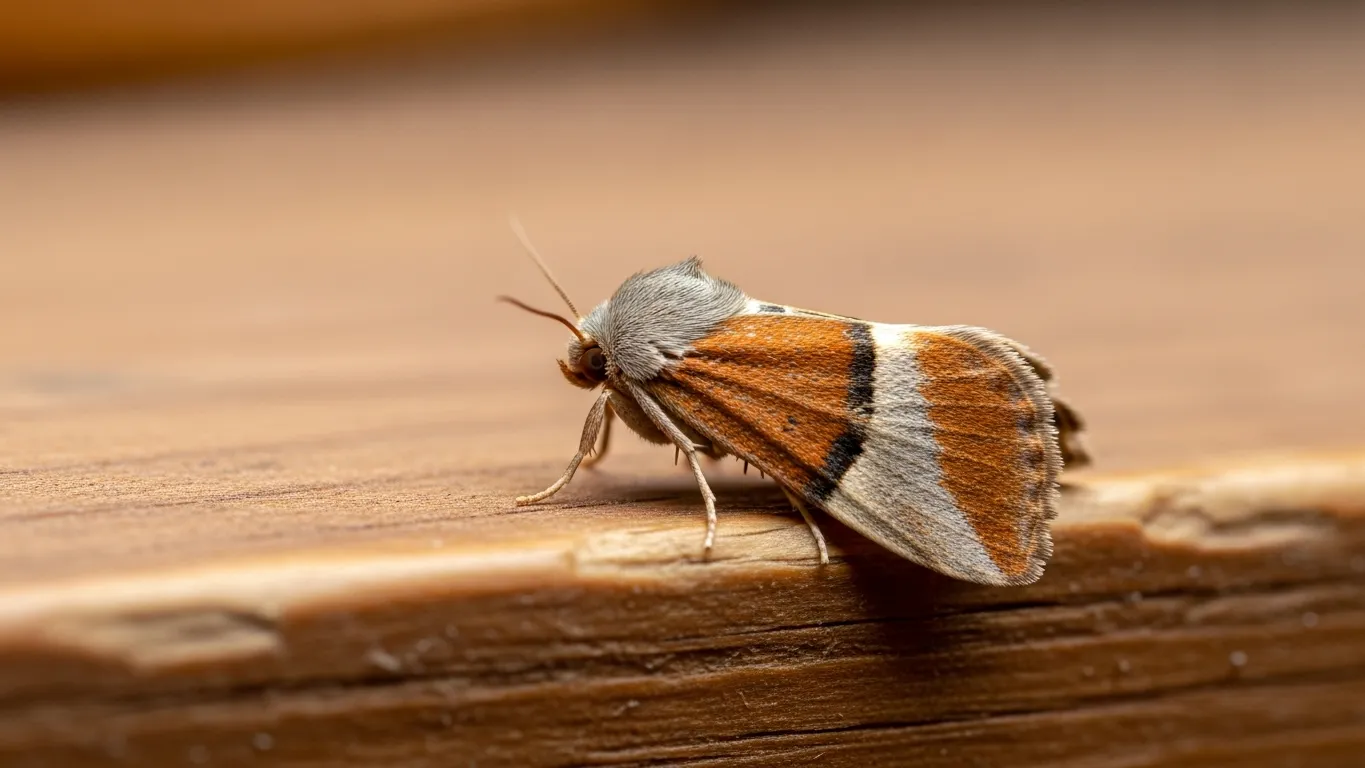
The Indian meal moth is the most common stored-product moth in Phoenix kitchens and pantries. Adults have a distinctive two-toned wing pattern, the inner half of the forewing is pale gray or tan, and the outer half is coppery bronze. Wingspan is about 5/8 inch.
Larvae are off-white to pinkish with a brown head capsule. They spin dense silken webbing through the food they infest, creating clumps and trailing threads that are often the first visible sign of an infestation.
What Do Pantry Moths Eat?
Indian meal moth larvae feed on a wide range of dry goods:
- Flour, cornmeal, and baking mixes
- Cereals, oatmeal, and granola
- Rice, pasta, and couscous
- Dried fruit, nuts, and seeds
- Pet food, birdseed, and dried treats
- Spices and dried herbs
- Chocolate and candy
Infestations often begin with a single contaminated product brought home from a store or warehouse. Larvae can chew through thin plastic bags and cardboard, so they spread between packages easily.
How to Tell Clothes Moths and Pantry Moths Apart
| Feature | Clothes Moths | Pantry Moths (Indian Meal Moth) | |—|—|—| | Where found | Closets, drawers, under furniture, carpet edges | Kitchen, pantry, pet food storage | | Adult color | Uniform golden/buff | Two-toned: pale inner wing, bronze outer wing | | Adult behavior | Avoids light, runs rather than flies | Attracted to light, flies actively | | Larval food | Animal fibers, fur, feathers | Grain products, dried food | | Visible signs | Holes in fabric, silken tubes, frass on shelves | Webbing in food, larvae in packages, moths near ceilings |
How to Prevent Clothes Moths
- Clean before storing: Launder or dry-clean wool, silk, and cashmere items before putting them into storage. Soiled garments attract moths.
- Use sealed storage: Store off-season clothing in airtight plastic bins or vacuum-sealed bags rather than cardboard boxes or open shelving.
- Vacuum regularly: Pay attention to closet floors, carpet edges along baseboards, under furniture, and inside air vents where lint and pet hair accumulate.
- Cedar and lavender: Cedar blocks and lavender sachets may deter adult moths from laying eggs in a confined space, but they do not kill larvae already present.
- Monitor with pheromone traps: Sticky traps baited with clothes moth pheromones help detect an infestation early before significant damage occurs.
How to Prevent Pantry Moths
- Inspect groceries before storing: Check packaging for webbing, larvae, or small holes before placing items in the pantry.
- Transfer dry goods to sealed containers: Glass jars, rigid plastic containers, or metal canisters with tight lids prevent larvae from spreading between products.
- Rotate stock: Use older products first and avoid letting dry goods sit for extended periods.
- Clean shelves regularly: Wipe pantry shelves to remove food dust, crumbs, and spilled grain that can sustain larvae.
- Freeze suspect items: Placing flour, grains, or birdseed in the freezer for 72 hours after purchase kills any eggs or larvae present.
If you are finding moths throughout multiple rooms or cannot locate the source of an infestation, Uni-Tech Pest Control can help pinpoint the problem. Call 602-962-8935.
Frequently Asked Questions
Do adult moths eat clothes or food?
No. Adult moths of both groups have reduced or nonfunctional mouthparts. It is exclusively the larval stage that feeds and causes damage. Adults exist only to mate and lay eggs. If you see an adult moth, the damage has already been done by larvae somewhere nearby.
Can pantry moths make you sick?
Consuming food contaminated by pantry moth larvae and their webbing, frass, and shed skins is unappetizing but generally not considered a significant health hazard. However, heavily infested food should be discarded. Some individuals may experience allergic reactions to moth fragments and frass.
Why do I keep getting pantry moths even after cleaning?
Pantry moth larvae can hide in surprising places, inside the folds of packaging, behind shelf liners, in cracks between shelves, and even inside unopened products that were contaminated before purchase. A thorough inspection of every stored food item, including pet food and birdseed stored in garages, is necessary to find and eliminate the source.
Are the moths I see flying around my porch light the same ones that damage clothes?
Almost certainly not. The moths attracted to exterior lights are outdoor species and are typically harmless. Clothes moths and Indian meal moths are both small, inconspicuous, and avoid bright light. Clothes moths in particular rarely fly at all. If you see a moth actively flying toward a light, it is most likely an outdoor species that poses no threat to your belongings.