
Common Phoenix Beetles and How to Control Them
TLDR: Palo Verde beetles, desert stink beetles, and carpet beetles are the most common beetle pests in Phoenix homes. Prevention centers on lighting changes, sealing entry points, and regular cleaning. Professional pest control is the most effective solution for active infestations.
Phoenix homeowners encounter a wide variety of beetles, from the intimidatingly large Palo Verde beetle to the tiny carpet beetle that quietly destroys fabrics. While most beetles are nuisance pests that do not pose direct health risks, they can cause property damage and create an uncomfortable living environment. This guide covers the beetles you are most likely to find in your Phoenix home, the problems they cause, and the most effective strategies for keeping them out.
Identifying the Most Common Phoenix Beetles
Knowing which beetle you are dealing with is the first step toward effective control. Each species has different habits, risks, and vulnerabilities.
Palo Verde Beetles (Root Borers)
Palo Verde beetles are among the largest insects Phoenix residents encounter. These dark brown to black beetles can reach three to four inches in length, and their sudden appearance often causes alarm. They have long antennae and a rough, textured exoskeleton.
Despite their intimidating size, Palo Verde beetles are relatively harmless to homes. Adults emerge from the soil during warm months to mate and are strongly attracted to outdoor lighting. Their larvae, however, spend years underground feeding on the roots of Palo Verde and other trees, which can stress or damage landscape trees over time.
Desert Stink Beetles (Pinacate Beetles)
Desert stink beetles are black, slow-moving beetles that range from half an inch to over an inch long. They are easy to identify by their distinctive defensive posture: when threatened, they raise their rear end and may release a foul-smelling chemical spray. Small reddish markings on their underbelly help distinguish them from similar-looking beetles.
Stink beetles are primarily outdoor insects that wander indoors through open doors or gaps in the foundation. They do not cause structural damage or feed on household materials, but their defensive spray can stain surfaces and produce an unpleasant odor.
Carpet Beetles
Carpet beetles are the smallest of the three common species but arguably the most destructive to household belongings. Adults measure between one-tenth and one-quarter of an inch, with rounded bodies and patterns of black, brown, yellow, or orange scales depending on the species. Arizona is home to three carpet beetle species, according to the University of Arizona Cooperative Extension.
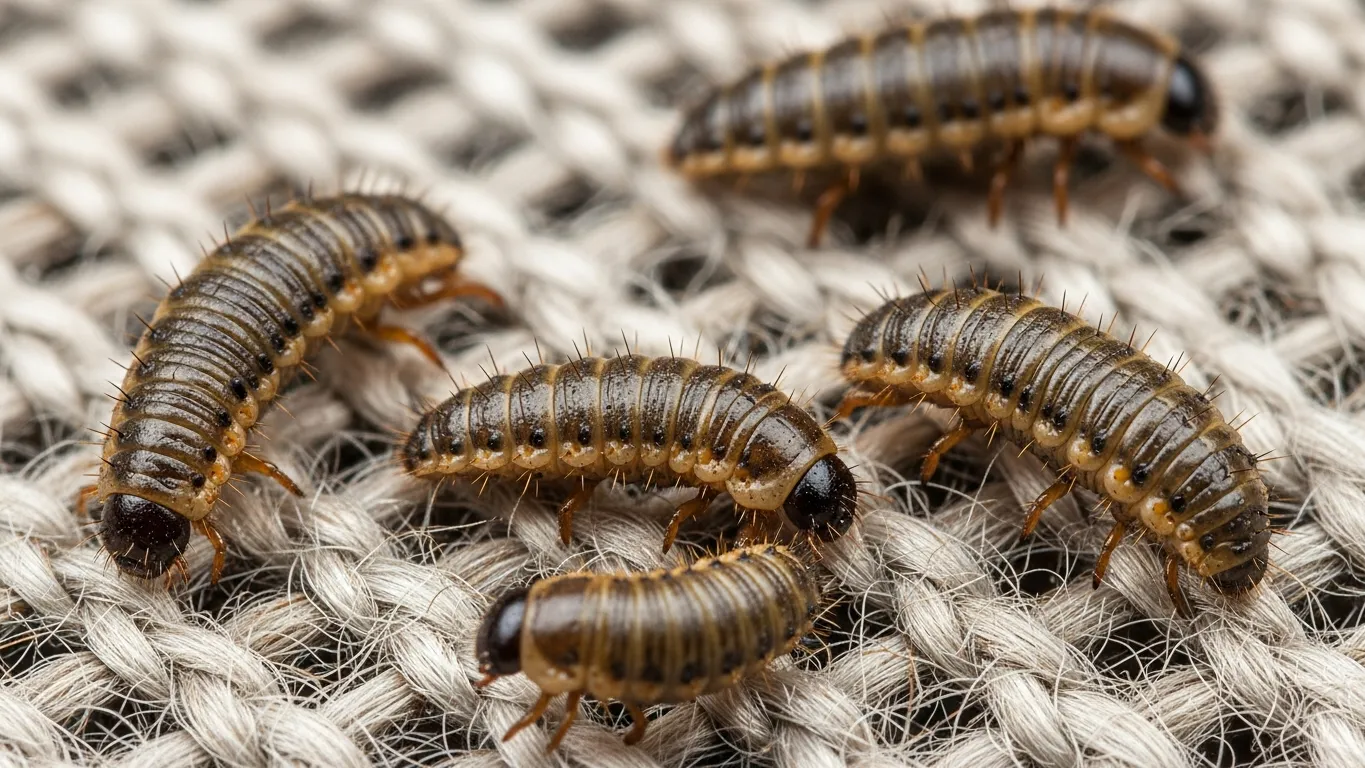
Adult carpet beetles are relatively harmless, but their larvae are the real problem. Covered in tiny hairs, carpet beetle larvae feed on natural fibers including wool, silk, cotton, leather, and fur. They can damage carpeting, clothing, upholstery, and stored textiles. Because of their small size, carpet beetle infestations often go unnoticed until significant damage has occurred.
The Risks Beetles Pose to Your Home
While beetles are generally classified as nuisance pests, the damage they cause can be significant:
- Fabric and textile damage: Carpet beetle larvae destroy wool rugs, clothing, upholstery, and stored fabrics. The damage often appears as irregular holes or thinning patches in the material.
- Landscape damage: Palo Verde beetle larvae feed on tree roots for several years before emerging as adults. Heavily infested trees may show declining health, yellowing foliage, or branch dieback.
- Staining and odor: Desert stink beetles leave dark, foul-smelling secretions on floors, walls, and surfaces when disturbed.
- Secondary pest attraction: Large beetle populations attract predators, including spiders and small rodents, adding to your pest control challenges.
Effective Beetle Prevention for Your Home
A consistent prevention strategy can dramatically reduce beetle activity around your property. Focus on these key areas:
Lighting Adjustments
Beetles, particularly Palo Verde beetles and many smaller species, are strongly attracted to bright white and blue-toned lights. Making simple lighting changes is one of the most impactful prevention steps you can take:
- Replace standard outdoor bulbs with warm-yellow or amber LED bulbs
- Position landscape and security lights away from doorways and windows
- Use motion-activated lighting instead of leaving fixtures on all night
- Close blinds or curtains in the evening to reduce light spilling outside
Sealing Entry Points
Inspect the exterior of your home and close off pathways beetles use to get inside:
- Apply silicone caulk to cracks in the foundation, stucco, or block walls
- Install or replace weatherstripping around exterior door and window frames
- Repair or replace damaged window screens
- Seal gaps around utility penetrations, pipes, and wiring conduits
- Check weep holes in brick veneer and install appropriate screening
Interior Maintenance
Regular cleaning reduces both food sources for carpet beetles and harborage for all beetle species:
- Vacuum carpets, rugs, and upholstered furniture weekly, paying close attention to edges and underneath furniture
- Launder or dry-clean stored clothing and fabrics periodically
- Store off-season clothing and textiles in sealed plastic containers rather than cardboard boxes
- Clean lint traps, air vents, and areas where pet hair accumulates, as carpet beetle larvae feed on these materials
Exterior Maintenance
Keep the area around your home’s foundation clean and dry:
- Remove leaf litter, mulch buildup, and landscape debris from the immediate foundation perimeter
- Stack firewood at least 20 feet from the house and elevate it off the ground
- Trim shrubs and ground cover so they do not contact exterior walls
Why Professional Beetle Control Works
Many homeowners try to manage beetle problems with store-bought aerosol sprays and traps. These products may kill individual beetles on contact, but they do not address the underlying population or prevent re-entry. Carpet beetle infestations are particularly stubborn because larvae hide deep within carpet fibers, inside wall voids, and in areas that surface sprays cannot reach.
Professional pest control technicians bring several advantages: accurate species identification, access to professional-grade residual products, knowledge of where beetles harbor and breed, and the ability to create a full treatment plan designed for your property. A trained technician can also identify conditions that attract beetles and recommend specific changes to reduce future risk.
Uni-Tech Pest Control provides thorough beetle control services for residential and commercial properties throughout the Phoenix metro area. Our technicians perform detailed inspections, apply targeted treatments, and work with you to prevent recurring beetle problems. Contact Uni-Tech Pest Control for a property assessment.
Ready to get rid of beetles? Call Uni-Tech Pest Control at (602) 962-8935 for a free inspection, or contact us online to schedule service.
Frequently Asked Questions
Are Palo Verde beetles harmful?
Palo Verde beetles look alarming due to their large size, but adults do not bite, sting, or damage homes. Their larvae can harm Palo Verde trees and other landscape plants by feeding on roots underground, but the adults themselves are short-lived and primarily a nuisance when attracted to lights.
How do I know if I have carpet beetles?
Look for irregular holes in wool, silk, or cotton fabrics. Check under furniture edges, along baseboards, and inside closets for small, fuzzy larvae or shed larval skins. Adult carpet beetles are tiny and rounded, often found near windows as they try to get outdoors. A professional inspection can confirm the species and assess the extent of the infestation.
Why do I keep finding beetles in my house?
Beetles enter homes primarily because of light attraction and accessible entry points. If you are consistently finding beetles indoors, assess your exterior lighting, inspect for gaps and cracks around the foundation and doors, and make sure window screens are intact. Persistent problems typically indicate conditions that require professional treatment.