
Humane Bird Control for Phoenix Properties
TLDR: Pigeons and woodpeckers are the primary pest birds in Phoenix, causing property damage and posing health risks through droppings and nesting. Humane control methods include exclusion devices, habitat modification, and professional bird management services.
Birds are a natural part of the Phoenix landscape, and most species are welcome additions to any yard. However, pigeons and woodpeckers can cross the line from wildlife into pest territory when they roost on structures, damage building materials, and leave accumulations of droppings that threaten both property and health. Effective bird control in Phoenix requires identifying the species involved, understanding the specific risks they pose, and applying humane management strategies that provide lasting results.
Identifying Phoenix’s Problem Bird Species
Not every bird on your property is a pest. Two species account for the vast majority of bird-related complaints from Phoenix homeowners.
Pigeons
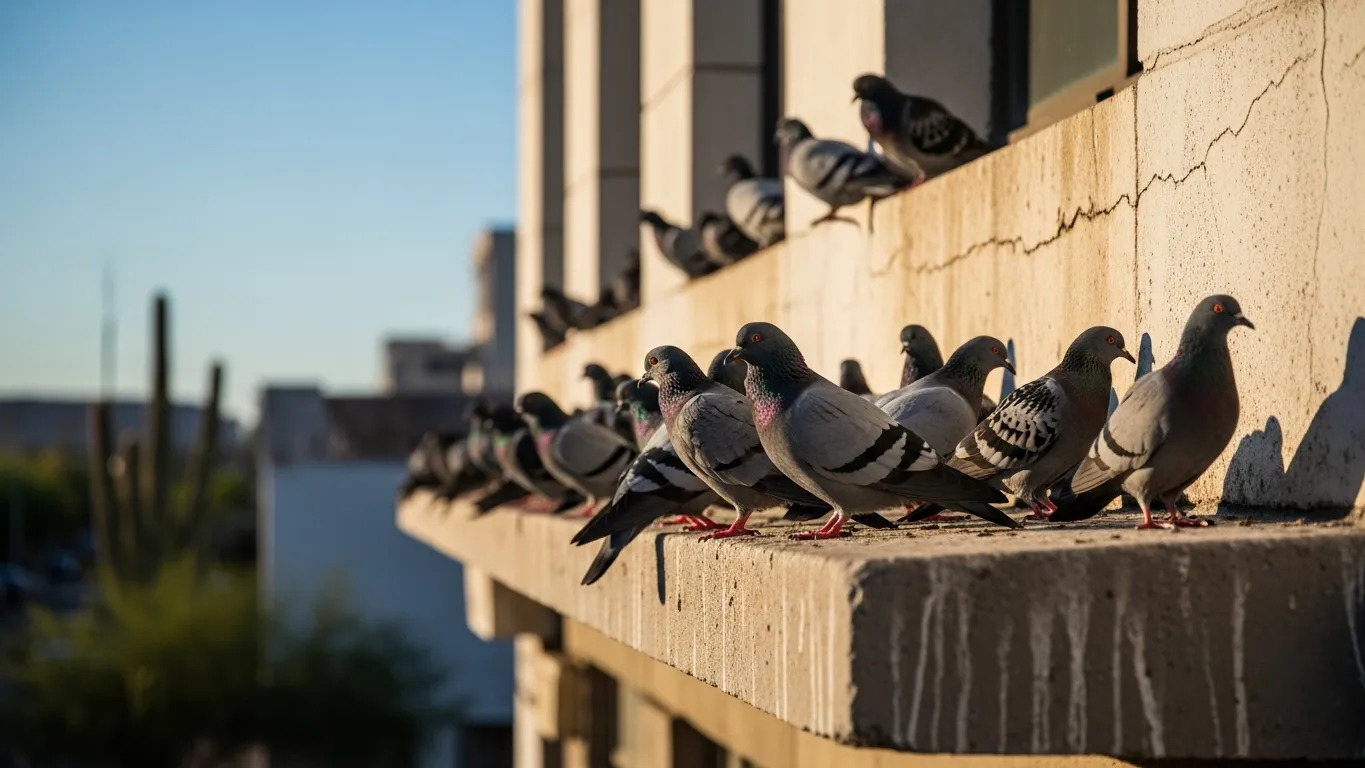
Pigeons are gray, white, and black birds with two distinctive dark bands across each wing. Adults grow to approximately 11 inches in length. Pigeons are highly adapted to urban and suburban environments and prefer to nest on flat surfaces near human activity, including rooftops, ledges, eaves, covered patios, and HVAC equipment platforms.
Pigeons are prolific breeders. A single pair can produce multiple broods per year, and once pigeons establish a nesting site, they return to it repeatedly. Flocks grow quickly, and with each new bird comes additional droppings, noise, and property damage.
Woodpeckers
Several woodpecker species live in the Phoenix area. Most have black and white plumage, sometimes with red or yellow markings on the head. Woodpeckers range from 7 to 15 inches in length and are easily identified by their long, pointed bills and their distinctive pecking behavior.
Woodpeckers drum on wood and other surfaces for three reasons: foraging for insects, excavating nesting cavities, and territorial communication. In residential settings, they target wood siding, fascia boards, eave trim, wooden patio structures, and even stucco when insects are present beneath the surface.
Health Risks and Property Damage
Pest birds create problems that extend well beyond noise and visual nuisance.
Health Concerns
Pigeon droppings are the primary health concern associated with pest birds in Phoenix. Dried pigeon droppings can become airborne and transmit several diseases, including:
- Histoplasmosis: A respiratory infection caused by a fungus that grows in accumulated bird droppings
- Cryptococcosis: Another fungal disease associated with pigeon droppings that can affect the lungs and central nervous system
- Psittacosis: A bacterial infection transmitted through contact with infected bird droppings or respiratory secretions
- Salmonellosis: Bacterial contamination that can spread to food and water sources through droppings
These diseases are treatable but can cause significant illness, particularly in young children, elderly individuals, and people with compromised immune systems. Areas with heavy pigeon droppings should be cleaned carefully, using appropriate protective equipment.
Property Damage
Both pigeons and woodpeckers damage residential properties in distinct ways:
- Woodpecker damage: Holes drilled into wood siding, fascia, and trim compromise the exterior envelope of your home. These openings allow moisture intrusion, which leads to wood rot, and they create entry points for insects, rodents, and other pests. Repairing woodpecker damage can be costly, especially on multi-story homes.
- Pigeon droppings: The acid in pigeon droppings corrodes roofing materials, paint, metal fixtures, and concrete. Heavy accumulations on flat roofs can clog drains and contribute to water damage. Droppings also stain and degrade patios, walkways, outdoor furniture, and vehicle finishes.
- Nesting debris: Bird nests can block gutters, downspouts, dryer vents, and HVAC intake vents, creating fire hazards and reducing equipment efficiency.
Humane Bird Deterrence Strategies
Effective bird control focuses on making your property less attractive and less accessible to pest birds without harming them. Arizona wildlife regulations protect many bird species, so humane methods are both ethical and legally prudent.
Physical Exclusion
Physical barriers are the most reliable long-term solution for persistent bird problems:
- Bird netting: Professional-grade netting blocks access to eaves, covered patios, carports, and other roosting areas while remaining nearly invisible from a distance
- Bird spikes: Stainless steel or polycarbonate spikes installed on ledges, rooflines, and parapet walls prevent birds from landing and roosting
- Slope panels: Angled panels installed on flat ledges make it impossible for pigeons to perch
- Vent covers and screens: Properly fitted covers prevent birds from nesting inside dryer vents, attic vents, and other openings
Habitat Modification
Reducing the resources that attract birds to your property decreases the likelihood of them settling in:
- Pick up pet food, birdseed spills, and food scraps from outdoor areas promptly
- Keep garbage cans tightly sealed
- Eliminate standing water sources that birds use for drinking and bathing
- Remove or relocate bird feeders that attract pest species along with desirable songbirds
- Trim trees and shrubs that provide convenient perching near rooflines and eaves
Maintaining General Pest Control
Woodpeckers are attracted to homes with insect activity in walls and siding. Maintaining a regular pest control program that addresses ants, beetles, and other insects reduces the food sources that draw woodpeckers to your home. Addressing the insect problem often resolves the woodpecker problem as a secondary benefit.
Why Professional Bird Control Is Worth the Investment
Bird control is more specialized than general pest management. It requires knowledge of bird behavior, proper installation of exclusion devices, safe cleanup of droppings and nesting materials, and an understanding of the regulations that govern how different bird species can be managed.
DIY bird deterrents like plastic owls, reflective tape, and ultrasonic devices provide minimal, short-lived results. Birds quickly habituate to these deterrents and resume their normal behavior within days. Professional bird control delivers lasting results because it relies on physical exclusion and habitat changes rather than scare tactics.
Uni-Tech Pest Control offers professional bird control services for Phoenix-area homeowners. Our team assesses your specific bird problem, recommends the most effective humane control methods, and handles installation and cleanup. We also provide ongoing monitoring to make sure exclusion devices remain effective over time. Contact Uni-Tech Pest Control to schedule a property assessment.
Ready to get rid of birds? Call Uni-Tech Pest Control at (602) 962-8935 for a free inspection, or contact us online to schedule service.
Frequently Asked Questions
Is it legal to remove bird nests from my home?
In most cases, you can remove inactive pigeon nests from your property. However, many bird species are protected under the Migratory Bird Treaty Act, and disturbing active nests with eggs or young birds may be illegal. Woodpeckers are federally protected. A professional bird control technician can advise you on the legal options for your specific situation.
How do I clean up pigeon droppings safely?
Wear a respirator mask, gloves, and protective eyewear. Moisten the droppings with water or a disinfectant solution before removal to prevent dust from becoming airborne. Do not dry-sweep or use a leaf blower on dried droppings. Bag the waste in sealed plastic bags and dispose of it in your regular trash. For large accumulations, professional cleanup is recommended.
Will bird spikes hurt the birds?
No. Properly designed bird spikes do not injure birds. The spikes create an uneven surface that prevents birds from landing comfortably, so they simply move to another location. Professional-grade spikes are made from blunted stainless steel or polycarbonate and are designed to deter rather than harm.