
How to Get Rid of Carpet Beetles in Your Home
TLDR: Carpet beetles cause damage during their larval stage, feeding on wool, cotton, leather, and other natural fibers. Elimination requires thorough cleaning, targeted treatment of infested areas, and sealing entry points to prevent reinfestation. Professional pest control is the most reliable solution.
Carpet beetles are one of the most underestimated household pests in Phoenix. While homeowners focus on more visible threats like scorpions and termites, carpet beetle larvae quietly destroy clothing, rugs, upholstery, and stored fabrics. By the time most people notice the damage, the infestation has been active for weeks or months. This guide will help you identify carpet beetles at every life stage, understand the damage they cause, and take the right steps to eliminate them from your home.
Identifying Carpet Beetles at Every Life Stage
Carpet beetles look different depending on their stage of development, and each stage behaves differently. Recognizing what you are looking at is critical to effective control.
Adults
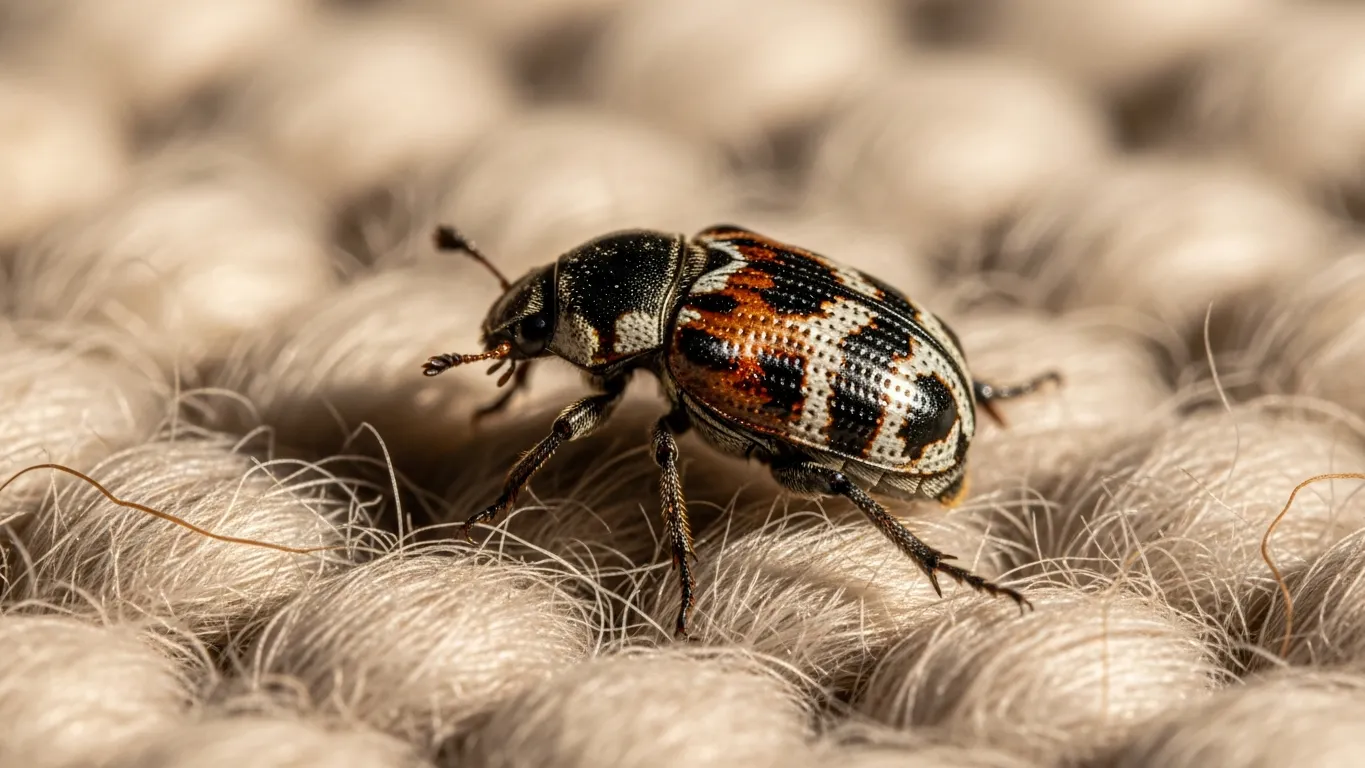
Adult carpet beetles are small, measuring roughly one-tenth to one-quarter of an inch long. They have rounded, oval-shaped bodies with a hard shell. Depending on the species, adults may be solid black or patterned with brown, yellow, orange, or white scales. Adults have wings but are weak fliers. You are most likely to find adult carpet beetles near windows and light sources, as they are attracted to sunlight and attempt to move outdoors.
Importantly, adult carpet beetles do not cause fabric damage. Their role in the infestation cycle is reproduction. Adults lay eggs on or near materials that will serve as food for the larvae.
Larvae
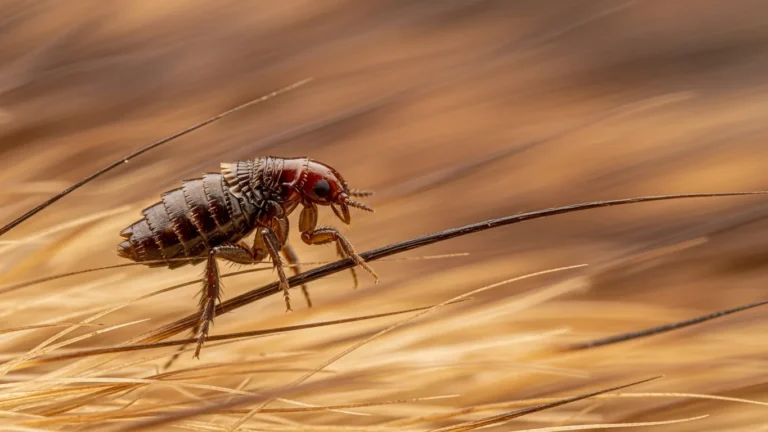
Carpet beetle larvae are the destructive stage. They are small, elongated, and covered in dense bristly hairs that give them a fuzzy appearance. Depending on the species, larvae may be tan, brown, reddish-brown, or dark with lighter banded markings. A distinguishing feature is the tuft of golden hairs on the abdomen.
Larvae avoid light and tend to feed in undisturbed areas: under furniture, along carpet edges, inside closets, in storage boxes, and within upholstered furniture. They move slowly and can be difficult to spot without actively looking for them.
Eggs
Carpet beetle eggs are white or cream-colored and very small, typically less than one millimeter. Females lay eggs directly on or near food sources such as carpeting, clothing, animal hides, or stored textiles. Eggs hatch within one to three weeks depending on temperature, and warmer conditions like those found in Phoenix homes accelerate development.
What Carpet Beetles Damage
Carpet beetle larvae feed on keratin and other proteins found in natural fibers and animal-based materials. Their diet includes:
- Wool carpets, rugs, and clothing
- Silk garments and accessories
- Cotton fabrics, especially blended with natural fibers
- Leather jackets, shoes, belts, and furniture
- Fur coats and accessories
- Feathers in pillows, down comforters, and decorative items
- Pet hair and lint that accumulates in vents, under furniture, and along baseboards
The damage typically appears as irregular holes, thinning patches, or bare spots in fabrics. You may also find shed larval skins, which are a reliable indicator of carpet beetle activity even if you do not see live larvae. Heavily infested items can be damaged beyond repair.
How Carpet Beetles Enter Your Home
Adult carpet beetles enter homes through surprisingly small openings. Common entry points include:
- Cracks and gaps in the foundation or exterior walls
- Gaps around door frames and window frames
- Torn or ill-fitting window screens
- Openings around utility pipes, wiring, and vents
- Open doors and windows
Carpet beetles can also hitch a ride into your home on secondhand furniture, used clothing, cut flowers, or stored items brought in from garages or storage units. Once inside, a single female can lay over 100 eggs, starting the cycle of damage.
How to Eliminate Carpet Beetles
Getting rid of carpet beetles requires a systematic approach that targets both active larvae and the conditions that support them.
Deep Cleaning
Thorough cleaning is the foundation of carpet beetle elimination:
- Vacuum aggressively. Focus on carpet edges, beneath furniture, inside closets, along baseboards, and around heating vents. Dispose of the vacuum bag or empty the canister in an outdoor trash container immediately after vacuuming.
- Launder or dry-clean affected textiles. High heat kills carpet beetle larvae and eggs. Wash items in hot water or run them through a hot dryer cycle for at least 30 minutes.
- Steam clean carpets and upholstery. The heat from steam cleaning penetrates deeper into fibers than vacuuming alone and kills larvae and eggs on contact.
- Clean lint and pet hair accumulations. Check dryer vents, HVAC registers, and spaces behind and under appliances where hair and lint collect.
Storage Practices
Proper storage prevents carpet beetles from accessing vulnerable items:
- Store off-season clothing, blankets, and fabrics in airtight plastic containers with secure lids
- Avoid cardboard boxes, which carpet beetles can penetrate
- Add cedar blocks or lavender sachets as a supplemental deterrent, though these should not be relied upon as a sole control method
- Periodically inspect stored items for signs of damage or larval activity
Sealing Entry Points
Prevent new carpet beetles from entering by sealing the exterior of your home:
- Caulk cracks in the foundation and around window and door frames
- Repair or replace damaged window screens
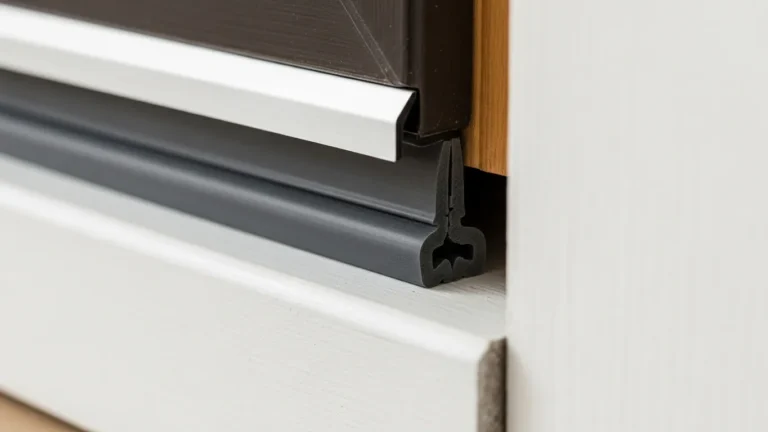
- Install door sweeps on exterior doors
- Screen attic and crawlspace vents
Why Professional Treatment Delivers Better Results
Carpet beetle infestations are notoriously difficult to resolve with DIY methods alone. Larvae hide in places that are hard to reach with a vacuum or surface spray, including inside wall voids, beneath tack strips, within HVAC ductwork, and deep in upholstered furniture. Over-the-counter insecticides may kill larvae on contact but lack the residual activity needed to eliminate an entire population.
Professional pest control technicians have access to targeted products that penetrate deep into carpet fibers and crevices where larvae feed. They also know how to inspect for the full extent of an infestation, identify all affected areas, and develop a treatment plan that addresses every stage of the carpet beetle life cycle.
Uni-Tech Pest Control provides effective carpet beetle treatment and prevention for Phoenix-area homes. Our technicians inspect your property, treat affected areas with professional-grade products, and provide guidance on preventing reinfestation. Contact Uni-Tech Pest Control to schedule an inspection.
Ready to get rid of carpet beetles? Call Uni-Tech Pest Control at (602) 962-8935 for a free inspection, or contact us online to schedule service.
Frequently Asked Questions
Can carpet beetles infest a clean home?
Yes. While regular cleaning reduces the risk, carpet beetles can infest any home that contains natural fiber materials. They feed on wool, silk, leather, pet hair, and lint, all of which exist in well-maintained homes. Even small accumulations of pet hair behind furniture or inside vents can sustain a carpet beetle population.
How long does it take to get rid of carpet beetles?
Eliminating a carpet beetle infestation typically takes several weeks of consistent effort. The larval stage can last anywhere from two months to over a year depending on conditions, so ongoing monitoring and treatment are necessary. Professional treatment accelerates the process and improves the likelihood of complete elimination.
Do carpet beetles bite?
Carpet beetles do not bite. However, their larvae have tiny bristly hairs that can cause skin irritation, redness, and itching in some people. This reaction is sometimes mistaken for insect bites. If you are experiencing unexplained skin irritation along with fabric damage, carpet beetles may be the cause.