
Common Spiders in Phoenix: A Visual ID Guide
TLDR: Phoenix is home to dozens of spider species, but only a handful regularly show up inside houses. Knowing how to identify wolf spiders, jumping spiders, cellar spiders, house spiders, and black widows helps you assess the risk and decide when professional treatment is needed.
The Phoenix metro area sits in the heart of the Sonoran Desert, an ecosystem that supports a wide variety of spider species. Most of these spiders stay outdoors and rarely interact with people. However, several species commonly find their way into homes, garages, and sheds. Being able to tell them apart lets you know whether you are dealing with a nuisance pest or a genuine safety concern.
Wolf Spiders
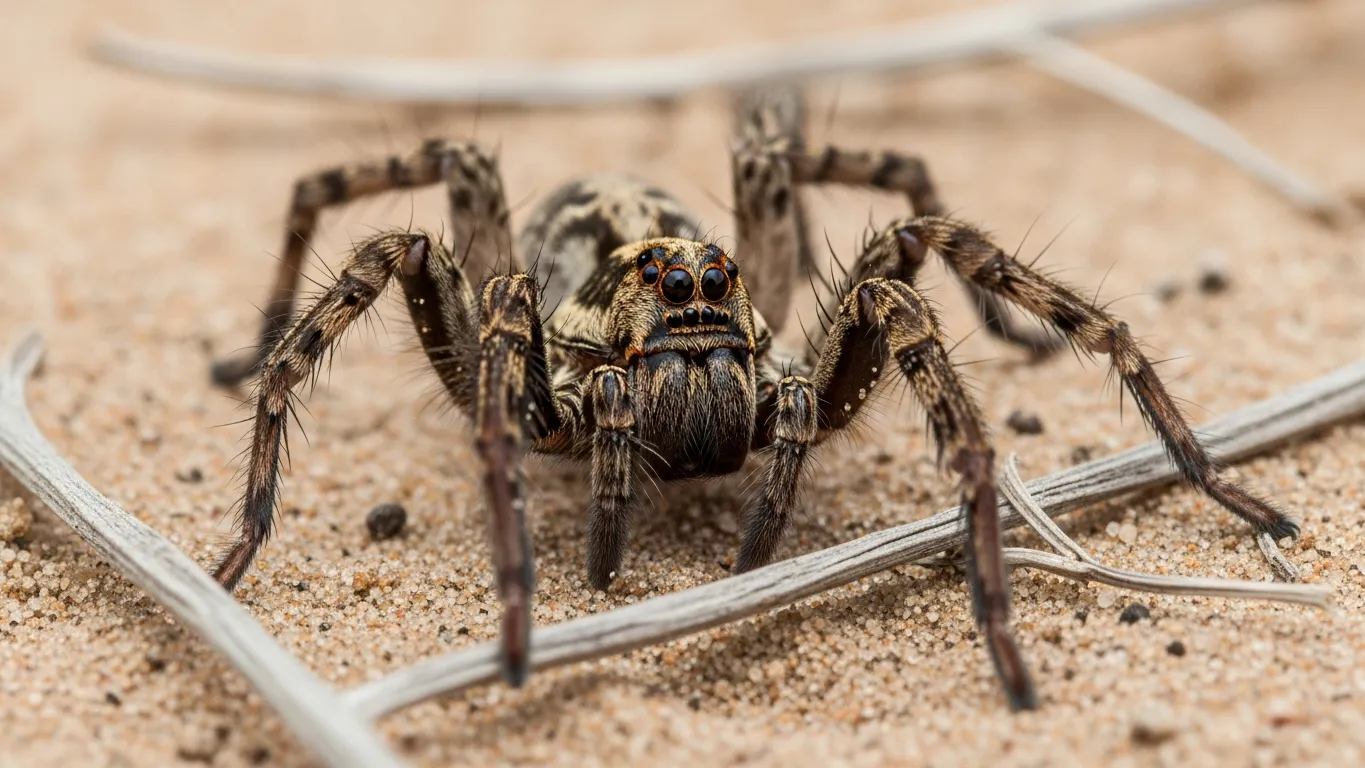
Appearance: Wolf spiders are among the largest spiders Phoenix homeowners encounter indoors. Adults range from half an inch to over an inch in body length. They are brown or grayish-brown with darker stripes or chevron markings on their backs. Their bodies appear hairy, and they have a distinctive eye arrangement: two large forward-facing eyes, two medium eyes above them, and four smaller eyes in a bottom row.
Behavior: Unlike most spiders, wolf spiders do not spin webs to catch prey. They are active ground hunters that chase down insects using speed and ambush tactics. Wolf spiders are primarily nocturnal, so you are most likely to spot them at night when they are on the move. During the day, they hide under rocks, debris, or in dark corners.
Risk level: Low. Wolf spider bites are uncommon and comparable to a bee sting. They are not aggressive toward people and will typically flee when disturbed. However, their large size and fast movement can be startling.
What their presence means: Finding wolf spiders indoors is a strong signal that prey insects such as crickets, cockroaches, or beetles are already present in your home.
Jumping Spiders
Appearance: Jumping spiders are compact and stout-bodied, usually measuring between a quarter inch and half an inch long. They come in a variety of colors depending on the species, from black with white or iridescent markings to brown and tan. Their most recognizable feature is a pair of large, forward-facing eyes that give them excellent vision. They appear almost curious, often turning to face you when you approach.
Behavior: These spiders are active daytime hunters that stalk and pounce on prey from a distance. Some species can leap more than 50 times their own body length. While some jumping spiders produce silk, they use it primarily as a safety line rather than building traditional webs. You may find them on windowsills, walls, and exterior surfaces where they bask in sunlight.
Risk level: Very low. Jumping spiders are not aggressive and rarely bite. When they do, the bite is mild and causes only brief, localized irritation.
What their presence means: Like wolf spiders, jumping spiders follow prey populations. Frequent sightings suggest a healthy insect population on your property.
Cellar Spiders (Daddy Long Legs)
Appearance: Cellar spiders have small, pale tan or grayish bodies with very long, thin legs. The body is roughly a quarter inch, but the leg span can reach two inches or more. They appear fragile and almost translucent.
Behavior: Cellar spiders spin loose, irregular webs in corners, ceilings, and undisturbed areas. When threatened, they vibrate rapidly in their webs, earning the nickname “vibrating spiders.” They are commonly found in garages, basements, bathrooms, and closets, anywhere with steady humidity and low traffic.
Risk level: Negligible. Cellar spiders are not dangerous to humans. Their jaws are too small to deliver a meaningful bite.
What their presence means: Cellar spiders feed on other spiders and small insects. A large cellar spider population may indicate that other spider species are also active in the home.
Common House Spiders
Appearance: The common house spider is small, typically under a quarter inch in body length. Coloring is usually dull brown or tan with subtle mottled patterns. They have a rounded abdomen and build classic, symmetrical cobwebs.
Behavior: House spiders are prolific web builders. They construct webs in corners, behind furniture, in window frames, and near light sources that attract insects. If a web does not catch prey within a few days, the spider abandons it and builds a new one elsewhere, which explains why cobwebs accumulate quickly in unoccupied rooms.
Risk level: Very low. House spiders rarely bite and their venom is not medically significant.
What their presence means: House spiders are generalist predators that thrive wherever small insects are available. Their webs are unsightly but the spiders themselves are harmless.
Black Widow Spiders
Appearance: Female black widows are the ones most people recognize. They have a shiny black body, about half an inch long, with a distinctive red hourglass marking on the underside of the abdomen. Some individuals display more irregular red blotches rather than a clean hourglass shape. Males are smaller, lighter in color, and may show red, white, or brown markings on their backs.
Behavior: Black widows build messy, irregular webs close to the ground in sheltered locations. Outdoors, look for them under rocks, in block walls, inside meter boxes, and beneath patio furniture. Indoors, they favor garages, storage areas, and dark closets. They are reclusive and prefer to stay hidden.
Risk level: High. Black widow venom is a neurotoxin that can cause pain, muscle cramps, nausea, sweating, and elevated blood pressure. Fatalities are very rare in healthy adults, but bites require prompt medical attention. Children, elderly individuals, and those with compromised immune systems are at greater risk of serious symptoms.
What their presence means: Black widows are drawn to properties with abundant insect prey and undisturbed hiding spots. Their presence warrants professional inspection and treatment.
When Identification Matters Most
Correctly identifying a spider determines whether you can manage the situation yourself or need to call in a professional. Harmless species like cellar spiders and house spiders can often be addressed through basic prevention and regular cleaning. Wolf spiders and jumping spiders are nuisance pests that signal a broader insect issue worth investigating. Black widows, however, require professional removal due to the health risks their venom poses.
If you are unsure what species you are looking at, avoid handling it. Take a clear photo from a safe distance and contact a licensed pest control provider for identification. Uni-Tech Pest Control provides free spider inspections throughout the Phoenix metro area.
Ready to get rid of spiders? Call Uni-Tech Pest Control at (602) 962-8935 for a free inspection, or contact us online to schedule service.
Frequently Asked Questions
Are brown recluse spiders common in Phoenix?
Brown recluse spiders exist in Arizona but are far less common in the Phoenix metro area than black widows. They are light to dark brown with a distinctive violin-shaped mark behind the head. If you suspect a brown recluse in your home, contact a pest control professional for identification and removal.
Do tarantulas get inside Phoenix homes?
Desert tarantulas live throughout the Phoenix area but rarely enter homes. They are large and slow-moving, and they prefer outdoor burrows. If one does wander inside, it can usually be guided out with a piece of cardboard. Tarantulas are not aggressive and their bite is comparable to a bee sting.
How can I tell a wolf spider from a brown recluse?
Wolf spiders are hairy with prominent eyes and striped markings. Brown recluses are smooth-bodied with a uniform brown color and a small violin-shaped mark behind the head. Brown recluses also have only six eyes arranged in three pairs, while wolf spiders have eight eyes in three rows. When in doubt, do not attempt to handle the spider and consult a professional.
Why do I see more spiders in my garage than anywhere else?
Garages typically have more entry points (gaps under doors, vents, utility penetrations) and more clutter (cardboard boxes, stored items) than the rest of the house. They also tend to attract insects that are drawn to warmth and shelter, providing an easy food source for spiders.