
Fire Ants in Phoenix: Dangers and Treatment
TLDR: Fire ants in Phoenix build large soil mounds, sting aggressively in swarms, and are very difficult to eliminate without professional treatment. Their multi-queen colonies and extensive underground tunnel systems make DIY methods unreliable and potentially dangerous.
How to Identify Fire Ants in Your Phoenix Yard
Fire ants are among the most recognizable and feared pests in the Phoenix area. Knowing how to confirm their presence (and distinguish them from less dangerous species) is the first step toward protecting your family and property.
Body characteristics. Fire ants are small to medium-sized, ranging from 1/8 to 3/8 inch long. Workers within a single colony vary in size, which is a distinguishing trait. They are reddish-brown to dark reddish-black, with a distinctly darker abdomen. Fire ants have a visible stinger at the tip of the abdomen and two nodes (bumps) between the thorax and abdomen.
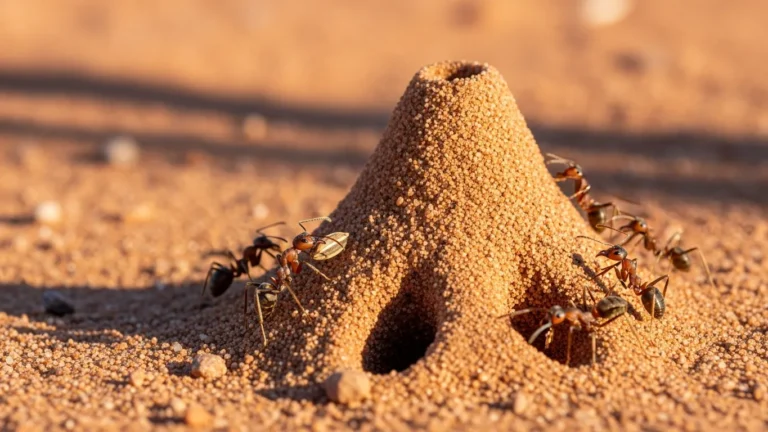
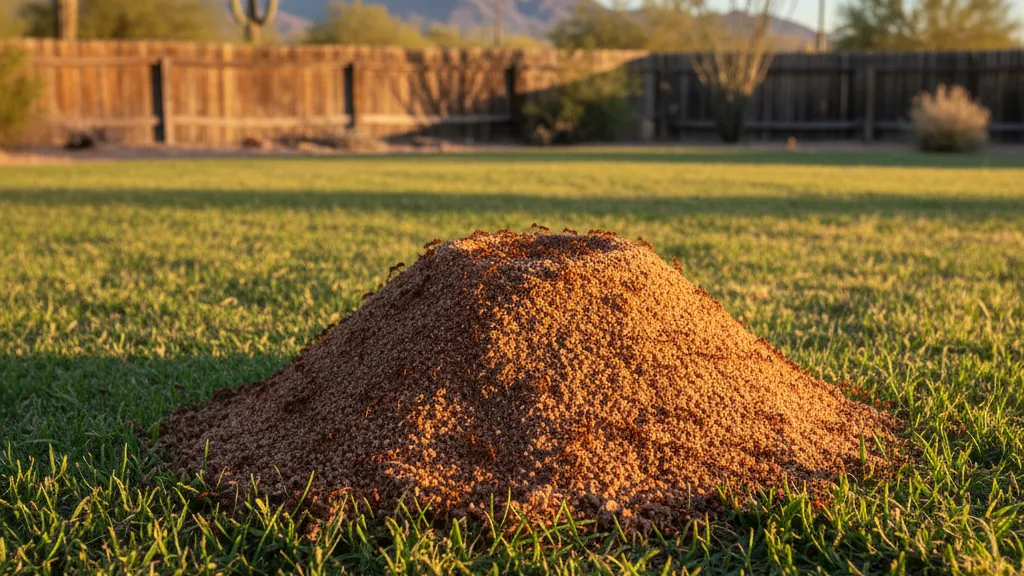
Mound identification. Fire ant mounds are dome-shaped piles of loose, sandy soil, often 6 to 18 inches in diameter and several inches tall. A key identifying feature is that fire ant mounds have no visible entry hole at the top. Workers enter and exit through underground tunnels at the base and periphery of the mound. Mounds are most visible after rainfall, when ants push displaced soil to the surface.
Behavior. Fire ants are noticeably more aggressive than other common ant species. Disturbing a mound (even slightly, such as stepping near it or running a mower over it) triggers an immediate defensive swarming response. Hundreds of workers pour out of the mound and climb onto the perceived threat before stinging simultaneously.
Where Fire Ants Build Colonies in Phoenix
Fire ants prefer open, sunny areas with well-drained soil. In Phoenix-area yards, common nesting locations include:
- Lawns and turf areas, especially irrigated grass where soil stays moist below the surface
- Along sidewalks, driveways, and foundation edges, where concrete retains heat and radiates warmth into the soil
- Near irrigation equipment, including valve boxes, drip emitters, and sprinkler heads
- In landscape beds and around tree bases, particularly where mulch retains moisture
- Along fence lines and property borders, where undisturbed soil allows colonies to grow unchecked
Colonies extend well below the visible mound, with tunnel systems reaching several feet underground. A mature colony can contain 100,000 to 500,000 workers and multiple egg-laying queens.
The Dangers of Fire Ant Stings
Fire ants do not simply bite. They use their mandibles to grip the skin and then inject venom through a stinger on their abdomen. A single ant can sting multiple times. Because fire ants attack in groups, a person who disturbs a mound can receive dozens or even hundreds of stings in seconds.
Immediate symptoms. Each sting produces an intense burning sensation, the source of the “fire” in their name. Within hours, a raised red welt forms at each sting site. Over the next day, these welts typically develop into white, fluid-filled pustules that last several days to a week.
Secondary infection risk. Fire ant pustules are itchy and easily broken open by scratching. Open pustules are vulnerable to bacterial infection, which can require medical treatment.
Allergic reactions. For a small but significant percentage of the population, fire ant venom triggers a systemic allergic reaction. Symptoms range from widespread hives and swelling to difficulty breathing and anaphylaxis. Anyone who experiences symptoms beyond the immediate sting area should seek emergency medical attention. Individuals with known venom allergies should carry an epinephrine auto-injector.
Risk to children and pets. Young children and pets are especially vulnerable because they may not recognize a mound or react quickly enough to escape a swarming attack. Dogs and cats that step on or dig near mounds can receive numerous stings on their paws, muzzle, and belly.
Why DIY Fire Ant Treatment Rarely Works
Fire ants are among the most difficult yard pests to eliminate, and most homeowner attempts fail for predictable reasons:
Colony relocation. Pouring boiling water, soapy water, or chemical drenches onto a mound often kills surface workers but drives the colony to relocate. A new mound appears nearby within days, sometimes just a few feet away.
Multiple queens. Many fire ant colonies contain multiple reproductive queens. Even if a treatment kills one queen and a large portion of the colony, surviving queens and workers can regroup and rebuild. In some cases, the colony splits into multiple daughter colonies, multiplying the problem.
Extensive tunnel networks. The underground tunnels of a fire ant colony can extend several feet in every direction and several feet deep. Surface treatments simply cannot penetrate to the full extent of the nest.
Rebound from neighboring colonies. Even if you manage to eliminate one colony, fire ants from adjacent properties quickly move in to occupy the vacated territory. Without a full perimeter strategy, the problem repeats.
How Professional Fire Ant Treatment Works
Effective fire ant control requires a two-pronged approach that professionals call “broadcast and mound” treatment:
Broadcast bait application. A professional-grade granular bait is applied across the entire yard. Worker ants collect the bait granules and carry them underground, distributing the active ingredient to queens, brood, and other workers throughout the colony. This eliminates colonies you can see and colonies you cannot.
Individual mound treatment. Visible mounds receive a direct application of fast-acting product that eliminates the surface population and reaches into the upper tunnel system. This provides immediate knockdown while the slower-acting bait works through the colony.
Perimeter barrier. A non-repellent treatment around the foundation and property edges deters new colonies from establishing near the home.
This combined approach addresses fire ants across the entire property rather than playing an endless game of treating individual mounds.
First Aid for Fire Ant Stings
If you or a family member is stung by fire ants, take these steps:
- Move away from the mound immediately to prevent additional stings.
- Brush ants off the skin, do not swat, as this can cause additional stings.
- Wash sting sites with soap and cool water.
- Apply a cold compress to reduce swelling and pain.
- Take an oral antihistamine to relieve itching.
- Avoid scratching or breaking pustules to prevent infection.
- Seek emergency medical attention if you experience dizziness, difficulty breathing, widespread swelling, or rapid heartbeat.
If fire ants are established on your property, Uni-Tech Pest Control can eliminate active colonies and set up a recurring treatment plan to prevent reinfestation. Contact us for a free yard inspection.
Ready to get rid of fire ants? Call Uni-Tech Pest Control at (602) 962-8935 for a free inspection, or contact us online to schedule service.
Frequently Asked Questions
How quickly can fire ants reinfest a treated yard?
Without ongoing treatment, new colonies from neighboring properties can establish mounds within a few weeks. Quarterly or bimonthly professional treatments maintain a protective barrier that prevents recolonization.
Are fire ants active year-round in Phoenix?
Yes. Phoenix’s mild winters allow fire ants to remain active throughout the year, though they are most visibly active during warm months and after monsoon rains bring moisture to the soil.
Can fire ants damage my home or property?
Fire ants are attracted to electrical currents and have been documented causing damage to outdoor A/C units, irrigation controllers, pool equipment, and landscape lighting by nesting inside electrical housings. They can also damage young plants and tree roots.
How many times can a single fire ant sting?
Unlike bees, fire ants do not lose their stinger. A single ant can sting repeatedly, pivoting in a circle and stinging multiple times from a single grip point.
Is it safe to mow over fire ant mounds?
No. Running a lawn mower over a fire ant mound triggers an immediate swarming response. Ants will climb onto the mower, your shoes, and your legs within seconds. Always flag mound locations and have them professionally treated before mowing.