
German Cockroaches in Phoenix: What to Know
TLDR: German cockroaches are indoor-only pests that reproduce faster and resist more pesticides than any other cockroach species in Phoenix. They require targeted treatment with gel baits and insect growth regulators — not the same approach used for the larger outdoor species. Professional treatment is almost always necessary for full elimination.
How to Identify German Cockroaches
Not all cockroaches are the same, and identifying the species you are dealing with determines the right approach. German cockroaches are distinct from the larger American or Turkestan roaches you might find in your Phoenix garage or yard.
Size: Small — about half an inch to five-eighths of an inch long, roughly the size of a penny.
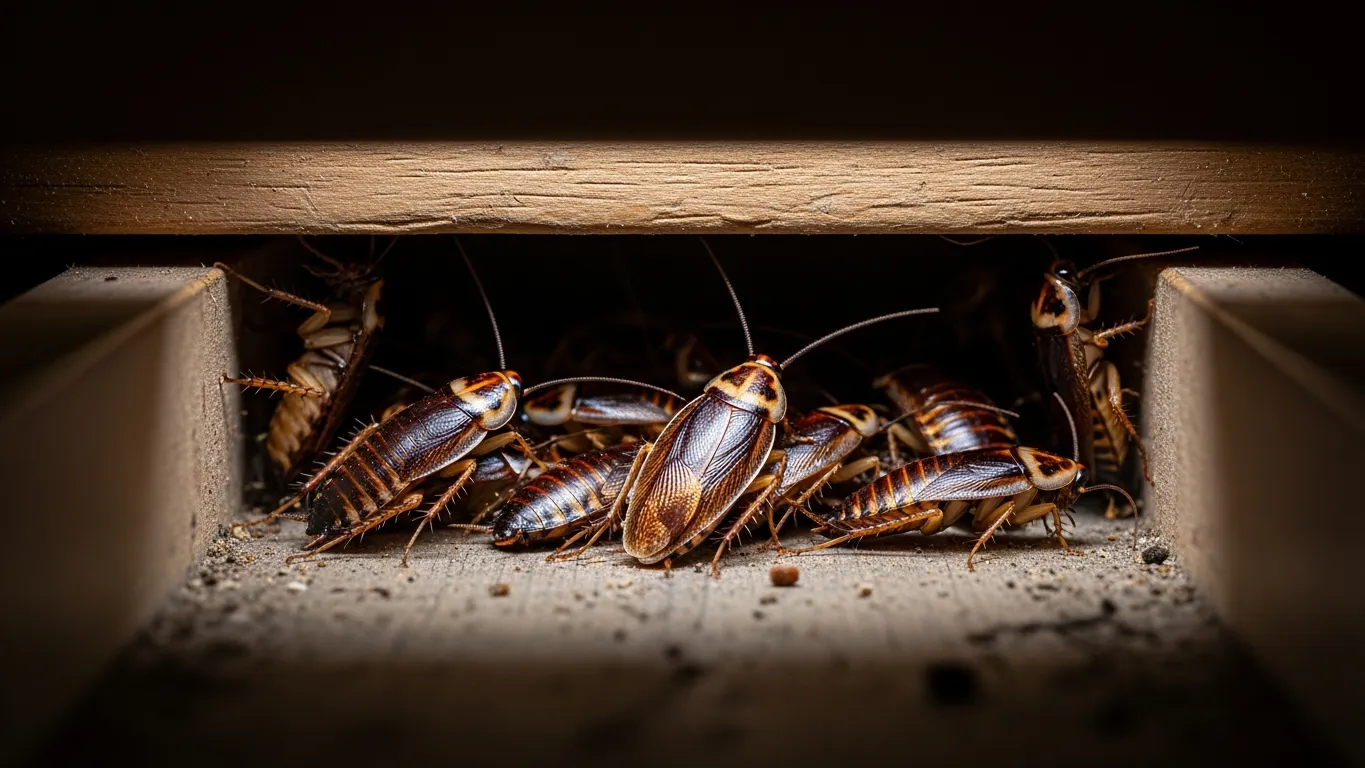
Color: Light brown to tan with two dark parallel stripes running from the head down the back.
Wings: Adults have wings but almost never fly. If you see a small tan roach scurrying rather than flying, it is very likely a German cockroach.
Location: Exclusively indoors. Unlike American cockroaches, which live outdoors and occasionally wander inside, German cockroaches spend their entire lives inside human structures. You will find them in kitchens, bathrooms, and anywhere with consistent warmth, moisture, and food.
Behavior: Nocturnal and highly secretive. They cluster in tight crevices near heat and moisture sources — behind refrigerators, inside dishwasher panels, around plumbing fixtures, and inside electrical appliance housings. If you see German cockroaches during the day, the population is large.
Why German Cockroaches Are the Hardest Roach to Eliminate
German cockroaches present a more serious challenge than other species for several specific reasons:
Explosive Reproduction
A single female German cockroach produces an egg casing (ootheca) containing 30 to 40 eggs, and she can produce a new casing roughly every six weeks. She carries the ootheca until just before the eggs hatch, which protects the eggs from treatments that might kill exposed casings. One mated female can generate thousands of offspring in a single year. This reproduction rate means the population recovers quickly from incomplete treatments.
Rapid Resistance Development
German cockroaches develop pesticide resistance faster than any other cockroach species. Studies have documented populations that are resistant to multiple classes of insecticides simultaneously. This is why the same over-the-counter spray that seemed to work at first stops being effective after a few applications — the surviving roaches pass resistance to the next generation.
Indoor-Only Lifecycle
Because German cockroaches do not live outdoors, you cannot resolve the problem by sealing entry points alone. They arrived inside your home — often by hitchhiking in grocery bags, cardboard boxes, secondhand appliances, or furniture — and they will remain inside indefinitely. Perimeter treatments designed for outdoor species will not reach them.
Colony Behavior
German cockroaches aggregate in tight clusters, often deep inside wall voids, appliance motors, electrical outlets, and cabinet joints. They spend most of their time in these harborage sites and only venture out briefly to feed and drink. Treatments that do not reach these hidden locations will miss the majority of the colony.
Signs of a German Cockroach Infestation
Because these roaches stay so well hidden, you are more likely to notice indirect signs before you see a live bug:
- Pepper-like droppings in cabinet corners, drawer tracks, around hinges, and on countertops near walls.
- Dark smear marks along the edges where cabinets meet walls — these are fecal stains left along travel routes.
- A musty, oily odor in the kitchen or bathroom that does not go away with cleaning. German cockroach aggregation pheromones produce a distinctive smell.
- Small tan egg casings found near heat sources like behind the refrigerator or inside the dishwasher door panel.
- Shed skins — translucent brown husks accumulating in sheltered areas.
If you notice any of these signs, inspect behind your refrigerator and stove, inside the panel of your dishwasher, under your kitchen sink, and around bathroom plumbing fixtures. These are the most common German cockroach harborage sites in Phoenix homes.
How Professional German Cockroach Treatment Works
Effective German cockroach control uses an integrated approach that targets every life stage:
Gel bait placement. Professional-grade gel baits are applied in precise locations inside cracks, crevices, and harborage sites. When roaches consume the bait and return to the colony, secondary poisoning kills other roaches that contact the dead insect or its droppings. This cascade effect reaches deep into the colony.
Insect growth regulators (IGRs). These products prevent nymphs from developing into reproductive adults and interfere with egg viability. IGRs are critical for German cockroach control because of the species’ rapid reproduction rate. Without them, surviving juveniles mature and rebuild the population.
Dust applications. Insecticidal dusts applied inside wall voids, electrical outlets, and appliance housings reach roaches in their most protected harborage sites — locations that baits and sprays cannot access.
Monitoring and follow-up. Because German cockroach egg casings are protected until hatching, follow-up treatments are necessary to eliminate newly emerged nymphs. Uni-Tech Pest Control schedules follow-up visits to verify progress and apply additional treatments as needed.
What You Can Do to Support Treatment
Professional treatment is the core of German cockroach elimination, but your actions between visits directly affect the outcome:
- Remove all food from counters overnight. Store everything in sealed containers.
- Fix every source of moisture, especially under sinks and around dishwashers.
- Eliminate cardboard from the home — German cockroaches feed on and harbor in it.
- Avoid using over-the-counter sprays, which can repel roaches away from professional bait placements and reduce treatment effectiveness.
- Do not move items from an infested room to other areas of the home, as this can spread the colony.
Ready to get rid of German cockroaches? Call Uni-Tech Pest Control at (602) 962-8935 for a free inspection, or contact us online to schedule service.
Frequently Asked Questions
Where do German cockroaches come from?
German cockroaches do not enter from outside the way American or Turkestan roaches do. They are almost always introduced through infested items — cardboard boxes, grocery bags, used appliances, or furniture. Multi-unit housing also allows them to spread between apartments through shared walls and plumbing.
Can I get rid of German cockroaches on my own?
Small, early-stage infestations may respond to consumer gel baits combined with meticulous sanitation. However, once the colony is established in wall voids and appliance housings, professional treatment is nearly always required. German cockroach populations rebound quickly from incomplete treatment.
How long does it take to eliminate German cockroaches?
Professional treatment typically requires two to four visits over four to eight weeks for full elimination. The timeline depends on the severity of the infestation and how well sanitation and moisture issues are managed between visits.
Are German cockroaches dangerous?
Yes. They spread bacteria including Salmonella, E. coli, and Staphylococcus. Their droppings and shed skins are a documented trigger for asthma and allergic reactions, particularly in children. The health risks increase with colony size.
Why do I see more roaches right after treatment?
This is common and actually a sign that the treatment is working. Bait and dust applications disrupt roach behavior, flushing them out of harborage sites. Activity typically peaks for a few days after treatment and then drops sharply over the following one to two weeks.