
How Gophers Damage Your Yard and How to Stop Them
TLDR: Gophers destroy lawns, gardens, and landscaping by tunneling underground and feeding on roots, bulbs, and vegetables. Prevention strategies include raised garden beds, underground fencing, gopher wire, and regular yard inspections. Early action is critical to limiting damage.
Gophers are a persistent headache for Phoenix-area homeowners who take pride in their yards and gardens. These burrowing rodents work mostly underground, and by the time you notice the telltale mounds of loose dirt in your lawn, they have already built an extensive tunnel network beneath the surface. The damage adds up quickly, from ruined vegetable gardens and dying plants to uneven lawns and undermined irrigation lines. Understanding how gophers operate and what you can do to protect your property is the first step toward keeping your landscape intact.
Understanding Gopher Behavior
Gophers are solitary, territorial rodents that spend the vast majority of their lives underground. Unlike some burrowing animals that are only active at certain times of day, gophers dig and feed around the clock. A single gopher can create a tunnel system spanning several hundred feet, and they continuously expand their network in search of food.
Phoenix-area gophers typically have brown fur, strong front legs with large claws, and prominent front teeth that grow continuously throughout their lives. Adults measure between 5 and 10 inches in length. Their small eyes and ears reflect their underground lifestyle, and they rely on sensitive whiskers and their sense of touch to navigate tunnels.
Gophers are strict herbivores. They feed on roots, bulbs, tubers, seeds, grasses, and vegetables. They pull plants down into their tunnels from below, which means a plant can disappear overnight with no obvious surface explanation. In Phoenix, irrigated landscapes and gardens are particularly attractive to gophers because they concentrate both food and moisture in an otherwise dry environment.
How Gophers Damage Your Property
The damage gophers cause falls into several categories, and all of it tends to compound over time.
Lawn and Turf Damage
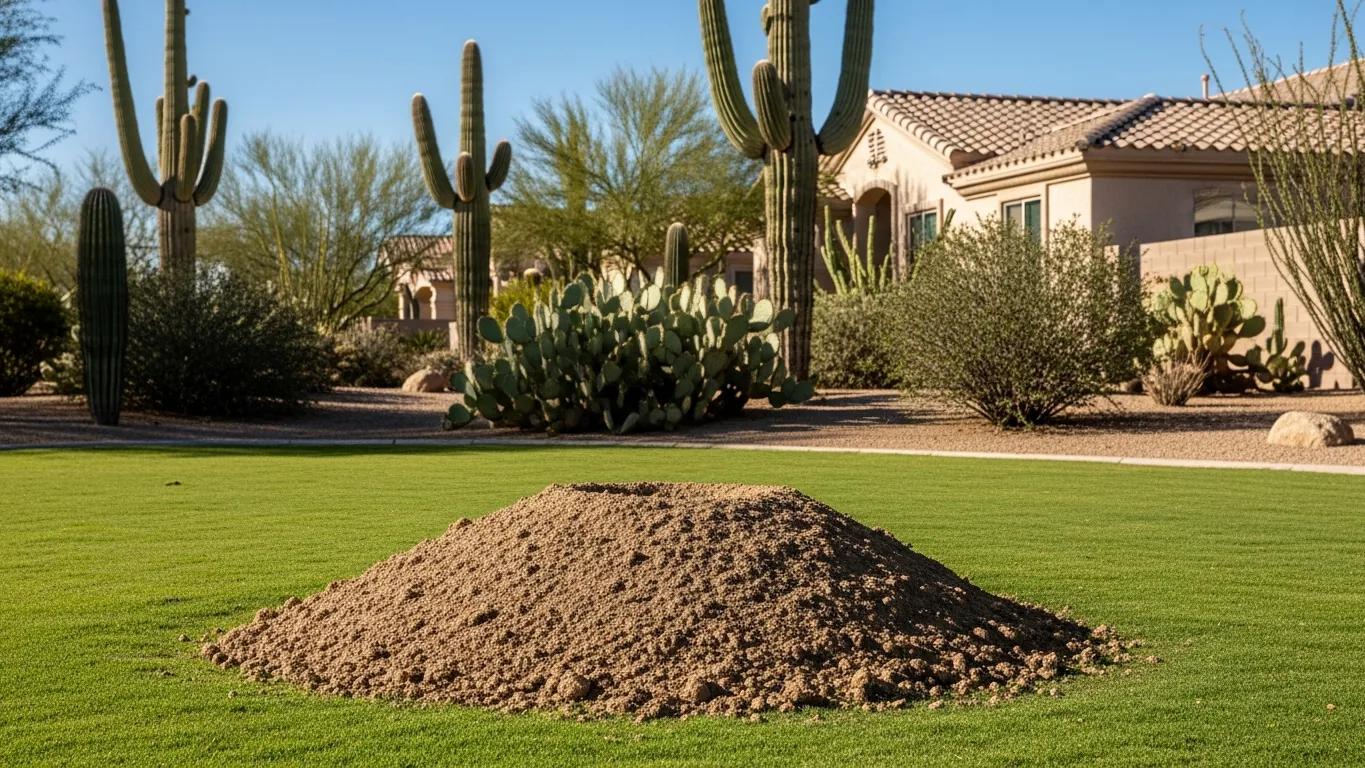
Gopher tunnels create uneven ground beneath your lawn. As tunnels collapse, the surface develops depressions, soft spots, and bare patches. Fan-shaped or crescent-shaped mounds of loose soil appear where gophers push excavated dirt to the surface. These mounds smother existing turf and create tripping hazards. A single gopher can produce several mounds per day when actively digging.
Garden and Plant Loss
Gardens are prime targets. Gophers eat a wide range of vegetables including carrots, potatoes, onions, beets, and peas. They also feed on the roots and bulbs of ornamental plants, pulling entire plants below the surface. Root damage to plants that are not fully consumed often leads to slow decline and death over the following weeks.
Tree and Shrub Damage
Gophers gnaw on the roots of trees and shrubs, particularly young or recently planted specimens. This root damage stunts growth, causes canopy decline, and can kill trees outright if the root system is severely compromised. Citrus trees and other fruit trees common in Phoenix yards are frequent targets.
Irrigation and Utility Damage
Gopher tunnels can intercept and damage underground irrigation lines, drip tubing, and low-voltage landscape wiring. A chewed irrigation line can waste significant water before the break is discovered, and repairing underground utilities requires excavation that adds cost and disruption to your yard.
Recognizing Gopher Activity Early
Early detection limits the extent of damage. Watch for these signs:
- Fresh soil mounds: Fan-shaped or crescent-shaped mounds of loose, finely textured soil are the most obvious sign. Fresh mounds indicate active digging.
- Plugged holes: Gophers seal their tunnel openings with soil plugs. Look for small, packed dirt areas near mounds.
- Wilting or disappearing plants: A plant that suddenly wilts or vanishes from below is a strong indicator of gopher feeding.
- Surface depressions: Soft, sunken areas in your lawn indicate collapsing tunnels below.
- Chewed irrigation lines: Unexpected wet spots or dry zones in your irrigation coverage may point to gopher-damaged lines.
Prevention Strategies That Work
Preventing gopher damage is far easier and less expensive than repairing it. These strategies protect your yard and garden proactively.
Raised Garden Beds
Building raised beds with hardware cloth (half-inch mesh or smaller) lining the bottom creates a physical barrier that gophers cannot penetrate from below. This is one of the most reliable ways to protect vegetable gardens. Make sure the mesh extends up the inside walls of the bed at least six inches.
Underground Fencing
Burying galvanized hardware cloth or gopher-specific wire mesh vertically around garden perimeters, flowerbeds, or individual high-value trees creates a subsurface barrier. Bury the mesh at least 24 inches deep and bend the bottom six inches outward at a 90-degree angle to prevent gophers from digging beneath it.
Gopher Wire Under Turf
When installing new sod or repairing damaged lawn areas, laying gopher wire beneath the soil prevents gophers from reaching the root zone. This method is most practical during new landscape installation or major renovation projects.
Gravel Barriers
Gophers avoid digging through coarse gravel. Backfilling trenches around irrigation lines, utility cables, and foundation perimeters with angular gravel creates a deterrent zone. This also protects infrastructure from gnawing damage.
Regular Yard Inspections
Walk your property regularly and look for fresh mounds, plugged holes, and wilting plants. The sooner you detect gopher activity, the easier it is to address. A single gopher caught early is far simpler to manage than an established tunnel system.
When Prevention Is Not Enough
Even with strong preventive measures in place, gophers can find their way onto your property. Once a gopher is actively tunneling in your yard, passive prevention alone will not remove it. Active control measures are necessary, and this is where professional help makes the biggest difference.
Uni-Tech Pest Control provides gopher management services for homeowners throughout the Phoenix metro area. Our technicians locate active tunnel systems, apply targeted control methods, and help you implement prevention strategies to protect your landscape going forward. Contact Uni-Tech Pest Control for a free property assessment.
Ready to get rid of gophers? Call Uni-Tech Pest Control at (602) 962-8935 for a free inspection, or contact us online to schedule service.
Frequently Asked Questions
How much damage can one gopher do?
A single gopher can tunnel through up to 200 feet of soil and create dozens of surface mounds. One gopher can destroy a small vegetable garden in a matter of days and significantly damage lawn areas within a few weeks. Because gophers are territorial and solitary, you may only have one or two on your property, but the damage they cause is disproportionate to their numbers.
Do gophers carry diseases?
Gophers are not known to be significant carriers of diseases that affect humans. The primary concern with gophers is property damage rather than health risks. However, their tunnels can attract other pests, including snakes that may use abandoned gopher burrows for shelter.
Will gophers eventually leave on their own?
No. Gophers are territorial and once established, they remain in an area as long as food and suitable soil conditions exist. Phoenix’s irrigated landscapes provide both, so gophers that find your yard have little reason to leave. Active removal is necessary to resolve the problem.