
Buzz Off, Mosquitoes! Non-Chemical Ways to Keep Your Phoenix Patio Bite-Free
TLDR: Keep mosquitoes off your Phoenix patio without chemicals by eliminating standing water (especially from irrigation and monsoon puddles), running fans at ground level, planting desert-friendly repellents like lavender and rosemary, and using UV or water-based traps. Layer multiple methods for the best results.
In Arizona, we’re blessed with sunny days and warm evenings, perfect for enjoying our back patios. But mosquitoes, those pesky desert dwellers, can turn your outdoor oasis into a swatting nightmare. If you’re tired of chemical sprays and want safe, eco-friendly ways to minimize mosquitoes, you’re in the right place.
Here’s how to reclaim your patio from mosquitoes without a drop of pesticide!
Why Mosquitoes Love Phoenix (and How to Stop Them)
Phoenix’s hot, dry climate might seem like a mosquito-free zone, but our irrigation systems, monsoon rains, and backyard water features create perfect breeding grounds. Mosquitoes thrive in the Valley’s warm evenings, especially from July to September, when humidity spikes. Non-chemical solutions are ideal here, not only do they avoid harsh chemicals that can harm desert pollinators like bees, but they also keep your patio safe for kids, pets, and those epic summer barbecues.
1. Eliminate Standing Water: Phoenix’s Mosquito Magnets
In the desert, water is life, for mosquitoes too. Even a small puddle can become a breeding hotspot in our warm climate, where mosquito eggs can hatch in just a few days. Check your patio and yard for standing water in:
- Irrigation drip lines or overwatered plant saucers
- Pool covers or unmaintained hot tubs
- Rain barrels or buckets left out after monsoon storms
- Low spots in your yard where water pools
Pro Tip: In Phoenix, monsoon rains (July through September) can leave unexpected puddles. After a storm, walk your property and dump out water from pots, toys, or tarps. For permanent water features like fountains, add a pump to keep water moving, as mosquitoes avoid flowing water. I cut my mosquito problem in half by religiously checking my patio’s drip irrigation system for leaks and emptying saucers under my potted cacti.
2. Use Fans: A Desert Breeze to Blow Mosquitoes Away
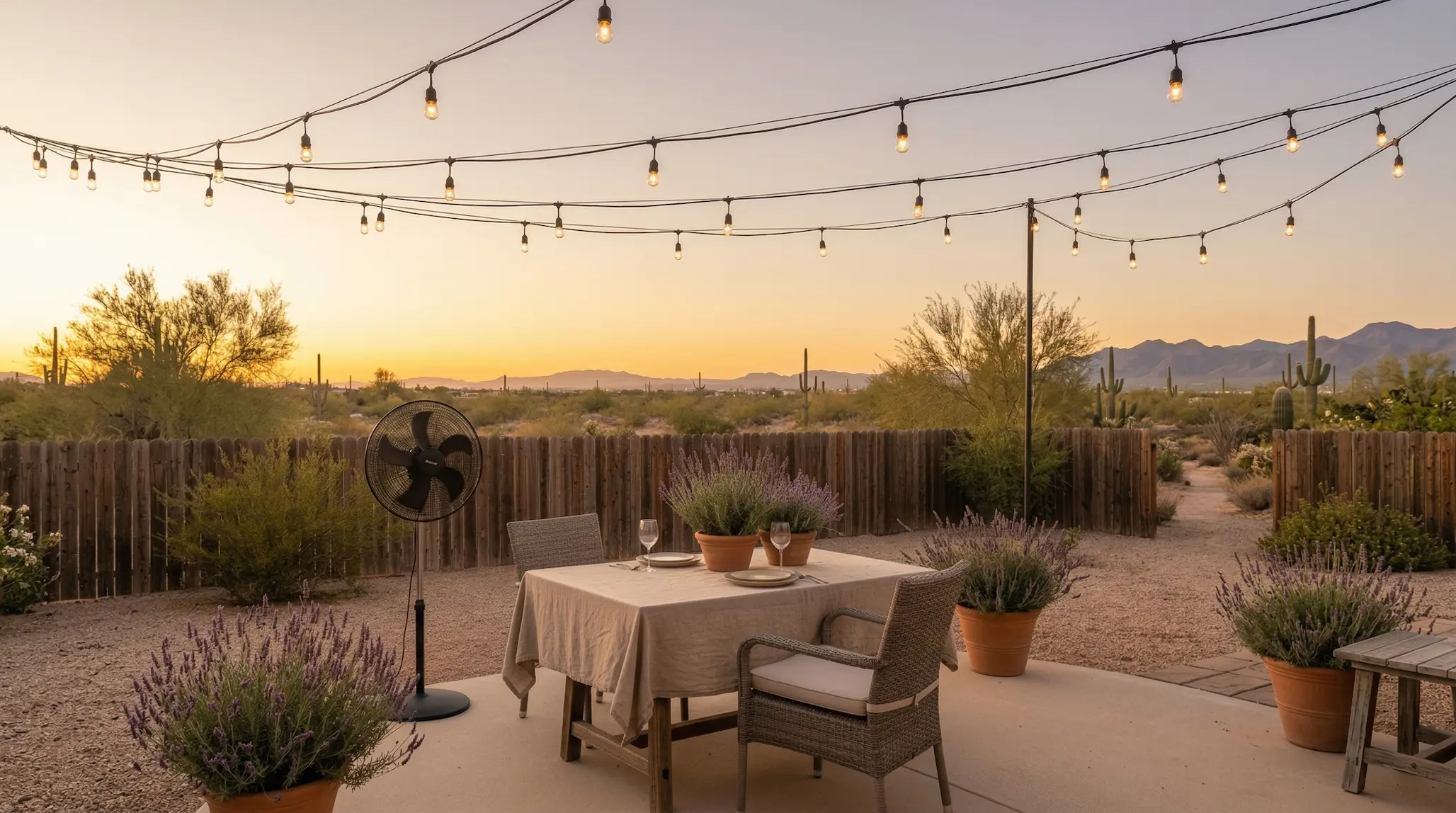
Mosquitoes are weak fliers, and a good fan can make your patio a no-fly zone. In Phoenix’s scorching climate, fans also keep you cool while deterring pests. Set up one or two oscillating fans to create a steady breeze across your seating area.
How to Do It: Place weather-resistant fans at ground level (mosquitoes fly low) and aim them to cover your lounging or dining space. I set up a solar-powered fan on my Phoenix patio last summer, and it was a game-changer during our evening taco nights, with no bites plus a refreshing breeze in the 90-degree heat! Opt for durable, outdoor-rated fans to withstand our intense sun.
3. Plant Mosquito-Repelling Desert Beauties
Certain plants repel mosquitoes with their strong scents, and luckily for us, many thrive in Phoenix’s arid conditions. Try these desert-friendly options:
- Lavender: Loves our sunny climate and repels mosquitoes with its fragrance.
- Rosemary: A hardy, drought-tolerant herb that mosquitoes hate.
- Marigolds: Bright, heat-loving flowers that add color and deter pests.
- Lemongrass: Contains citronella-like compounds and tolerates our warm weather.
My Experience: I planted rosemary and lavender in pots around my patio’s perimeter, and they’ve doubled as low-maintenance decor and mosquito deterrents. While they don’t eliminate mosquitoes entirely, they noticeably reduce bites when paired with other methods. Place pots near seating areas or entryways, and water sparingly to suit Phoenix’s dry conditions.
4. Try Mosquito Traps: Lure and Trap in the Desert Heat
Non-chemical mosquito traps can work wonders in Phoenix, especially during monsoon season when mosquito populations spike. Options include:
- UV Traps: These use light and heat to attract and trap mosquitoes.
- Water-Based Traps: These mimic breeding sites, capturing mosquitoes when they try to lay eggs.
5. Add Physical Barriers: Nets for Phoenix Patios
Mosquito netting or screened enclosures are perfect for creating a bite-free patio, especially in urban Phoenix areas where neighbors’ yards (and their irrigation) can harbor mosquitoes. Netting is affordable and removable, while a full screen enclosure offers a permanent solution.
6. Tame Your Yard: Clear Mosquito Hideouts
Mosquitoes seek shade to escape Phoenix’s blistering sun, hiding in overgrown vegetation or debris. Keep your yard mosquito-unfriendly by:
- Trimming grass and desert shrubs like oleander or mesquite.
- Clearing leaf litter or palm fronds after storms.
- Spacing out plants to improve airflow and let sunlight in (mosquitoes avoid bright, hot areas).
In our climate, keeping your yard open and sunny disrupts their daytime resting spots, making your patio less inviting.
7. Time Your Patio Use: Dodge Phoenix’s Mosquito Hours
In Phoenix, mosquitoes are most active at dawn and dusk, especially during the warm, humid monsoon months. Plan patio time for mid-morning or later evenings when mosquito activity drops. If you’re hosting a summer event, combine this with fans or netting for extra protection.
My Hack: I schedule my patio hangouts for after 8 PM, when the desert cools and mosquitoes quiet down. Pairing this with a fan made my last summer party in Mesa nearly bite-free, even during peak mosquito season.
Combining Methods for a Mosquito-Free Phoenix Patio
The secret to a buzz-free patio in Phoenix is layering solutions. My go-to combo is a fan for airflow, lavender and rosemary pots for natural repellent, and diligent water management to stop breeding. Experiment to find the right mix for your patio.
Phoenix-Specific Tips and Mistakes to Avoid
- Watch Irrigation Systems: Phoenix’s drip irrigation and flood irrigation can create sneaky breeding spots. Check for pooling water regularly.
- Don’t Rely on Plants Alone: Desert plants like rosemary help, but they need backup from fans or traps for full effect.
- Maintain Traps in the Heat: UV or water traps can dry out or malfunction in Phoenix’s intense sun. Clean and check them weekly.
- Monsoon Prep: Before July, inspect your patio for potential water traps to stay ahead of the seasonal mosquito surge.
Final Thoughts: Enjoy Your Phoenix Patio, Mosquito-Free
With Phoenix’s warm evenings and vibrant outdoor lifestyle, you shouldn’t let mosquitoes ruin your patio time. By eliminating standing water, using fans, planting desert-friendly repellents, and adding traps or netting, you can create a bite-free haven. These non-chemical solutions are safe, sustainable, and perfect for keeping your patio ready for sunset cocktails or family gatherings.
Got a favorite mosquito-repelling trick for the Valley? Drop it in the comments. Try these ideas, and let me know how they transform your patio into a desert paradise. Here’s to mosquito-free nights under the Arizona stars!
Ready to take back your patio from mosquitoes? Call Uni-Tech Pest Control at (602) 962-8935 for a free inspection, or contact us online to schedule service.
Frequently Asked Questions
Do non-chemical mosquito methods actually work in Phoenix?
Yes, but they work best when combined. Eliminating standing water removes breeding sites, fans prevent mosquitoes from landing near you, and repellent plants add another layer of protection. No single method eliminates mosquitoes entirely, but stacking two or three together makes a noticeable difference, especially during monsoon season.
When are mosquitoes most active in the Phoenix area?
Mosquitoes are most active at dawn and dusk, particularly from July through September when monsoon rains increase humidity and create standing water. Evening patio time after 8 PM tends to be safer, as mosquito activity drops once temperatures cool and breezes pick up.
Why do I have mosquitoes if I live in the desert?
Phoenix’s irrigation systems, swimming pools, decorative fountains, and monsoon rain puddles all create standing water where mosquitoes breed. Even a small saucer under a potted plant can produce hundreds of mosquitoes in less than a week during warm months. The water sources around residential properties make the Phoenix metro a surprisingly active mosquito zone.
Which plants repel mosquitoes and survive Phoenix heat?
Lavender, rosemary, marigolds, and lemongrass all have mosquito-repelling properties and handle Phoenix’s heat and dry conditions well. Plant them in pots near your seating areas for the strongest effect. They won’t eliminate mosquitoes on their own, but they reduce bites when paired with fans or traps.
When should I call a professional for mosquito control?
If non-chemical methods aren’t keeping mosquitoes under control, or if you’re dealing with large populations during monsoon season, professional barrier treatments can reduce mosquito activity by up to 90%. A pest control technician can also identify hidden breeding sites on your property that you might be missing.