
Natural Spider Deterrents That Actually Work
TLDR: Several natural deterrents can reduce spider activity in your Phoenix home without synthetic chemicals. Peppermint oil, vinegar sprays, diatomaceous earth, and strategic plant placement all discourage spiders. These methods work best as part of a broader prevention plan that includes sealing entry points and reducing prey insects.
Not every spider problem calls for heavy-duty chemical treatment. If you prefer to start with natural, low-toxicity methods, there are several proven approaches that make your Phoenix home less inviting to spiders. These techniques work by repelling spiders, disrupting their habitat, or eliminating the prey insects that draw them indoors.
Keep in mind that natural deterrents are most effective for managing low-level spider activity and preventing new arrivals. If you are dealing with a large infestation or dangerous species like black widows, professional pest control is the safer and more reliable option.
Essential Oils That Repel Spiders
Spiders detect their environment largely through chemical signals. Certain strong-scented essential oils overwhelm their senses and discourage them from settling in treated areas.
Peppermint oil is the most widely recommended natural spider repellent. Mix 15 to 20 drops of pure peppermint essential oil with water in a 16-ounce spray bottle. Add a small squirt of dish soap to help the oil disperse evenly. Spray the mixture along baseboards, window frames, door frames, and any corners or crevices where you have noticed spider activity.
Other effective essential oils include:
- Tea tree oil: Has a strong medicinal scent that spiders avoid. Use the same dilution ratio as peppermint.
- Eucalyptus oil: Particularly effective in enclosed spaces like closets and cabinets.
- Lavender oil: Offers a pleasant scent for humans while deterring spiders. Place sachets of dried lavender in storage areas or closets.
- Citrus oils (lemon, orange): Spiders dislike citrus compounds. You can also rub lemon peels along windowsills and door thresholds.
Reapply essential oil sprays every one to two weeks, or more frequently in areas with high airflow. The oils evaporate over time and lose their repellent effect.
White Vinegar Spray
White vinegar is an inexpensive and readily available spider deterrent. The acetic acid irritates spiders on contact and leaves a residual scent they avoid.
Mix equal parts white vinegar and water in a spray bottle. Apply it to the same target areas as essential oils: baseboards, window and door frames, corners, and known web sites. Vinegar is safe for most surfaces, but test it on a small area first if you are spraying on natural stone, hardwood, or finished surfaces, as the acid can damage certain materials over time.
For a stronger formula, combine the vinegar solution with 10 drops of peppermint oil for a dual-action repellent.
Diatomaceous Earth
Food-grade diatomaceous earth (DE) is a fine powder made from fossilized algae. It works mechanically rather than chemically: the microscopic sharp edges damage the exoskeletons of spiders and insects, causing them to dehydrate.
Apply a thin, even layer of DE in areas where spiders travel or hide:
- Along baseboards in garages, storage rooms, and laundry areas
- Behind appliances
- Under sinks
- Around the perimeter of your home’s foundation (reapply after rain or irrigation)
- Inside wall voids if accessible through outlet plates (turn off power first)
DE is non-toxic to humans and pets when used as directed, but avoid inhaling the dust during application. Wear a simple dust mask when spreading it.
Important: Only use food-grade diatomaceous earth. Pool-grade DE is chemically treated and not safe for household pest control.
Spider-Repelling Plants
Certain plants produce natural compounds that spiders find unpleasant. Placing them near entry points can create a living barrier.
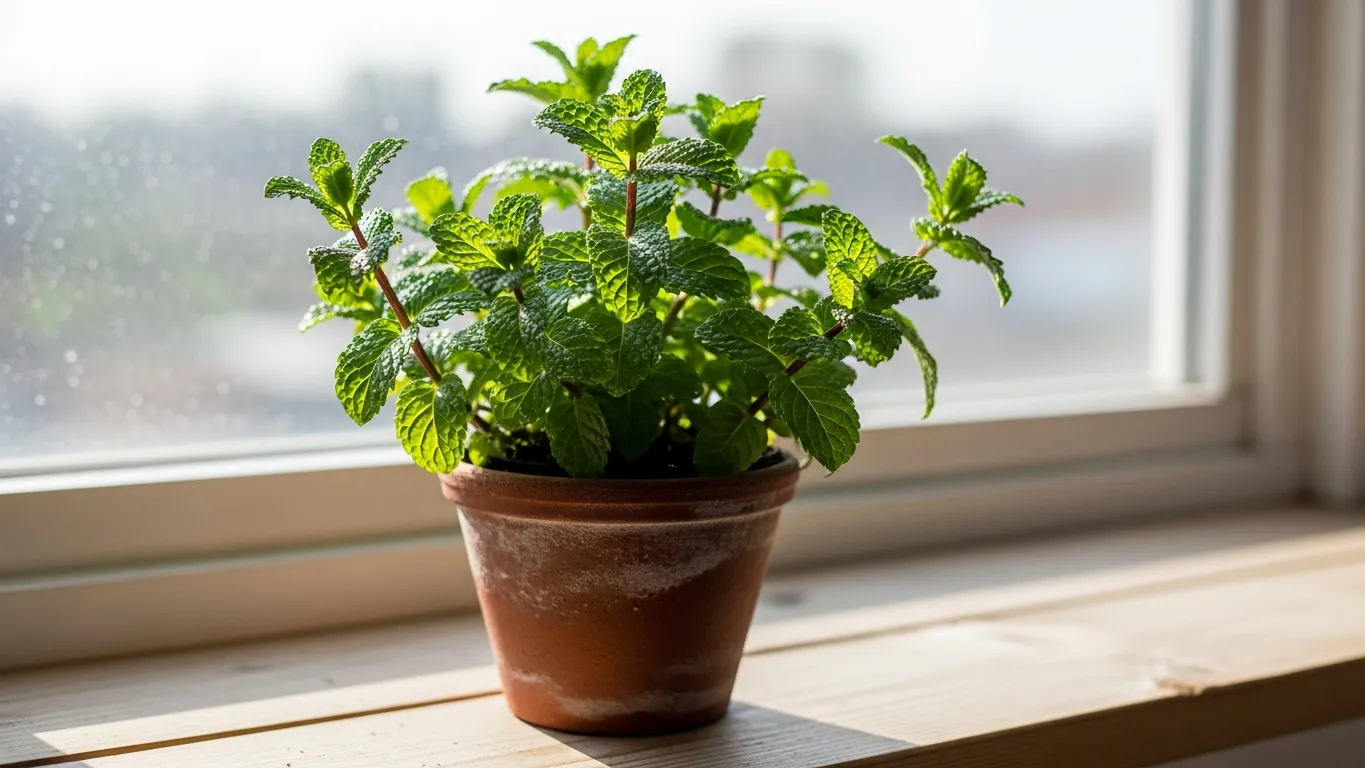
- Peppermint and spearmint: Grow well in pots near doors and windows. In the Phoenix climate, place them where they receive morning sun and afternoon shade to prevent scorching.
- Lavender: Thrives in the Arizona desert with minimal water once established. Plant it along walkways and near exterior walls.
- Rosemary: Another drought-tolerant herb that does well in Phoenix and produces a scent spiders dislike.
- Chrysanthemums: Contain pyrethrin, a natural insecticide that repels a wide range of insects and spiders. They need regular watering in the Phoenix heat.
Container planting near doorways and patios gives you the most flexibility and keeps the repellent plants close to the areas spiders are most likely to enter.
Chestnuts and Cedar
Some homeowners report success with placing horse chestnuts (conkers) or cedar blocks in corners, on windowsills, and near entry points. While scientific evidence is limited, both materials contain natural compounds that may discourage spiders. Cedar, in particular, is a well-established insect deterrent.
Cedar chips or blocks in closets and storage areas serve double duty: they repel moths and other fabric pests while potentially discouraging spiders.
Keep Webs Cleared Consistently
Removing spider webs is one of the simplest and most effective natural deterrents. When you knock down a web, the spider loses its food-catching tool and its investment of silk and energy. Most species will relocate after repeated web removal.
Use a long-handled duster or broom to clear webs from eaves, porch ceilings, window frames, and garage corners. Do this at least once a week during peak activity periods. Over time, consistent web removal trains spiders to build elsewhere.
The Limits of Natural Methods
Natural deterrents reduce spider activity, but they have boundaries. They are most effective when combined with structural prevention, such as sealing cracks and managing outdoor lighting, and general pest management to control the insect prey that attracts spiders indoors.
If you are applying natural methods consistently and still seeing frequent spider activity, or if you identify dangerous species like black widows, it is time to bring in a licensed pest control professional who can assess the situation and apply targeted treatments. Uni-Tech Pest Control offers free spider inspections for Phoenix-area homes.
Ready to get rid of spiders? Call Uni-Tech Pest Control at (602) 962-8935 for a free inspection, or contact us online to schedule service.
Frequently Asked Questions
Does peppermint oil actually repel spiders?
Yes. Studies and extensive field experience confirm that peppermint oil is an effective short-term repellent. Spiders avoid areas treated with concentrated peppermint because the strong scent interferes with their chemical sensing. Reapply every one to two weeks for continued effectiveness.
Is diatomaceous earth safe around pets and children?
Food-grade diatomaceous earth is generally recognized as safe for use around pets and children. It is non-toxic if ingested in small amounts. The main precaution is to avoid breathing in the fine dust during application, as it can irritate the lungs. Apply it in cracks and along baseboards where it will not be disturbed.
Can I use natural deterrents alongside professional pest control?
Absolutely. Natural deterrents complement professional treatments. Many homeowners use essential oil sprays and diatomaceous earth between scheduled service visits to maintain a spider-resistant environment. Let your pest control technician know what products you are using so they can coordinate their approach.
Why do natural spider repellents stop working after a while?
Essential oils and vinegar evaporate, which diminishes their repellent effect over time. In the dry Phoenix climate, evaporation happens faster than in humid regions. Regular reapplication, typically every one to two weeks, is necessary to maintain the deterrent barrier.
What natural method works best for garages?
Diatomaceous earth along the perimeter and behind stored items is the most practical option for garages. Essential oil sprays dissipate quickly in large, ventilated spaces. Combine DE with consistent web removal and sealing gaps under the garage door for the best results.