
Aphids in Phoenix: Identification and Garden Care
TLDR: Aphids are tiny, soft-bodied insects that feed on plant sap and can damage ornamental and edible plants in Phoenix gardens. They reproduce rapidly, often appearing in large clusters on new growth. Identifying them early and encouraging natural predators are the most effective ways to manage aphid populations in Arizona landscapes.
What Are Aphids?
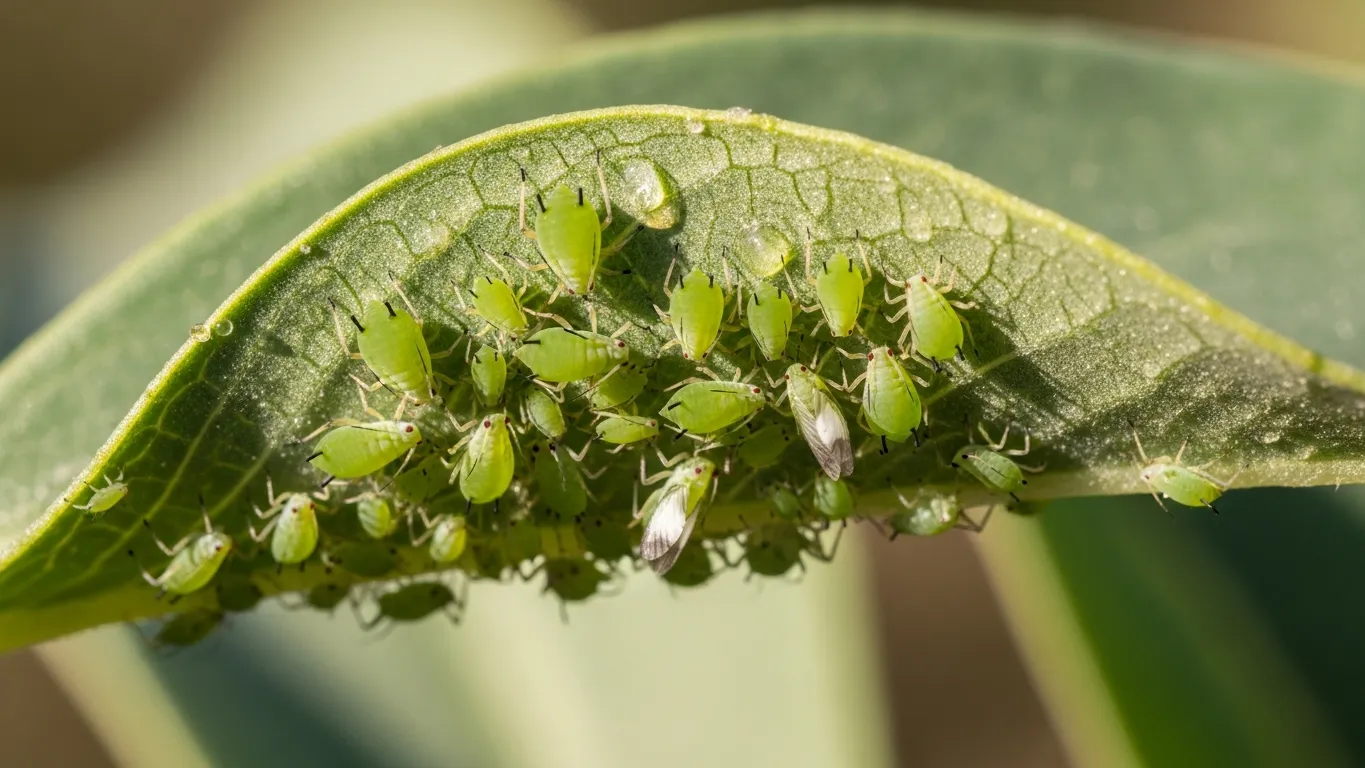
Aphids are small (1–3 mm), pear-shaped insects with soft bodies and long, slender mouthparts designed to pierce plant tissue and extract sap. They come in a wide range of colors (green, yellow, black, brown, pink, and white) depending on the species and host plant. Most aphids have two small tube-like structures called cornicles projecting from their rear abdomen, which is a key identification feature that distinguishes them from other small garden insects.
Aphids are found on every continent except Antarctica, and Phoenix’s warm climate allows multiple species to remain active throughout the year. While individual aphids seem insignificant, their explosive reproductive capability makes them one of the most impactful garden pests in the Valley.
Which Aphid Species Are Common in Phoenix?
Several aphid species affect Phoenix-area gardens and landscapes:
- Green peach aphid (Myzus persicae): Light green to yellowish, found on a wide range of ornamental and vegetable plants. One of the most common aphids in Arizona gardens.
- Oleander aphid (Aphis nerii): Bright yellow with black legs and cornicles. Commonly found in dense clusters on oleander, milkweed, and desert willow, all popular Phoenix landscape plants.
- Cotton/melon aphid (Aphis gossypii): Variable in color from yellowish-green to dark green or nearly black. Feeds on citrus, vegetables, and many ornamentals common to Phoenix yards.
- Crape myrtle aphid (Tinocallis kahawaluokalani): Pale yellowish-green, specific to crape myrtle trees, which are widely planted in Phoenix residential landscapes.
How Do Aphids Reproduce So Quickly?
Aphid reproduction is efficient. In warm climates like Phoenix, most aphid populations reproduce through a process called parthenogenesis, females give birth to live female offspring without mating. Each female can produce 40 to 80 offspring in her lifetime, and those offspring can begin reproducing within 7 to 10 days. This means a single aphid can theoretically give rise to thousands of descendants within a few weeks.
When populations become crowded or plant quality declines, aphids produce winged forms that fly to new host plants and establish fresh colonies. This is why an aphid problem can seem to appear overnight on previously healthy plants.
What Damage Do Aphids Cause to Plants?
Aphid feeding causes several types of damage:
- Direct feeding damage. Aphids extract plant sap from new growth, buds, and leaves, causing curling, yellowing, and stunted development. Heavily infested plants may show wilting even when adequately watered.
- Honeydew production. Aphids excrete a sticky, sugary substance called honeydew that coats leaves and surfaces below the infested plant. Honeydew attracts ants (which “farm” aphids for this substance) and promotes the growth of sooty mold, a black, powdery fungus that blocks sunlight and reduces photosynthesis.
- Virus transmission. Many aphid species transmit plant viruses as they feed, moving from plant to plant. This is particularly concerning for vegetable gardens, where viruses like cucumber mosaic virus and various potyviruses can devastate crops.
In Arizona’s desert climate, plants already face heat and drought stress. The added stress of aphid feeding can push otherwise healthy plants into decline more quickly than in milder environments.
What Are Natural Aphid Predators in Arizona?
Phoenix gardens support several beneficial insects that feed on aphids:
- Ladybugs (lady beetles): Both adults and larvae consume large numbers of aphids. A single ladybug can eat up to 50 aphids per day.
- Green lacewings: Lacewing larvae, sometimes called “aphid lions,” are voracious aphid predators.
- Hoverflies (syrphid flies): The larvae of these bee-mimicking flies feed heavily on aphid colonies.
- Parasitic wasps: Tiny wasps (Aphidius spp.) lay eggs inside aphids. Parasitized aphids become swollen, tan-colored “mummies”, a sign that natural control is at work.
Encouraging these predators by planting diverse flowering species and minimizing broad-spectrum pesticide use is one of the most effective long-term aphid management strategies for Phoenix gardens.
How Can You Prevent and Manage Aphids in Your Phoenix Yard?
- Inspect new growth regularly. Check the undersides of leaves and growing tips weekly. Early detection prevents large infestations.
- Use a strong water spray. A firm blast from a garden hose dislodges aphids from plants. In Phoenix’s dry climate, knocked-off aphids rarely survive to return to the plant.
- Avoid over-fertilizing. Excess nitrogen promotes the lush, tender new growth that aphids prefer. Use slow-release fertilizers appropriate for desert landscaping.
- Choose resistant plant varieties. Native and desert-adapted plants are often less susceptible to heavy aphid pressure than non-native ornamentals.
- Manage ant populations. Ants protect aphid colonies from predators in exchange for honeydew. Controlling ants around affected plants allows natural predators to do their work.
- Use targeted treatments when necessary. Insecticidal soaps and horticultural oils are effective against aphids while posing minimal risk to beneficial insects when applied correctly.
For persistent aphid problems affecting your landscape, Uni-Tech Pest Control can assess the situation and recommend a targeted approach. Reach out at 602-962-8935.
Frequently Asked Questions
Are aphids harmful to humans?
Aphids are not harmful to humans. They do not bite, sting, or transmit diseases to people. Their impact is limited to plants, where they can cause cosmetic and structural damage through feeding and virus transmission.
Why do I see ants on my plants that have aphids?
Ants and aphids have a mutualistic relationship. Ants feed on the sweet honeydew that aphids produce, and in return, ants protect aphid colonies from predators like ladybugs and lacewings. If you see ants actively tending aphids on your plants, managing the ant population can help natural predators reduce aphid numbers.
Can aphids kill my plants?
Healthy, established plants typically survive aphid infestations, though they may suffer cosmetic damage and reduced vigor. Young plants, seedlings, and plants already stressed by heat, drought, or poor soil are more vulnerable. In severe cases (particularly when aphid-transmitted viruses are involved) plant death is possible.
When are aphids most active in Phoenix?
Aphids thrive in moderate temperatures and are most active in Phoenix during spring (February through May) and fall (October through November), when temperatures are warm but not extreme. During the peak summer heat, aphid populations often decline, though they can persist on irrigated plants in shaded areas.