
Cockroaches in Phoenix: Species and Identification
TLDR: Four cockroach species dominate in the Phoenix area: German, American, Oriental, and Turkestan cockroaches. Each behaves differently and inhabits different environments. Accurate identification matters because the most effective prevention and management strategies vary by species.
Why Is Cockroach Identification Important?
Not all cockroaches are alike. The German cockroach that infests kitchens is a fundamentally different pest from the Turkestan cockroach that lives in your irrigation valve box. They have different diets, reproductive rates, preferred habitats, and responses to control measures. Treating all cockroaches the same way leads to wasted effort and ongoing problems. A few minutes spent identifying the species you’re dealing with saves significant time and frustration.
How to Identify the 4 Most Common Cockroach Species in Phoenix
German Cockroach (Blattella germanica)
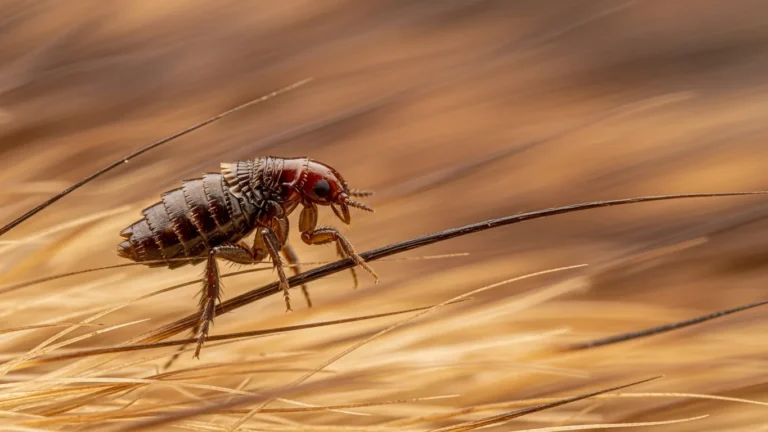
Size: Small, 13 to 16 mm (about half an inch). Color: Light brown to tan with two dark parallel stripes running lengthwise on the pronotum (the shield-like plate behind the head). Wings: Both sexes have wings but rarely fly.
German cockroaches are the most significant indoor cockroach pest worldwide. They live exclusively indoors in Phoenix, relying entirely on human environments for food, water, and warmth. They are most commonly found in kitchens and bathrooms, behind refrigerators, inside dishwashers, under sinks, inside cabinets, near coffee makers, and around any consistent moisture source.
German cockroaches reproduce rapidly. A single female produces an egg capsule (ootheca) containing 30 to 40 eggs, and she can produce four to eight capsules in her lifetime. Under favorable conditions, a small population can grow into thousands within months.
Key identifier: Small size + light color + two dark stripes behind the head + found strictly indoors = German cockroach.
American Cockroach (Periplaneta americana)
Size: Large, 35 to 40 mm (roughly 1.5 inches), the biggest cockroach species in Phoenix homes. Color: Reddish-brown with a yellowish figure-eight pattern on the pronotum. Wings: Both sexes have well-developed wings and can fly short distances, particularly in warm conditions.
American cockroaches prefer warm, humid environments. In Phoenix, they are commonly found in sewer systems, storm drains, and commercial buildings with plumbing-heavy infrastructure (restaurants, laundromats, hospitals). They enter homes through sewer connections, drain pipes, and gaps around plumbing fixtures. Finding an American cockroach emerging from a floor drain or bathtub drain at night is a classic Phoenix encounter.
They are also found outdoors in irrigated landscape beds, mulch, and around pools and water features. They are strong runners and capable fliers, which can make encounters startling.
Key identifier: Large size + reddish-brown + yellowish head marking + often found near drains = American cockroach.
Oriental Cockroach (Blatta orientalis)
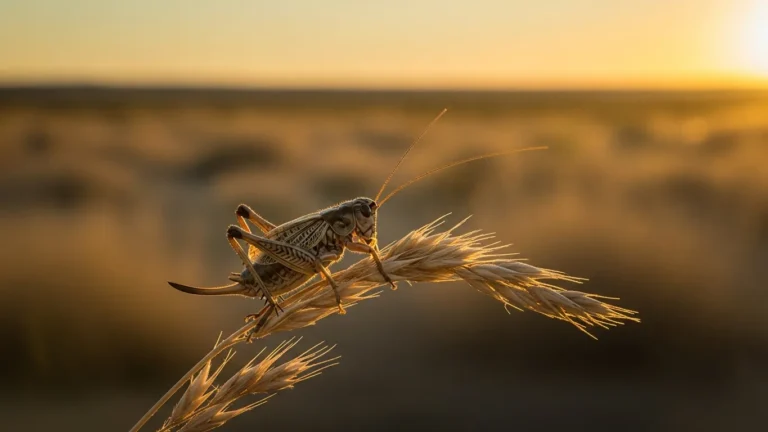
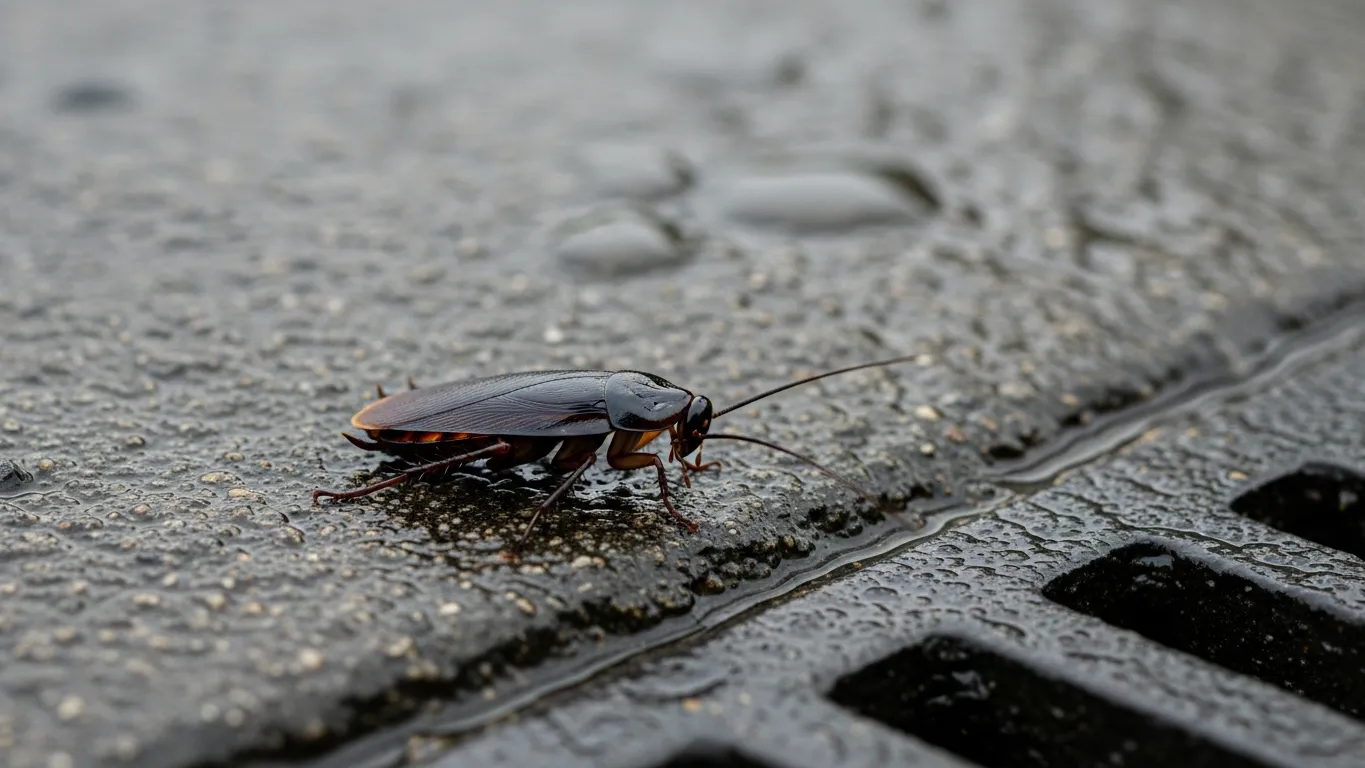
Size: Medium, 25 to 30 mm (about an inch). Color: Dark brown to black with a glossy, almost greasy-looking body. Wings: Males have short wings covering about three-quarters of the abdomen. Females have vestigial wing pads. Neither sex flies.
Oriental cockroaches are sometimes called “water bugs” due to their strong association with damp environments. In Phoenix, they inhabit irrigation boxes, sprinkler valve housings, sewer access points, and the moist soil beneath landscape rock and mulch. They are slower and less agile than American cockroaches and are more tolerant of cooler temperatures.
Oriental cockroaches are most active at night and are often found on porches, patios, and near exterior doors. They enter homes at ground level through door thresholds, garage doors, and foundation cracks.
Key identifier: Dark, glossy black-brown + found in wet areas outdoors + slow-moving = Oriental cockroach.
Turkestan Cockroach (Shelfordella lateralis)
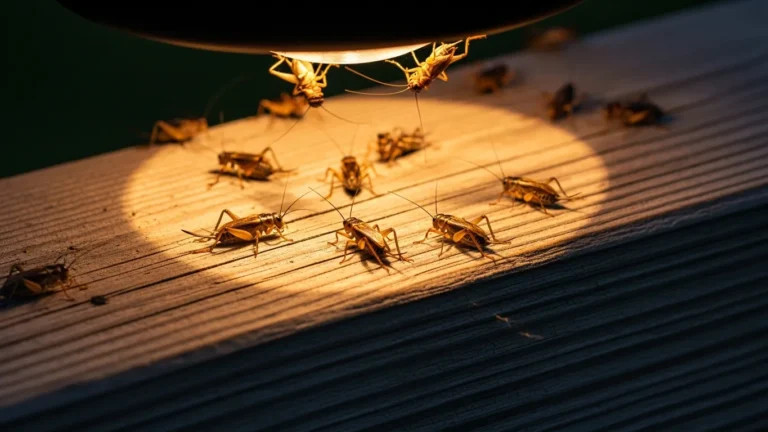
Size: Medium, 25 to 30 mm, similar to the Oriental cockroach. Color: Males are brownish-orange to tan with full wings. Females are dark brown to black with short, rounded wing pads and cream-colored markings along the edges of the body. Wings: Males fly readily, especially toward lights at night. Females cannot fly.
The Turkestan cockroach has become increasingly prevalent across the Phoenix metro area, displacing Oriental cockroach populations in many neighborhoods. It thrives in the same outdoor habitats (irrigation valve boxes, planter boxes, cracks in block walls, and in-ground utility housings) but reproduces faster than the Oriental cockroach, which gives it a competitive advantage.
Male Turkestan cockroaches are commonly found indoors because they are attracted to light and fly through open doors and windows at night. Females are more commonly found outdoors.
Key identifier: Male (tan, winged, found around lights. Female) dark, similar to Oriental cockroach, with pale body margins. Found in irrigation and utility boxes = Turkestan cockroach.
What Health Risks Do Cockroaches Pose?
Cockroaches are not just a nuisance, they are a documented public health concern. They carry bacteria (Salmonella, E. coli, Staphylococcus), parasitic organisms, and mold spores on their bodies and legs, contaminating food preparation surfaces and stored food. Cockroach feces, shed skins, and body fragments are potent allergens that trigger asthma and allergic reactions, particularly in children. Studies by the EPA and the National Institute of Environmental Health Sciences have identified cockroach allergens as a leading trigger of asthma in urban homes.
How Can You Prevent Cockroaches in Your Phoenix Home?
- Eliminate food sources. Clean up crumbs and spills promptly, store food in sealed containers, and don’t leave pet food out overnight.
- Reduce moisture. Fix leaky faucets and pipes, make sure proper drainage around the foundation, and use exhaust fans in bathrooms and kitchens.
- Seal entry points. Caulk cracks around pipes, install door sweeps on exterior doors, and make sure window screens are intact.
- Address drains. American cockroaches enter through sewer connections. Make sure floor drains have tight-fitting covers and consider drain screens in bathrooms.
- Manage exterior harborage. Inspect and clean irrigation valve boxes, remove debris near the foundation, and reduce ground-level moisture around the home.
- Reduce exterior lighting. Male Turkestan cockroaches fly toward lights. Switching to yellow bulbs or motion-activated fixtures near entry doors reduces attraction.
For persistent cockroach issues, species identification is the first step toward an effective solution. Uni-Tech Pest Control can identify the species present and recommend a targeted approach. Contact us at 602-962-8935.
Frequently Asked Questions
Why do I keep seeing cockroaches even though my house is clean?
A clean home reduces food availability, but cockroaches also need water and shelter, which even the cleanest homes provide. German cockroaches may arrive in grocery bags, boxes, or used appliances. American and Turkestan cockroaches enter from outdoor populations through drains, gaps, and open doors. Cleanliness helps, but exclusion (sealing entry points) and moisture management are equally important.
Are cockroaches more active during monsoon season in Phoenix?
Yes. Increased humidity and moisture during the monsoon season (typically July through September) drives cockroach activity higher. Outdoor species like Turkestan and Oriental cockroaches become more active and more likely to enter homes. American cockroaches may be pushed out of flooded sewer access points. German cockroach reproduction also accelerates in warm, humid conditions.
Can cockroaches survive without food and water?
German cockroaches can survive approximately two weeks without food but only about a week without water, water is the more critical resource. Larger species like American cockroaches can survive longer, up to a month without food in some cases. This is why addressing moisture issues is often more impactful than food sanitation alone.
Do cockroaches fly in Phoenix?
American cockroaches, male Turkestan cockroaches, and occasionally other species fly in Phoenix, particularly during warm evenings. American cockroaches tend to fly short distances when startled. Male Turkestan cockroaches actively fly toward artificial light sources. German cockroaches have wings but do not fly in any meaningful way.