
Crickets in Phoenix: Identification and Behavior
TLDR: Field crickets, house crickets, and Indian house crickets are the most common species in Phoenix homes. Beyond being a noisy nuisance, crickets are a primary food source for bark scorpions, meaning a cricket problem often leads to a scorpion problem. Controlling crickets is one of the most effective indirect strategies for reducing scorpion activity around your home.
Why Do Crickets Matter in Phoenix?
In most parts of the country, crickets are a minor nuisance, they chirp, they occasionally get indoors, and that’s about it. In Phoenix, crickets carry additional significance because of their direct connection to Arizona bark scorpions (Centruroides sculpturatus). Bark scorpions are the most venomous scorpion in North America, and crickets are one of their primary prey items. Properties with high cricket populations consistently show higher scorpion activity. Reducing cricket numbers around your home is one of the most practical, effective steps you can take to make your property less attractive to scorpions.
How to Identify the 3 Most Common Cricket Species in Phoenix
Field Crickets (Gryllus spp.)
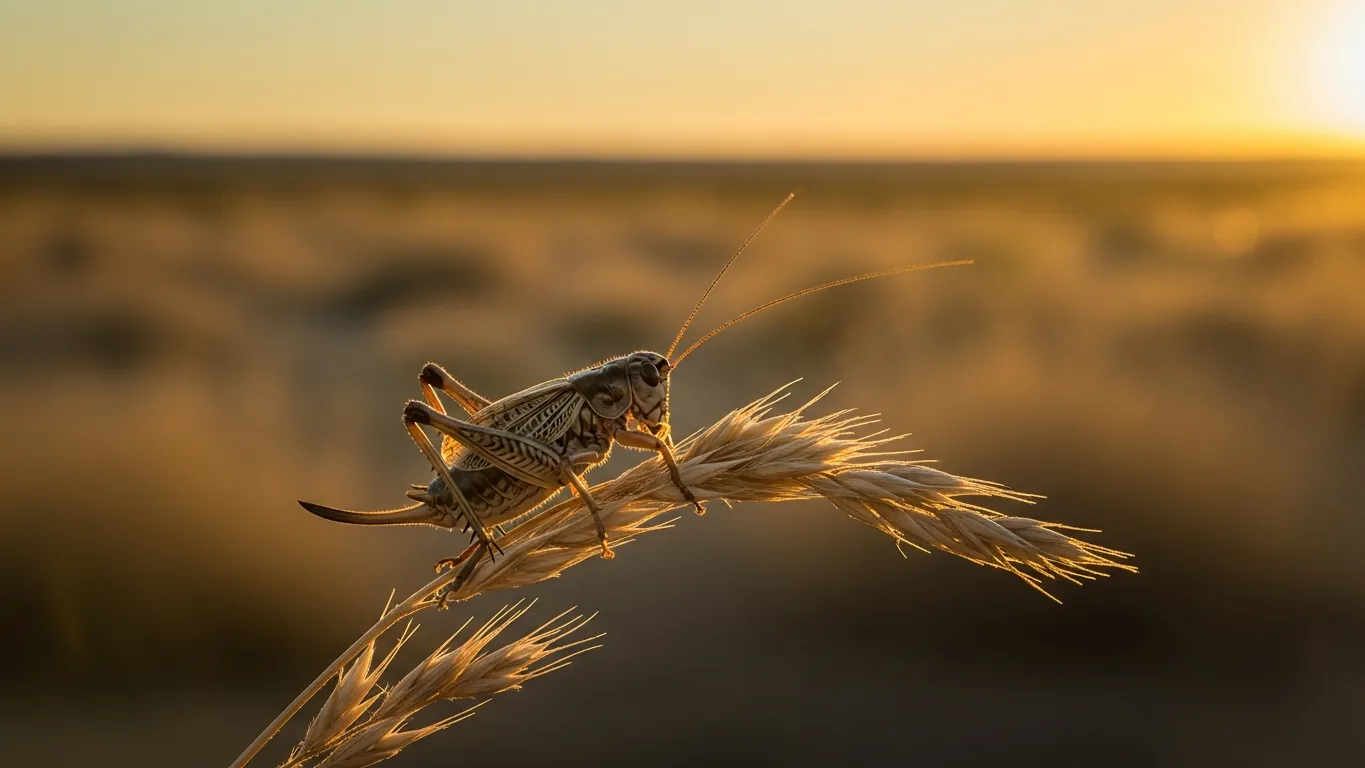
Field crickets are the most common outdoor cricket in the Phoenix area. They are medium to large (15–25 mm), with a strong, dark brown to black body, long antennae, and prominent hind legs built for jumping. Their wings lie flat against the body, and males produce the classic loud chirping sound by rubbing the front wings together (a process called stridulation).
Field crickets are primarily outdoor insects. They live in soil cracks, under rocks, in mulch and leaf litter, and in dense ground cover. They are omnivorous, feeding on plant material, seeds, other insects (both living and dead), and organic debris. They are nocturnal and are strongly attracted to artificial light, which brings them to porches, patios, and entry doors, and eventually indoors.
Field cricket populations surge during warm, moist conditions, making the monsoon season a peak period for activity in Phoenix.
House Crickets (Acheta domesticus)
House crickets are slightly smaller than field crickets (16–22 mm) and have a lighter coloration, yellowish-brown with three dark bands across the head. They have fully developed wings and are capable of short flights. Males produce a higher-pitched, more continuous chirp than field crickets, often described as a steady trill.
As their name suggests, house crickets are well-adapted to indoor living. They thrive in warm environments with access to food and moisture, kitchens, bathrooms, laundry rooms, garages, and utility closets are common habitats. They feed on a wide range of materials including fabrics (particularly those stained with food or perspiration), paper, pet food, crumbs, and other organic material.
House crickets can damage clothing, curtains, and upholstered furniture through their feeding. While the damage per individual is minor, large indoor populations can cause noticeable harm over time.
Indian House Cricket (Gryllodes sigillatus)
The Indian house cricket has become increasingly common in the Phoenix metro area. It is smaller than the other two species (13–18 mm), with a light brown body and darker mottled banding. Compared to the house cricket, it has a slightly more slender build and its chirp is quieter and less continuous.
Indian house crickets behave similarly to house crickets, they are nocturnal, omnivorous, and thrive indoors. They are often found in commercial buildings, warehouses, and apartments in addition to single-family homes. Their populations can build quickly in warm indoor environments with consistent food and moisture access.
Why Do Crickets Chirp?
Only male crickets chirp, and they do it to attract females for mating. The sound is produced by stridulation, the male raises his front wings and rubs a scraper on one wing against a row of teeth on the other. Chirping is temperature-dependent: crickets chirp faster in warmer conditions and slower when it’s cooler. In Phoenix’s warm climate, cricket chirping can be particularly persistent and loud during summer and fall evenings.
The chirping can make it difficult to locate a single cricket indoors because the sound bounces off walls and the cricket typically goes silent when it senses movement nearby.
How Are Crickets Connected to Scorpion Problems?
Arizona bark scorpions are opportunistic predators that follow their food supply. Crickets (abundant, soft-bodied, and nocturnal like scorpions) are among the bark scorpion’s preferred prey. Research and field observations consistently show a strong correlation between cricket populations and scorpion activity on residential properties.
This relationship means that cricket control is not just about eliminating the annoyance of chirping. It is a practical, food-web-based approach to scorpion management. By reducing the cricket population around your home, you remove a significant food source that attracts and sustains scorpions.
What Attracts Crickets to Your Home?
- Light. Crickets are strongly attracted to exterior lighting, especially white and UV light. Lights near doors and windows draw crickets to the building envelope, where they find entry points.
- Moisture. Irrigation systems, leaking hose bibs, and pooling water near the foundation attract crickets seeking humidity.
- Ground-level shelter. Mulch, leaf litter, decorative rock, dense ground cover, and stored items against the foundation provide hiding spots.
- Open entry points. Gaps under doors, cracked weatherstripping, foundation cracks, and unsealed utility penetrations allow crickets inside.
How Can You Prevent Crickets Around Your Phoenix Home?
- Switch exterior lighting to yellow or amber bulbs. These wavelengths are significantly less attractive to crickets and other nocturnal insects. Sodium vapor lights are another effective option.
- Use motion-activated lighting instead of always-on fixtures near doorways and garages.
- Install door sweeps on all exterior doors, especially the garage entry door.
- Seal cracks and gaps in the foundation, around windows, and where pipes or wires enter the structure.
- Reduce ground-level harborage. Pull mulch, rock, and stored items at least 12 inches away from the foundation. Keep landscaping trimmed.
- Address moisture. Fix leaking hose bibs, adjust irrigation heads spraying the foundation, and make sure proper drainage away from the home.
- Remove food sources indoors. Store pet food in sealed containers, clean up crumbs, and avoid leaving damp towels or clothing on the floor.
For properties with significant cricket activity (especially when scorpions are also present) a professional assessment can identify the conditions driving the population. Uni-Tech Pest Control provides cricket and scorpion evaluations throughout the Phoenix area. Call 602-962-8935.
Frequently Asked Questions
Do crickets bite?
Crickets can bite, but they rarely do. Their mandibles are designed for chewing plant material and organic debris, not for defense. On the rare occasion a cricket does bite a person, it is unlikely to break the skin and poses no health risk. Crickets are not venomous and do not transmit diseases through biting.
Will getting rid of crickets really help with scorpions?
Yes. Reducing cricket populations is one of the most effective indirect scorpion management strategies. Bark scorpions go where food is available. By eliminating the abundant prey source that crickets represent, you make your property significantly less attractive to foraging scorpions. Cricket control should be part of any full scorpion management plan in the Phoenix area.
Why do I hear crickets but can’t find them?
Cricket chirping is surprisingly difficult to localize. The sound resonates and bounces off surfaces, making it seem to come from different directions. Additionally, crickets stop chirping when they detect vibrations from approaching footsteps. To locate a chirping cricket, stand still and listen carefully, then move slowly toward the sound. Crickets typically hide in dark, tight spaces, behind appliances, inside closets, under furniture, and in wall cavities near baseboards.
Are crickets harmful to my home?
Crickets can cause minor damage to fabrics, paper, and wallpaper through feeding, particularly house crickets and Indian house crickets. They preferentially chew on items soiled with food stains or perspiration. Large indoor populations can damage clothing, curtains, and book bindings over time. Outdoors, crickets occasionally feed on seedlings and garden plants but rarely cause significant landscape damage.