
Earwigs in Phoenix: Identification and Behavior
TLDR: Earwigs are nocturnal insects recognized by the distinctive pincers on their abdomen. They are not dangerous to humans despite their intimidating appearance. In Phoenix, earwigs enter homes primarily to escape heat and find moisture.
What Do Earwigs Look Like?
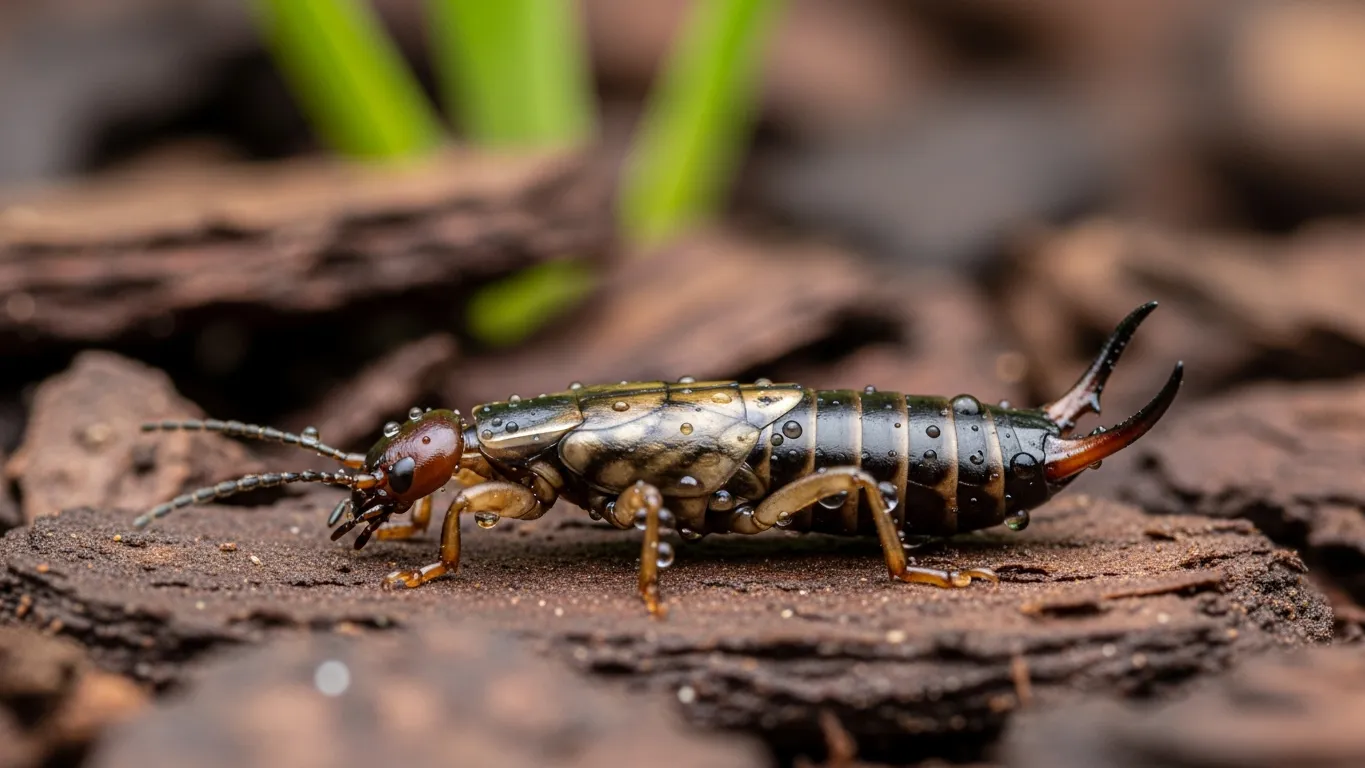
Earwigs are slender, elongated insects that typically measure between half an inch and one inch in length. Their most recognizable feature is a pair of curved, forceps-like pincers (called cerci) at the rear of their abdomen. Males tend to have more curved pincers, while females have straighter ones.
Their bodies are dark brown to reddish-brown with a flattened profile that allows them to squeeze through narrow gaps. Most species have short, leathery forewings and delicate, fan-shaped hindwings folded underneath, though they rarely fly. Their antennae are segmented and thread-like, usually about half the length of their body.
Which Earwig Species Live in Arizona?
The most common earwig species found in the Phoenix metro area is the ring-legged earwig (Euborellia annulipes). This species thrives in arid and semi-arid environments and adapts well to irrigated residential landscapes.
The European earwig (Forficula auricularia) also appears in Arizona, though less frequently than in cooler climates. It tends to concentrate in areas with consistent moisture, such as well-watered lawns, garden beds, and properties near irrigation canals.
A third species, the striped earwig (Labidura riparia), is one of the largest earwig species in North America and is found throughout the Sonoran Desert region. It can reach up to an inch in length and is more predatory than other species, feeding on small insects.
Why Do Earwigs Enter Phoenix Homes?
Earwigs are moisture-seeking insects. In the extreme heat of the Phoenix desert, they are drawn to any source of water and humidity. Common entry triggers include:
- Irrigated landscaping close to foundation walls
- Leaking hose bibs, AC condensation lines, and dripping faucets near the home’s exterior
- Mulch, ground cover, and leaf litter that retains moisture against the foundation
- Gaps under doors, cracks in weatherstripping, and unsealed utility penetrations
Once inside, earwigs gravitate toward bathrooms, kitchens, laundry rooms, and garages, anywhere humidity levels are higher than the surrounding environment. They are strictly nocturnal, hiding during the day in dark, tight spaces and becoming active after dark.
Are Earwigs Dangerous to Humans?
No. Despite the old myth that earwigs crawl into human ears (the origin of their common name), earwigs pose no meaningful threat to people. Their pincers can deliver a mild pinch if the insect is handled roughly, but they cannot break skin in most cases and carry no venom.
Earwigs do not transmit diseases, do not bite in a predatory sense, and do not damage the structural elements of a home. They may occasionally nibble on soft plant tissue, seedlings, or flower petals in a garden, but the damage is typically minor compared to other garden pests.
Their primary nuisance factor is their appearance. Finding a cluster of earwigs in a bathroom cabinet or under a kitchen sink can be startling, but it is not a health concern.
What Do Earwigs Eat?
Earwigs are omnivores and opportunistic feeders. Their diet includes:
- Decaying organic matter (leaf litter, compost, mulch)
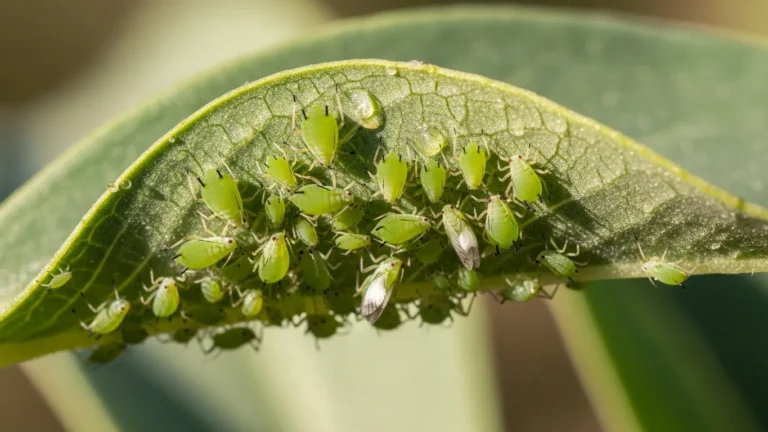
- Soft-bodied insects such as aphids and mites
- Plant material including flower petals, seedlings, and ripe fruit
- Algae and fungi found in damp environments
In some cases, earwigs can actually be beneficial in a garden by feeding on aphid populations. However, when their numbers grow large enough to damage ornamental plants, they cross the line from helpful to problematic.
How to Prevent Earwigs Around Your Phoenix Home
Reducing moisture and eliminating harborage near the structure are the most effective prevention strategies:
- Fix irrigation overspray: Adjust sprinkler heads so water does not hit the foundation or exterior walls.
- Clear debris from the foundation perimeter: Remove mulch, leaf litter, stacked pots, and ground cover within 12 inches of the structure.
- Seal entry points: Install door sweeps on exterior doors, caulk gaps around pipes and conduit, and repair damaged weatherstripping.
- Redirect AC condensation lines: Route condensate drain lines away from the foundation rather than letting them drip at the base of the wall.
- Reduce outdoor lighting near doors: Earwigs are attracted to light at night. Switch to yellow or sodium vapor bulbs near entryways, or move lights away from the door so insects are drawn away from the entrance.
- Eliminate standing water: Empty saucers under potted plants, fix leaky outdoor faucets, and make sure proper drainage around the property.
If earwigs are consistently entering your home despite these measures, Uni-Tech Pest Control can assess the specific moisture and entry conditions around your property. Call 602-962-8935 for guidance.
Frequently Asked Questions
Do earwigs actually crawl into your ears?
This is a persistent myth with no scientific basis. Earwigs have no special attraction to human ears. Like any small insect, one could theoretically wander into an ear canal by accident, but this is very rare and no more likely with earwigs than with any other insect of similar size.
Can earwigs damage my home?
No. Earwigs do not eat wood, fabric, or structural materials. They do not bore into walls or create nests inside building components. Their presence indoors is a moisture and entry-point issue, not a structural one.
Why am I suddenly seeing earwigs inside my house?
A sudden appearance of earwigs indoors almost always correlates with a moisture change. Common triggers in Phoenix include a new irrigation schedule, a plumbing leak, monsoon season humidity, or a malfunctioning AC condensation drain. Identifying and correcting the moisture source typically resolves the issue.
Are earwigs nocturnal?
Yes. Earwigs are almost exclusively active at night. During the day they hide in dark, tight, damp spaces, under rocks, inside rolled newspapers, beneath bark, or in cracks and crevices around the home. If you want to confirm an earwig presence, check these hiding spots during the day or look near exterior lights after dark.