
Flies in Phoenix: Species and Prevention
TLDR: Phoenix homes encounter several fly species including house flies, fruit flies, drain flies, and cluster flies. Each breeds in different material and requires a different prevention approach. Flies are not just a nuisance, they are capable of transmitting dozens of disease-causing pathogens.
Why Are Flies So Common in Phoenix?
Phoenix’s warm temperatures create favorable conditions for fly reproduction year-round. Flies are cold-blooded, and their development accelerates in heat. A house fly egg that takes two to three weeks to reach adulthood in cooler climates can complete the same cycle in as little as seven to ten days in Phoenix summer temperatures. Irrigated landscapes, green waste bins, pet waste, and organic debris all provide breeding material within residential neighborhoods.
How to Identify Common Fly Species in Phoenix
House Flies (Musca domestica)
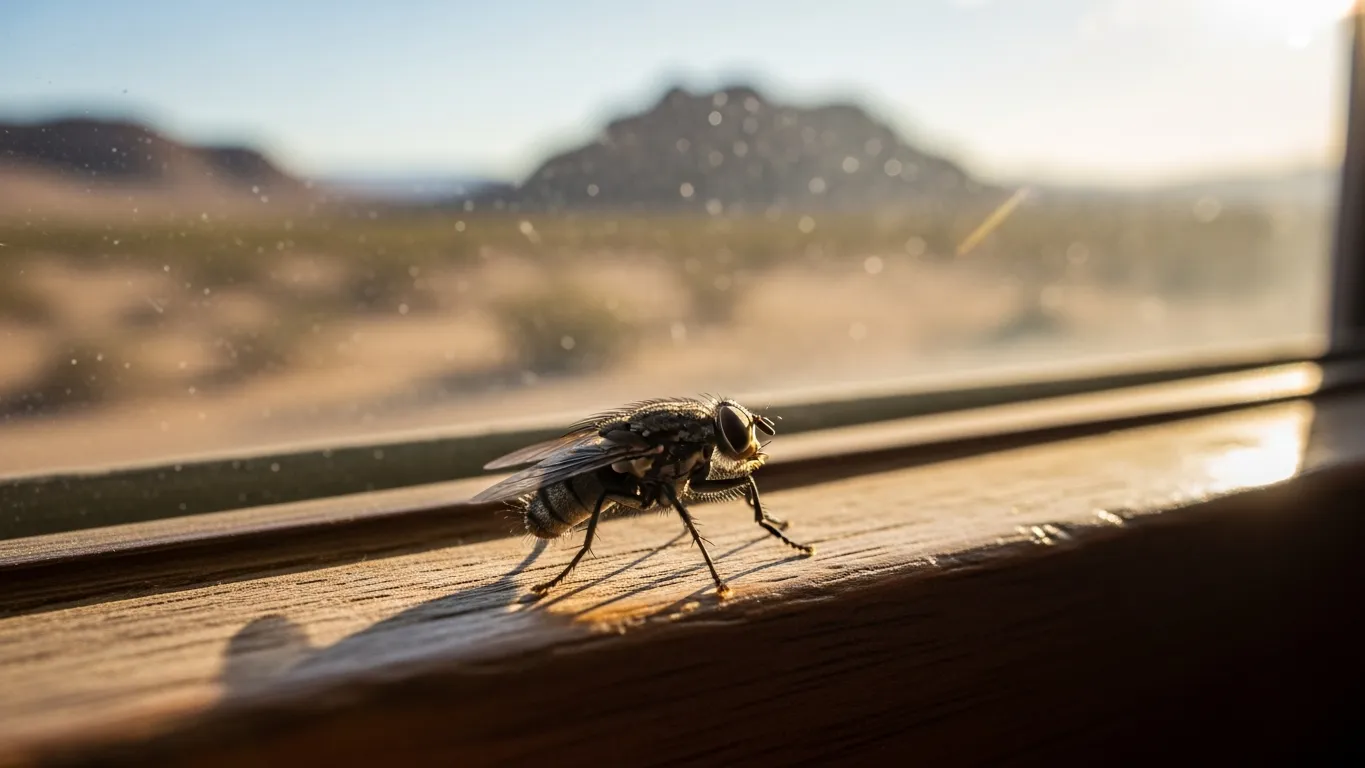
House flies are the most familiar and widespread fly species. Adults are about 1/4 inch long, gray with four dark longitudinal stripes on the thorax, and have sponging mouthparts (they cannot bite). Their large, reddish-brown compound eyes nearly touch at the top of the head in males.
House flies breed in decaying organic matter, garbage, animal waste, compost, and rotting food. A single female can lay 500 or more eggs in her lifetime, depositing them in batches of 75 to 150. Eggs hatch within 12 to 24 hours in warm conditions, and larvae (maggots) feed in the breeding material for several days before pupating.
Fruit Flies (Drosophila spp.)
Fruit flies are small (about 1/8 inch long) with tan or yellowish-brown bodies and distinctive bright red eyes. They hover around ripe or fermenting fruit, vegetables, and any sugary liquid.
These flies breed in thin films of fermenting organic material. Common breeding sites include overripe produce on counters, residue inside recycling bins, spilled juice or soda, fermenting mop water, and the drip trays under refrigerators. A fruit fly can go from egg to reproducing adult in as little as eight days, which is why populations seem to explode overnight.
Drain Flies (Psychodidae)
Drain flies are small (about 1/8 inch), fuzzy, moth-like flies with broad, leaf-shaped wings held roof-like over their body. They are weak fliers and tend to make short, hopping flights. You will most often see them resting on walls and ceilings near bathrooms, kitchens, and laundry rooms.
They breed in the gelatinous organic film (biofilm) that builds up inside drains, overflow pipes, and sewer lines. In Phoenix, drain flies are common in homes with infrequently used guest bathrooms, floor drains in garages, and older plumbing where biofilm accumulates.
Cluster Flies (Pollenia rudis)
Cluster flies are slightly larger than house flies, about 3/8 inch long, with dark gray bodies covered in fine golden hairs on the thorax. They move sluggishly compared to house flies.
Unlike other pest flies, cluster flies do not breed in garbage or filth. Their larvae are parasites of earthworms in soil. Adults become a nuisance when they seek sheltered spaces to overwinter, congregating in attics, wall voids, and window frames. In Phoenix, cluster fly pressure is lower than in cooler climates but can still occur in homes near irrigated turf with healthy earthworm populations.
What Diseases Can Flies Transmit?
House flies are among the most significant mechanical vectors of disease. Because they feed by regurgitating digestive fluids onto food and then sponging up the liquified result, they deposit pathogens on every surface they land on. Flies have been implicated in the transmission of:
- Bacterial infections: Salmonella, E. coli, Shigella, Campylobacter
- Parasitic organisms: roundworm eggs, tapeworm cysts
- Viral pathogens: enteroviruses, rotavirus
A single house fly can carry over 100 different pathogens on its body and in its gut. Fruit flies and drain flies are less significant disease vectors but can still contaminate food and food-preparation surfaces with bacteria.
How to Prevent Flies in Your Phoenix Home
Fly prevention is fundamentally about sanitation and exclusion: eliminating breeding material and blocking entry.
Sanitation
- Manage garbage carefully: Use bins with tight-fitting lids. Clean bins regularly to remove residue. In Phoenix heat, organic waste decomposes and attracts flies rapidly, take trash out frequently.
- Pick up pet waste daily: Dog waste in a backyard is one of the top house fly breeding sources in residential areas.
- Store produce properly: Refrigerate ripe fruit and vegetables rather than leaving them on counters.
- Clean drains monthly: Use a stiff brush to physically remove biofilm from kitchen and bathroom drains. Chemical drain cleaners alone do not remove the organic film that drain flies breed in.
- Rinse recycling: Bottles, cans, and containers with sugary residue attract fruit flies. Rinse items before placing them in recycling bins.
- Wipe surfaces: Clean up spills, crumbs, and food residue on counters, stovetops, and floors promptly.
Exclusion
- Repair or replace damaged window screens: Even small tears allow flies easy entry.
- Install door sweeps on exterior doors, including garage service doors.
- Seal gaps around utility penetrations: pipes, conduit, and vents entering the structure.
- Keep exterior doors closed: Avoid propping doors open, especially during early morning and evening when fly activity peaks.
For ongoing fly issues that persist despite good sanitation, Uni-Tech Pest Control can inspect for hidden breeding sources that are easy to overlook. Call 602-962-8935.
Frequently Asked Questions
Why do I have tiny flies around my kitchen sink?
Small flies near the kitchen sink are most likely drain flies or fruit flies. Drain flies breed in the biofilm inside the drain itself and can be identified by their fuzzy, moth-like appearance. Fruit flies breed in food residue and are identified by their red eyes. Cleaning the inside of the drain with a brush usually resolves drain fly issues, while removing overripe produce addresses fruit flies.
Do house flies bite?
No. House flies have sponging mouthparts and cannot bite. If you are being bitten by a fly indoors, it is likely a stable fly (Stomoxys calcitrans), which closely resembles a house fly but has piercing mouthparts. Stable flies are associated with animal waste and decaying vegetation.
How fast do flies reproduce?
Very fast. A house fly can complete its life cycle from egg to reproducing adult in as little as seven days in Phoenix summer temperatures. A single pair of flies, if all offspring survived, could theoretically produce millions of descendants in a single season. This is why prompt sanitation and exclusion matter more than any other intervention.
Can flies breed inside my house?
Yes. Fruit flies breed in fermenting produce and residue, drain flies breed in drain biofilm, and house flies can breed in forgotten organic material, a bag of potatoes that has gone bad, a deceased rodent in a wall void, or pet waste tracked into a garage. If flies are reproducing indoors, there is always a breeding source to find and eliminate.