
Mosquitoes in Phoenix: Species, Risks, and Prevention
TLDR: Two mosquito groups cause most problems in the Phoenix metro area: Culex species (which carry West Nile virus) and Aedes species (which bite aggressively during the day). Mosquitoes breed in any standing water, and Phoenix’s irrigation systems and monsoon rains create ideal habitat year-round. Eliminating standing water is the most effective prevention step.
What Do Mosquitoes Look Like?
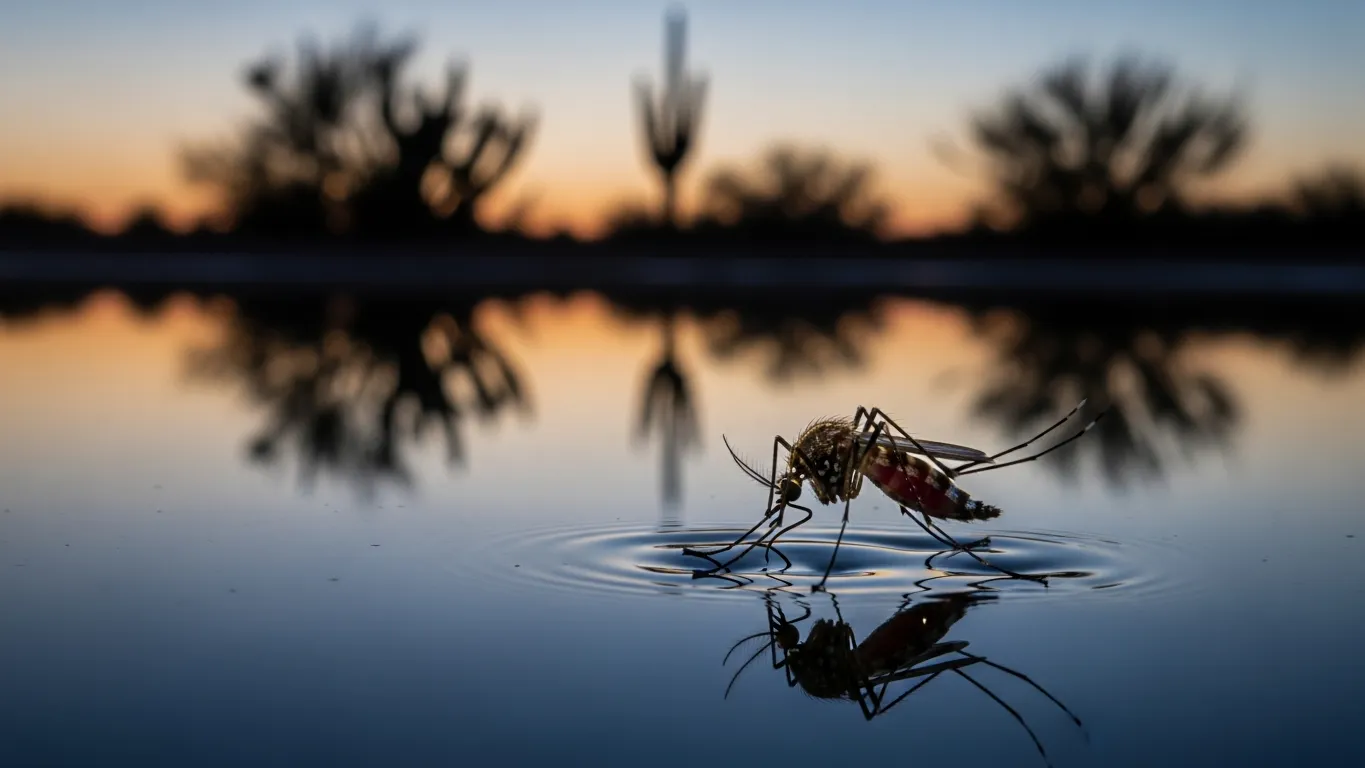
Adult mosquitoes are small, slender, flying insects with long legs, narrow wings, and a prominent proboscis (the needle-like mouthpart used for feeding). Most species are 1/4 to 3/8 inch long. Body color varies by species, from pale brown to dark gray or black, often with white or silver banding on the legs and abdomen.
Female mosquitoes are the biters. They need a blood meal to develop their eggs. Males feed only on plant nectar and do not bite. You can distinguish males by their feathery, bushy antennae compared to the smoother antennae of females.
Mosquitoes are weak fliers and tend to stay close to their breeding sites. Most species fly no more than one to three miles from where they hatched, and many stay within a few hundred yards. This means the mosquitoes biting you in your backyard are likely breeding somewhere on or near your property.
Which Mosquito Species Are Common in Phoenix?
Culex Mosquitoes
Culex quinquefasciatus (the southern house mosquito) is the most significant mosquito species in Maricopa County. It breeds in standing water with organic matter, including storm drains, neglected swimming pools, ornamental ponds, and irrigation runoff. Culex mosquitoes are most active from dusk through dawn and are the primary vector for West Nile virus in Arizona.
Maricopa County Vector Control reports positive West Nile virus detections in mosquito trap samples every year. Human cases occur annually, with higher numbers during and after wet monsoon seasons.
Aedes Mosquitoes
Aedes aegypti (the yellow fever mosquito) is present in the Phoenix metro area and is notable for its aggressive daytime biting behavior. Unlike most mosquitoes, Aedes aegypti bites primarily during morning and late afternoon hours. It breeds in very small containers of clean water: bottle caps, plant saucers, pet bowls, and the folds of tarps or pool covers.
Aedes aegypti is the species capable of transmitting Zika virus, dengue, and chikungunya, though these diseases are not currently circulating locally. The presence of the vector species means the potential exists if an infected traveler introduces the virus.
How Does the Mosquito Life Cycle Work?
The mosquito life cycle has four stages, and the first three are entirely aquatic:
1. Egg: Females lay 100 to 300 eggs at a time, either directly on the water surface (Culex) or on moist surfaces just above the waterline (Aedes). Aedes eggs can survive dry conditions for months and hatch when water returns, which is why they persist through dry spells.
2. Larva: Eggs hatch within 24 to 48 hours in warm water. Larvae (called wrigglers) live in the water, feeding on microorganisms and organic matter. They breathe at the surface through a siphon tube. The larval stage lasts 5 to 14 days depending on water temperature.
3. Pupa: Pupae (called tumblers) do not feed. They rest at the water surface while the adult mosquito develops inside. This stage lasts one to four days.
4. Adult: The adult mosquito emerges from the pupal case on the water surface. Males emerge first and form mating swarms. Females mate, seek a blood meal, and begin the egg-laying cycle. The entire egg-to-adult cycle can complete in as little as seven days in Phoenix summer temperatures.
What Health Risks Do Mosquitoes Pose?
Mosquitoes are responsible for more human disease transmission worldwide than any other animal. In the Phoenix area, the primary concern is:
- West Nile virus: Transmitted by Culex mosquitoes. Most infected people show no symptoms or develop mild flu-like illness. However, roughly 1 in 150 infections leads to serious neurological disease including encephalitis or meningitis, which can be fatal. There is no vaccine and no specific treatment.
- St. Louis encephalitis: Also carried by Culex mosquitoes, though less common in Arizona than West Nile.
- Potential Zika and dengue risk: Aedes aegypti is established locally. While these diseases are not currently circulating, the vector is in place.
Beyond disease, mosquito bites cause itching, swelling, and skin irritation. Some individuals develop allergic reactions to mosquito saliva that result in large welts.
How to Prevent Mosquitoes Around Your Phoenix Home
The most effective mosquito prevention targets breeding sites:
- Eliminate standing water: Empty plant saucers, pet bowls, birdbaths, and any container that holds water at least once per week. A single bottle cap of water can produce dozens of Aedes mosquitoes.
- Maintain your pool: A properly chlorinated and circulating pool does not breed mosquitoes. Neglected pools with stagnant, green water are major breeding sites. If you have an unused pool, treat it or drain it.
- Clean gutters: Clogged gutters hold water and organic debris, creating ideal Culex breeding habitat.
- Fix irrigation leaks: Drip irrigation that puddles or overflows creates standing water around your foundation. Check for leaks and adjust run times.
- Screen and seal: Make sure window and door screens are intact and fit tightly. Repair any holes or gaps.
- Reduce resting habitat: Trim overgrown vegetation, clear leaf litter, and thin dense shrubs where adult mosquitoes shelter during the heat of the day.
For properties with persistent mosquito pressure, professional barrier spray treatment and larvicide applications provide ongoing reduction. Call Uni-Tech Pest Control at 602-962-8935 for a property assessment.
Dealing with mosquitoes around your Phoenix home? Call Uni-Tech Pest Control at (602) 962-8935 for a free inspection, or contact us online to schedule service.
Frequently Asked Questions
Can mosquitoes breed in my swimming pool?
A properly maintained pool with working filtration and adequate chlorine levels does not support mosquito breeding. However, neglected pools with stagnant water, broken pumps, or algae growth are among the most productive mosquito breeding sites in residential areas. Pool covers that collect rainwater on top can also breed mosquitoes.
Are mosquitoes active year-round in Phoenix?
Mosquitoes are most active from March through November in the Phoenix area. Activity drops during the coolest winter weeks but does not stop entirely in irrigated neighborhoods. Culex mosquitoes can breed in standing water year-round if temperatures stay above 50 degrees, which they typically do in the Valley.
Do mosquito repellent plants work?
Plants like citronella grass, lavender, and rosemary produce compounds that mosquitoes find unpleasant, but the concentration released by a living plant is too low to provide meaningful protection. Crushing the leaves and applying the oils directly is somewhat more effective, but none of these approaches substitute for eliminating breeding sites and applying professional-grade treatments.
When are mosquitoes most active during the day?
Most Culex mosquitoes bite primarily during the hour after sunset and the hour before sunrise. Aedes aegypti is the exception, it bites aggressively during the morning and late afternoon. If you are getting bitten during daylight hours, Aedes mosquitoes are likely responsible.