
Termites in Phoenix: Biology and Identification
TLDR: Subterranean termites are the primary termite threat in the Phoenix metro area, though drywood termites also occur. Learning to identify swarmers, mud tubes, and early damage signs allows homeowners to catch infestations before structural damage becomes severe. Phoenix’s soil conditions and construction patterns make the region particularly conducive to termite activity.
Which Termite Species Are Found in Phoenix?
Subterranean Termites
Subterranean termites are the most destructive and most common termite group in the Phoenix area. The two species homeowners are most likely to encounter are:
- Desert subterranean termite (Heterotermes aureus). The most prevalent species in the Sonoran Desert region. Colonies are smaller than those of the more aggressive species but are very common, and multiple colonies often infest a single structure simultaneously.
- Arid-land subterranean termite (Reticulitermes tibialis). Also common in Arizona, particularly in areas with irrigated landscaping. This species closely resembles termite species found in other parts of the country.
Subterranean termites live in soil and require consistent contact with ground moisture. They build mud tubes (shelter tubes) to travel between their soil colony and above-ground food sources, protecting themselves from dehydration and predators.
Drywood Termites
Drywood termites (Incisitermes spp.) do not require soil contact or external moisture. They live entirely within the wood they consume, extracting the small amount of water they need from the wood itself. Colonies are much smaller than subterranean colonies, typically a few thousand individuals versus hundreds of thousands.
Drywood termites are less common than subterranean termites in Phoenix but do occur, particularly in older homes and in wood furniture, door frames, and window framing. Their telltale sign is the presence of frass: small, hard, six-sided fecal pellets that they push out of tiny “kick holes” in the wood surface.
How Is a Termite Colony Structured?
Termite colonies are organized into specialized castes:
Workers: The most numerous caste. Workers are soft-bodied, pale, wingless, and about 1/8 inch long. They are the individuals that actually consume wood and feed the rest of the colony. They are responsible for all foraging, tunnel construction, and colony maintenance. Workers are the termites you see if you break open a mud tube or infested piece of wood.
Soldiers: Soldiers defend the colony against predators, primarily ants. They have enlarged, darkened heads with strong mandibles. They cannot feed themselves and rely on workers for nutrition. In desert subterranean termite colonies, soldiers are a small percentage of the total population.
Reproductives: The king and queen are the primary reproductives. The queen can live for decades and produces thousands of eggs. Mature colonies also produce alates (swarmers), winged reproductive termites that leave the colony in large numbers to mate and establish new colonies.
How to Identify Termite Swarmers vs. Ant Swarmers
Termite swarmers and flying ants are frequently confused. Here is how to tell them apart:
| Feature | Termite Swarmer | Ant Swarmer | |—|—|—| | Antennae | Straight, bead-like segments | Elbowed (bent) | | Waist | Broad, no constriction | Narrow, pinched waist | | Wings | Four wings of equal size and shape | Four wings; front pair larger than rear pair | | Body shape | Straight-sided, uniform width | Distinctly segmented with constrictions |
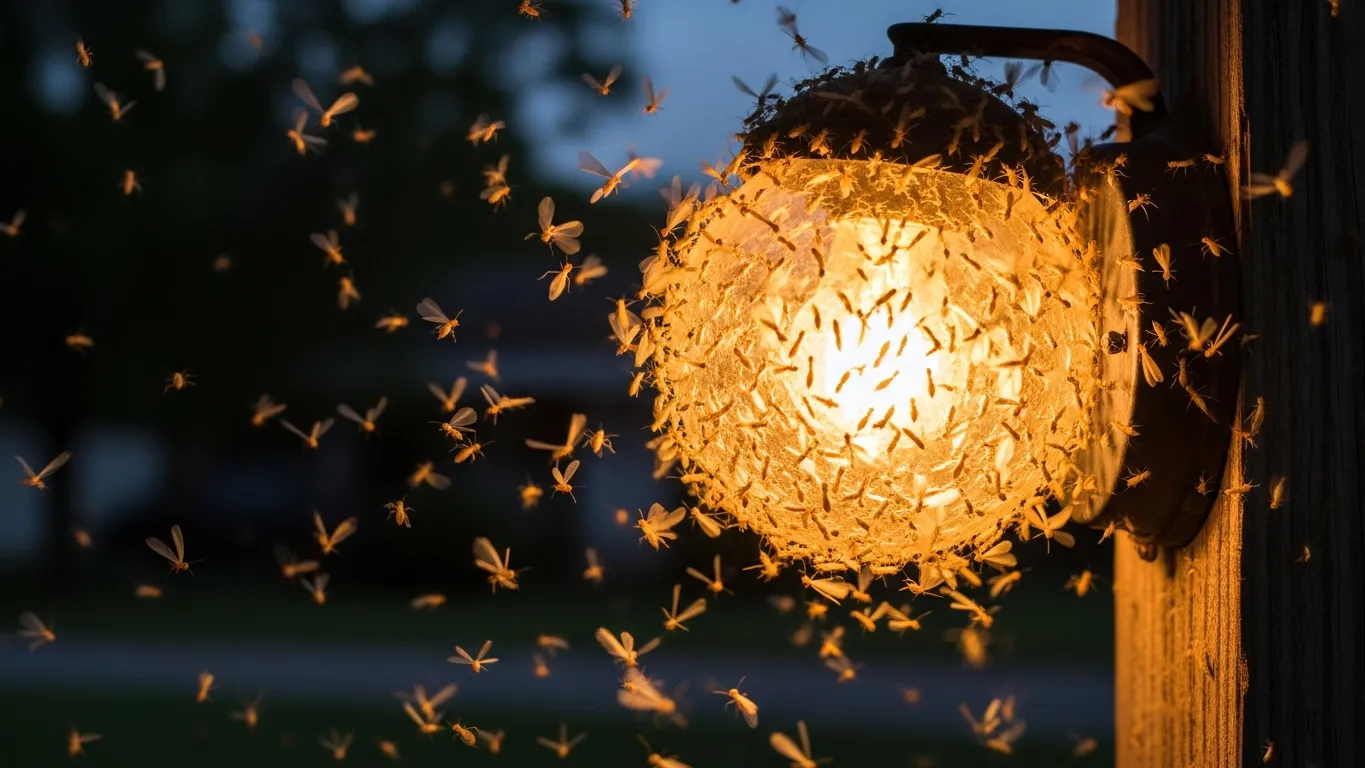
In Phoenix, subterranean termite swarms typically occur after summer monsoon rains, when moisture and humidity levels rise. Swarms from desert subterranean termites can also occur after landscape irrigation or after a significant rain event at any time of year. Swarms usually happen at dusk or after dark and last only 30 to 60 minutes.
Finding shed wings near windows, doors, or light fixtures is often the first sign that a swarm has occurred.
What Do Mud Tubes Look Like?
Mud tubes are narrow, enclosed tunnels made of soil, wood particles, and termite saliva. They are typically about the width of a pencil (1/4 to 1/2 inch in diameter) and follow foundation walls, plumbing penetrations, expansion joints, and any surface that connects soil to wood.
Common places to look for mud tubes in Phoenix homes:
- Along the interior and exterior of stem-wall foundations
- Inside garage walls near the slab edge
- On plumbing pipes entering through the slab
- In expansion joints (the gap between the garage slab and the house slab)
- On block walls, both interior and exterior
- Around bath traps (plumbing access points in the slab)
Mud tubes can be active or abandoned. Breaking a small section and checking for live termites inside indicates current activity. If the tube is repaired within a few days, the colony is active even if no termites were visible when you broke it.
What Are the Signs of Termite Damage?
Early termite damage is often invisible because subterranean termites consume wood from the inside out, leaving a thin outer shell intact. Warning signs include:
- Mud tubes on foundations, walls, or plumbing
- Shed wings near windows, doors, or light sources
- Hollow-sounding wood when tapped
- Buckling or blistering paint on wood surfaces (may indicate termite galleries just below the surface)
- Sagging or soft drywall in areas adjacent to the slab edge
- Frass pellets (drywood termites only), tiny, hard, sand-grain-sized pellets accumulating below a small hole in wood
Why Is Phoenix Construction Vulnerable to Termites?
Several factors make Phoenix-area homes particularly susceptible:
- Slab-on-grade construction: Most Phoenix homes are built on concrete slabs poured directly on soil. Termites exploit any crack, expansion joint, or plumbing penetration in the slab to gain entry.
- Irrigated landscaping against foundations: Desert landscaping is often supplemented with drip irrigation and sprinklers that add moisture to soil directly adjacent to the structure, creating ideal conditions for subterranean termites.
- Desert soil composition: The caliche and sandy soils of the Phoenix basin allow termites to forage across wide areas. Colonies can extend foraging tunnels 100 feet or more from the nest.
- Wood-to-soil contact: Fence posts, porch supports, decorative beams, and landscape timbers in contact with soil provide direct access for termites without the need for mud tubes.
Uni-Tech Pest Control recommends regular inspections of your foundation perimeter, garage, and any wood-to-soil contact points. If you find mud tubes, shed wings, or frass, call 602-962-8935 for an assessment.
Frequently Asked Questions
Can I have termites without seeing any signs?
Yes. Subterranean termites often feed inside walls, under flooring, and within structural members that are not visible during normal daily activity. Infestations can persist for years before producing visible evidence. This is why periodic professional inspections are valuable, especially for slab-on-grade homes in the Phoenix area.
When do termites swarm in Phoenix?
Desert subterranean termites in Phoenix commonly swarm after monsoon rains, typically from July through September. However, swarms can occur at other times following heavy irrigation or unusual rainfall. Drywood termite swarms tend to occur during warm, calm evenings in late summer and early fall.
Do termites eat concrete or drywall?
Termites cannot consume concrete, but they can travel through cracks in concrete as narrow as 1/32 of an inch. They do not eat drywall paper as a primary food source, but they will tunnel through it to reach wood framing behind it. Damaged drywall is a sign that termites have already passed through on their way to structural wood.
What is the difference between termite damage and water damage?
The two can look similar, both cause wood to become soft, discolored, and structurally compromised. The key differences are: termite-damaged wood contains soil in the galleries (from mud tube construction), has a layered or honeycombed internal pattern, and may have live termites or mud present. Water-damaged wood tends to show staining, fungal growth, and a uniform softness without soil or insect evidence inside.