
Ticks in Phoenix: Identification and Health Risks
TLDR: The brown dog tick is the most common tick species in Phoenix and can complete its entire life cycle indoors, making it capable of infesting homes year-round. Ticks carry several disease-causing pathogens that affect both pets and people. Consistent pet treatment and yard maintenance are the foundation of tick prevention.
What Are Ticks?
Ticks are not insects, they are arachnids, closely related to spiders and mites. Like all arachnids, adult ticks have eight legs (larvae have six). They are obligate blood feeders, meaning every active life stage requires a blood meal from a host animal to develop and reproduce.
Ticks locate hosts through a behavior called questing: they climb to the tip of a grass blade, shrub, or ground-level object and extend their front legs outward, waiting to latch onto a passing animal or person. They detect hosts by sensing carbon dioxide, body heat, and vibrations.
Which Tick Species Are Found in the Phoenix Area?
Brown Dog Tick (Rhipicephalus sanguineus)
The brown dog tick is the dominant tick species in the Phoenix metropolitan area and throughout low-elevation Arizona. It is unique among North American ticks because it can complete its entire life cycle indoors (in kennels, homes, garages, and yard structures) without requiring natural outdoor habitat.
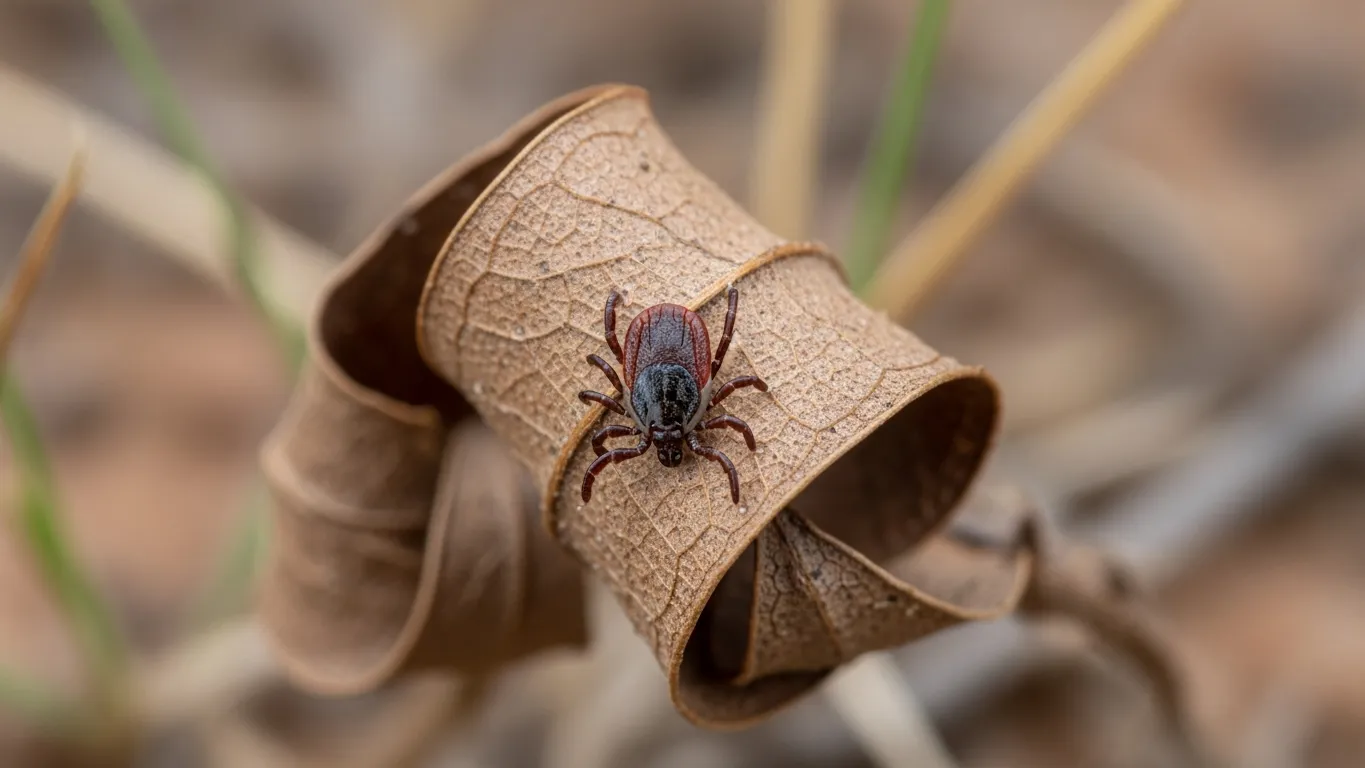
Identification: Unfed adults are reddish-brown, flat, and about 1/8 inch long. Engorged females swell to roughly 1/2 inch and become blue-gray in color. The brown dog tick has no ornate markings or white patterns on its back (unlike many other tick species).
Brown dog ticks feed primarily on dogs but will bite humans, cats, and other mammals when dog hosts are unavailable. They are the most common tick found infesting residential homes in Phoenix.
Rocky Mountain Wood Tick (Dermacentor andersoni)
This larger tick species occurs at higher elevations in Arizona, particularly in the Prescott National Forest, Mogollon Rim, and mountain areas north of Phoenix. It is less common within the Phoenix metro area itself but relevant for residents who hike, camp, or have properties in the transition zone between desert and pine forest.
Identification: Adults are larger than brown dog ticks (about 1/8 to 5/8 inch depending on engorgement) with an ornate white or silver shield pattern on the back (scutum). Males have the pattern covering the entire back; females have it only on the front portion.
Other Arizona Ticks
The Arizona paralysis tick and several Ornithodoros (soft tick) species also exist in Arizona, particularly in rural and wildland areas. These are less commonly encountered in urban Phoenix but can affect residents in outlying communities.
How Does the Tick Life Cycle Work?
All hard ticks (including brown dog ticks and wood ticks) pass through four life stages:
1. Egg: A single engorged female brown dog tick can lay 1,000 to 5,000 eggs in a sheltered location, cracks in walls, behind baseboards, in kennel crevices, or in yard debris. Eggs hatch in two to five weeks.
2. Larva (Seed Tick): Six-legged larvae are tiny (smaller than a pinhead) and nearly translucent. They attach to a host, take a blood meal over several days, then drop off and molt into the next stage.
3. Nymph: Eight-legged nymphs are slightly larger than larvae but still small enough to go unnoticed on a pet or person. They feed again, drop off, and molt into adults.
4. Adult: Adult males and females feed on a host. After mating (which occurs on the host), the engorged female drops off to lay eggs, and the cycle repeats.
The complete life cycle takes two to four months under favorable conditions but can extend to over a year if hosts are scarce. In a Phoenix home with dogs present, brown dog tick populations can cycle continuously without seasonal interruption.
What Diseases Do Ticks Carry?
Ticks are second only to mosquitoes as vectors of disease worldwide. In Arizona, the following tick-borne diseases are of concern:
- Rocky Mountain spotted fever (RMSF): Transmitted by the brown dog tick in Arizona. RMSF is caused by the bacterium Rickettsia rickettsii and can be fatal without prompt antibiotic treatment. Arizona has experienced significant RMSF outbreaks, particularly in tribal communities.
- Canine ehrlichiosis: Transmitted by the brown dog tick to dogs. Causes fever, lethargy, weight loss, and bleeding disorders.
- Canine babesiosis: A blood parasite transmitted by brown dog ticks that destroys red blood cells in infected dogs.
- Tick paralysis: Caused by a neurotoxin in the saliva of certain tick species. Symptoms include progressive weakness and paralysis that resolves once the tick is removed.
- Tularemia: Occasionally associated with ticks in Arizona’s higher elevations.
How to Check for Ticks
After outdoor activity in tick-prone areas (or as a routine check for dog owners in Phoenix) inspect these areas:
On people:
- Scalp and hairline
- Behind and inside ears
- Underarms
- Waistband and belt line
- Behind the knees
- Between toes
On dogs:
- Inside and around ears
- Around the eyes
- Under the collar
- Between toes and foot pads
- Groin area
- Around the tail base
Run your fingers slowly through your dog’s coat, feeling for small bumps. Engorged ticks are easier to spot; unfed ticks are small and flat enough to hide easily.
How to Prevent Ticks in Phoenix
- Use veterinary-prescribed tick prevention on all dogs year-round. Phoenix’s warm climate supports brown dog tick activity in every month. Oral or topical products that kill ticks on contact are the single most effective measure.
- Inspect dogs regularly: Check dogs for ticks after walks, after visits to dog parks, and as part of a weekly routine even if they stay in the yard.
- Maintain your yard: Keep grass and weeds trimmed, remove leaf litter and brush piles, and eliminate clutter near dog kennels and resting areas.
- Seal the home: Caulk cracks along baseboards, window frames, and door frames where brown dog ticks hide and lay eggs. Check behind picture frames and furniture near where dogs sleep.
- Wash pet bedding weekly in hot water and dry on high heat.
- Address infestations promptly: Brown dog ticks reproduce rapidly indoors. A small number of ticks on a dog can become thousands within weeks if left unchecked.
For tick infestations inside the home or persistent yard populations, Uni-Tech Pest Control can identify harborage areas and provide targeted guidance. Call 602-962-8935.
Frequently Asked Questions
Can brown dog ticks infest my house even if my dog stays indoors?
Yes. Brown dog ticks can be brought indoors on a dog after even brief outdoor exposure, a walk around the block, a trip to the vet, or contact with another dog. Once inside, they can establish a reproducing population in the home, laying eggs in cracks, behind baseboards, and in furniture. Brown dog ticks are one of the few tick species capable of completing their entire life cycle indoors.
How do I remove a tick that is attached to my skin or my pet?
Use fine-tipped tweezers to grasp the tick as close to the skin surface as possible. Pull upward with steady, even pressure, do not twist, jerk, or squeeze the tick body. After removal, clean the bite area with rubbing alcohol or soap and water. Save the tick in a sealed container in case identification is needed later. Do not use matches, petroleum jelly, nail polish, or other folk remedies, as these can cause the tick to regurgitate pathogens into the bite.
Are ticks active year-round in Phoenix?
Brown dog ticks are active year-round in Phoenix due to the warm climate. Their activity does not follow the seasonal pattern seen in cooler regions where ticks go dormant in winter. Indoor infestations are completely independent of season. For ticks that live in wildland areas (like wood ticks at higher elevations), peak activity tends to be spring through early summer.
Can ticks jump or fly?
No. Ticks cannot jump, fly, or drop from trees. They can only crawl. They reach hosts by questing, waiting on vegetation or ground-level objects with their front legs extended, then grabbing onto a host that brushes past. This is why ticks are most commonly picked up on legs, feet, and lower body areas.