
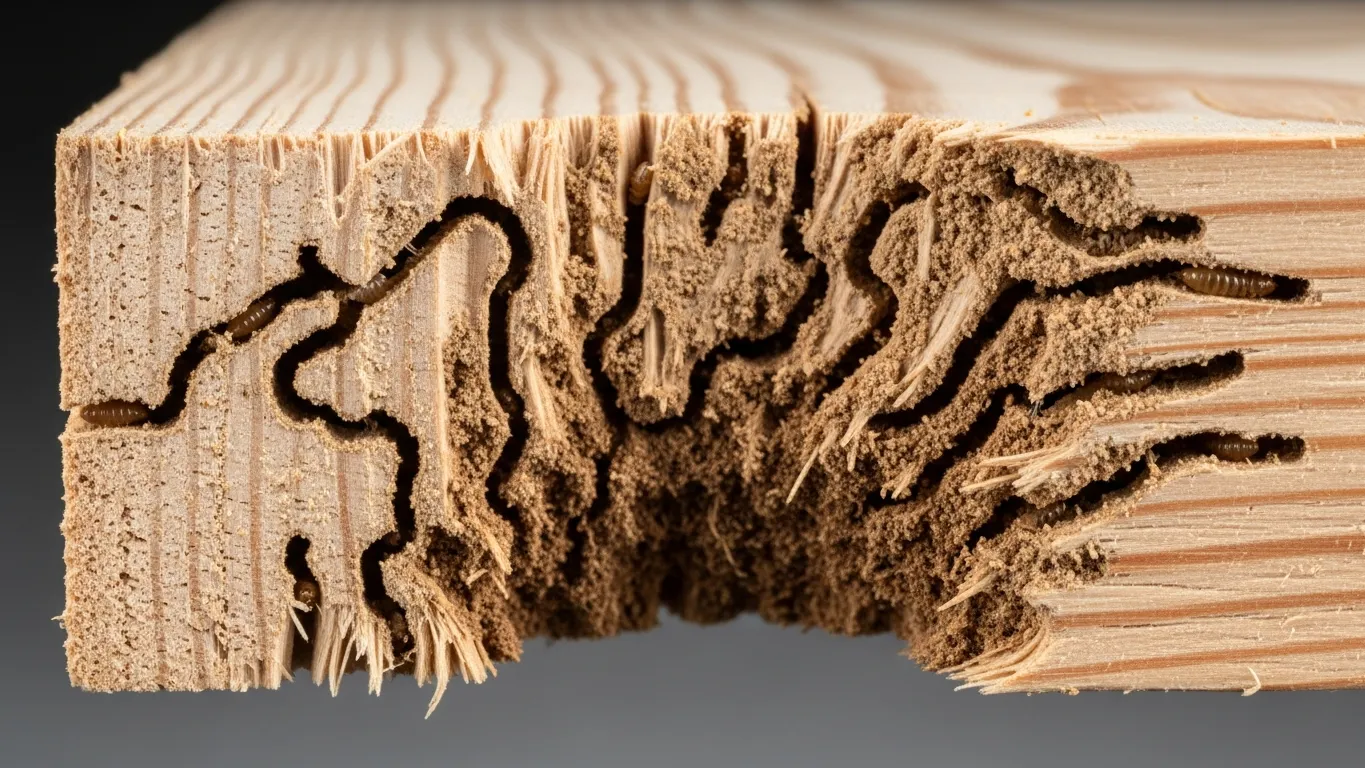
Why Termites Are a Year-Round Threat in Phoenix
TLDR: Unlike most of the country, Phoenix has no true termite “off-season.” Warm desert soil, mild winters, and slab-on-grade construction create ideal conditions for termites to feed 365 days a year. Year-round professional monitoring is the only reliable defense.
Most homeowners associate termites with spring swarms, but in Phoenix, that thinking can be costly. The combination of warm soil temperatures, low-moisture-adapted termite species, and construction methods common across the Valley means termites never stop feeding here. Understanding why Phoenix is uniquely vulnerable helps homeowners take the right steps to protect their biggest investment.
Phoenix’s Climate Keeps Termites Active All Year
In northern states, freezing winter soil drives termites deep underground and slows colony activity to a crawl. Phoenix rarely sees a hard freeze. Soil temperatures in the Valley stay above 50 degrees Fahrenheit even in January, which is well within the comfort range for both subterranean and drywood termite species.
During the hotter months, subterranean termites simply forage deeper where soil moisture is higher, then move back toward the surface when temperatures moderate. Drywood termites, which live inside the wood they consume, are insulated from outdoor temperature swings entirely. The result is continuous, around-the-clock feeding regardless of the calendar.
Phoenix’s arid climate also plays a role in a less obvious way. Because natural wood debris decomposes slowly in the desert, termite colonies depend heavily on man-made structures for their cellulose supply. Your home is not competing with a forest floor for termite attention — it may be the primary food source in the area.
Desert Soil and Slab Construction: A Perfect Storm
The Sonoran Desert soil profile is another factor working against Phoenix homeowners. Caliche — the calcium-carbonate hardpan common across the Valley — forces subterranean termite colonies to forage laterally rather than straight down. That lateral movement increases the odds that foraging tunnels will encounter your home’s foundation.
Most Phoenix homes are built on concrete slab-on-grade foundations. While concrete itself is not a food source, termites only need a crack as thin as a credit card to pass through a slab and reach the wooden framing above. Expansion joints, plumbing penetrations, and the gap between the slab edge and the stem wall are all common entry points.
Post-tension slab construction, widely used across the Valley, complicates matters further. Drilling through a post-tension slab for traditional liquid termiticide treatment requires specialized knowledge to avoid cutting tensioned cables. This is one reason why professional assessment is critical before any treatment begins.
The Three Termite Species That Threaten Phoenix Homes
Phoenix is home to three main termite groups, each with different habits:
- Subterranean termites are the most common and most destructive species in the Valley. They build underground colonies that can contain hundreds of thousands of workers and construct mud tubes to reach above-ground wood. Because they need soil contact, they typically enter homes at or below the foundation line.
- Drywood termites (including the desert drywood termite) live entirely inside the wood they consume. They do not need soil contact and can infest roof framing, window frames, and furniture. Their colonies are smaller, but multiple colonies can occupy a single structure.
- Dampwood termites are less common in Phoenix due to the arid climate, but they appear wherever sustained moisture problems exist — around leaking pipes, failed shower pans, or poorly graded landscaping that traps water against a foundation.
All three species are active throughout the year in the Phoenix metro area.
Signs of Termite Activity Every Phoenix Homeowner Should Know
Because termites work hidden inside wood and soil, infestations often go unnoticed until significant damage has occurred. Watch for these warning signs:
- Mud tubes on foundation walls, garage stems, or interior walls. These pencil-width tunnels made of soil and saliva are the clearest sign of subterranean termite activity.
- Discarded wings near windowsills, light fixtures, or doorways. Swarmers shed their wings after mating flights, which happen multiple times per year in Phoenix.
- Frass (termite droppings) that looks like fine sawdust or sand-colored pellets, typically found below kick-out holes in drywood-infested wood.
- Hollow-sounding or soft wood when tapped, especially along baseboards, door frames, and window trim.
- Bubbling or warped paint on walls or ceilings, which can indicate termite galleries just beneath the surface.
If you spot any of these signs, a professional inspection should happen promptly. Early detection dramatically reduces repair costs.
Why Year-Round Monitoring Matters More Than Seasonal Treatment
A single treatment can eliminate an active colony, but it cannot prevent new colonies from finding your home next month. In a market where termites never go dormant, protection must be continuous. Annual inspections are the baseline recommendation for Phoenix properties, but homes with a history of infestation or high-risk conditions — mature landscaping close to the structure, older plumbing, or previous moisture problems — benefit from more frequent monitoring.
Professional termite monitoring programs use a combination of visual inspection, moisture meters, and strategically placed monitoring stations to catch new activity before it becomes a full infestation. This proactive approach is far less expensive than reactive treatment after structural damage has already occurred. Uni-Tech Pest Control provides year-round termite monitoring and treatment for Phoenix-area homes.
Ready to get rid of termites? Call Uni-Tech Pest Control at (602) 962-8935 for a free inspection, or contact us online to schedule service.
Frequently Asked Questions
Do termites go dormant during Phoenix winters?
No. Phoenix winter soil temperatures remain warm enough for termites to forage and feed year-round. Colony activity may slow slightly during the coolest weeks, but termites do not enter dormancy in the Valley. This is why annual or more frequent professional inspections are recommended regardless of the season.
Are termite swarms the only time I need to worry about termites?
Swarms are the most visible sign of termite activity, but they represent a mature colony that has been feeding for years. The absence of swarmers does not mean your home is termite-free. Worker termites cause all the structural damage, and they operate silently inside wood and soil every day of the year.
How much damage can termites do to a Phoenix home in one year?
A single subterranean termite colony can consume roughly 15 pounds of wood per year. That may sound modest, but Phoenix properties frequently host multiple colonies simultaneously, and damage accumulates over time. The National Pest Management Association estimates that termites cause over five billion dollars in property damage across the United States annually, and Arizona is one of the highest-risk states.