

How Professional Cockroach Treatment Works
TLDR: Eliminating cockroaches from a Phoenix home requires a systematic, multi-step approach that targets every life stage. Professional treatments combine inspection, targeted product application, growth regulators, and follow-up monitoring to break the breeding cycle and deliver lasting results.
If you have already tried cleaning, sealing, and store-bought products without success, you are not alone. Cockroach infestations in Phoenix often reach a point where consumer-grade methods cannot keep up with the colony’s reproductive rate. This guide walks through what happens when you bring in a professional — from the first phone call through post-treatment monitoring.
For help identifying whether you have an active infestation, see our cockroach species identification guide. If you are wondering why your DIY efforts stalled, our post on why DIY cockroach control fails explains the six most common reasons.
How to Prepare Before the Technician Arrives
A little preparation helps the technician work more effectively and speeds up results:
- Clear under sinks. Remove stored items from beneath kitchen and bathroom sinks so the technician can access these critical areas.
- Pull appliances slightly forward if possible. The gaps behind stoves, refrigerators, and dishwashers are primary harborage zones.
- Do not deep-clean roach activity areas. Droppings, smear marks, and egg casings help the technician identify nesting locations and travel routes. Clean up after treatment, not before.
- Note where you have seen activity. Write down specific locations and times. Nighttime sightings in particular rooms help the technician focus the inspection.
- Secure pets and plan for re-entry. Your technician will advise on how long to keep pets and family members away from treated areas.
The Professional Elimination Process
When Uni-Tech Pest Control handles cockroach elimination, the process follows four deliberate steps designed to collapse the colony, not just knock down visible roaches.
Step 1: Thorough Inspection
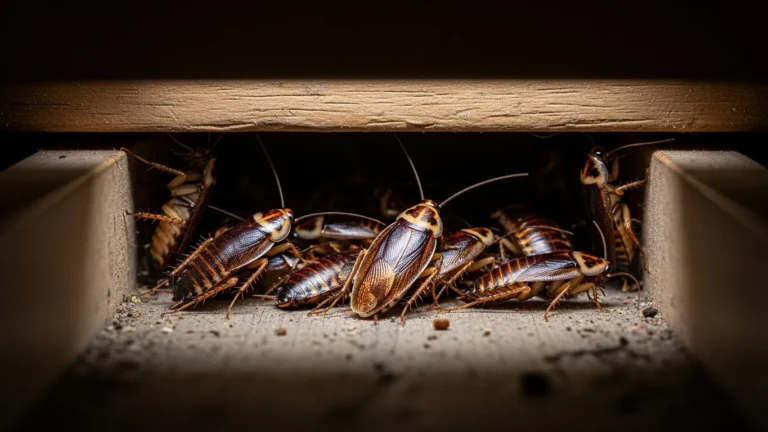
A trained technician inspects your entire home, focusing on kitchens, bathrooms, laundry areas, garages, and any other spaces with moisture and food access. The goal is to identify the cockroach species present, locate nesting sites, determine entry points, and assess the severity of the infestation. Species identification matters because different roaches respond to different treatment strategies.
Step 2: Targeted Treatment Application
Based on the inspection findings, technicians apply a combination of professional-grade products. This typically includes gel baits placed in cracks and crevices near nesting areas, dust formulations applied inside wall voids and electrical outlets, and residual treatments along baseboards and entry points. The combination approach ensures roaches encounter the treatment through multiple pathways — feeding, contact, and transfer between colony members.
Step 3: Growth Regulation
For established infestations, insect growth regulators (IGRs) are a critical part of the process. IGRs disrupt the cockroach reproductive cycle by preventing eggs from hatching and nymphs from maturing into breeding adults. This breaks the population cycle rather than just killing the roaches you can see.
Step 4: Follow-Up Monitoring
Cockroach eggs that were already laid before treatment can hatch days or weeks later. That is why follow-up visits are essential. Technicians return to check bait stations, look for new activity, and apply additional treatments if needed. This step is what separates a temporary knockdown from true elimination.
What to Expect After Treatment
Professional treatment does not produce instant results, and knowing what is normal helps you evaluate progress:
Days 1-3: You may see increased cockroach activity. This is actually a positive sign — it means roaches are encountering the treatment products and becoming more active as they are displaced from treated harborage sites. Do not spray consumer products, which can interfere with the professional treatment.
Days 4-14: Activity should begin declining noticeably. Dead roaches may appear in open areas as affected individuals lose coordination. Continue to see a few live roaches during this period, especially at night.
Weeks 2-4: Significant reduction in sightings. The technician returns for a follow-up visit to assess progress, refresh bait stations, and treat any new activity. If IGRs were applied, the reproductive cycle is now disrupted.
Weeks 4-8: For moderate to severe infestations, a second follow-up may be scheduled. By this point, the breeding population should be collapsed and new nymphs are not reaching maturity.
How to Know Treatment Is Working
Track your results so you can give the technician useful information at follow-up visits:
- Place sticky traps in corners, under sinks, and near known activity areas. Check them every few days. A declining catch count confirms progress.
- Monitor nighttime activity. Check kitchens and bathrooms with a flashlight after dark. Seeing fewer roaches each week is the clearest success indicator.
- Watch for egg casings. Fresh oothecae (egg casings) indicate active breeding. If you stop finding new casings, the reproductive cycle is breaking down.
- Notice the smell. The musty, oily odor of a cockroach infestation diminishes as the population shrinks. A noticeable reduction in odor is a strong sign that treatment is working.
If activity plateaus or increases after the initial knockdown period, contact your technician promptly. Adjustments to the treatment plan — different bait formulations, additional dust applications, or targeting newly discovered harborage — can address resistant populations.
Long-Term Protection
Once the infestation is eliminated, a recurring pest management plan provides the strongest defense against reinfestation. Phoenix’s warm climate supports year-round outdoor cockroach populations, and new roaches constantly test your home’s perimeter. For prevention strategies and habits that keep roaches from returning, see our cockroach prevention guide.
Ready to get rid of cockroaches? Call Uni-Tech Pest Control at (602) 962-8935 for a free inspection, or contact us online to schedule service.
Frequently Asked Questions
How long does professional cockroach elimination take?
Most homes require an initial treatment followed by one or two follow-up visits spaced two to four weeks apart. Severe infestations may need additional visits. You should see a significant reduction in activity within the first week.
Is professional cockroach treatment safe for pets and children?
Yes. Licensed technicians apply products in targeted locations — inside cracks, crevices, and wall voids — rather than broadcasting chemicals across open surfaces. Your technician will provide specific guidance for your household.
How many cockroaches are there if I see one?
Seeing a single cockroach during the day often indicates a larger population. Cockroaches are nocturnal and avoid open spaces, so daytime sightings typically mean the colony is large enough that some roaches are being pushed out of hiding by overcrowding.
Do cockroaches come back after professional treatment?
Without ongoing prevention, reinfestation is possible — particularly in Phoenix, where outdoor cockroach populations remain active throughout the year. A recurring pest management plan provides continuous protection and catches new activity before it becomes an infestation.
Should I clean before the exterminator arrives?
Light cleaning is helpful, but avoid deep-cleaning areas where you have seen roach activity right before treatment. Droppings and smear marks help technicians identify nesting locations and travel routes. Your technician can advise you on cleaning after the treatment is complete.