
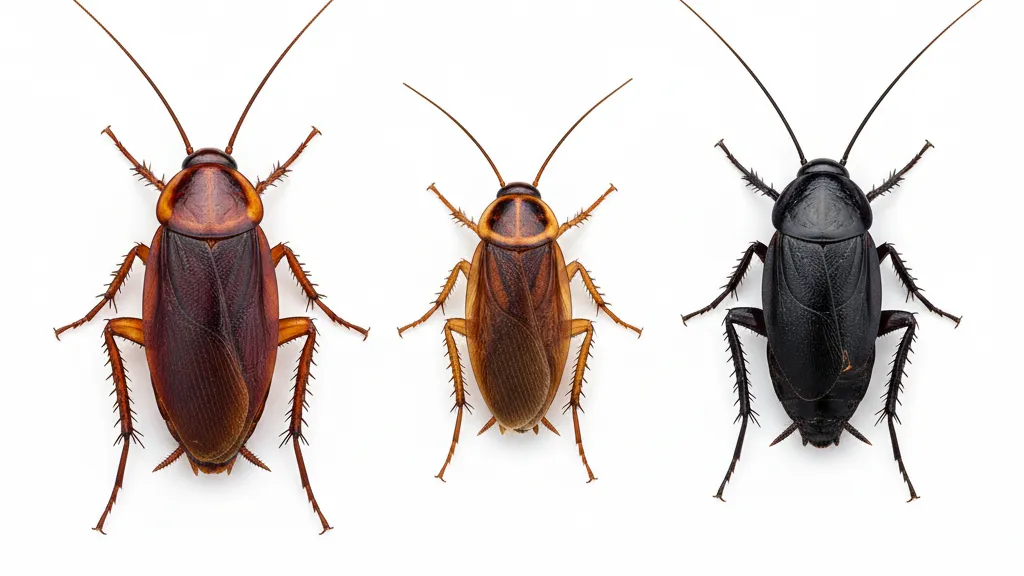
Cockroach Species in Phoenix and Their Health Risks
TLDR: Phoenix is home to five common cockroach species, each with different sizes, habits, and preferred environments. Identifying which species you have determines the right treatment approach. All cockroaches carry bacteria and produce allergens, making them a real health concern — not just a nuisance.
Why Species Identification Matters
Cockroach control is not one-size-fits-all. A treatment plan designed for German cockroaches will not be effective against American cockroaches, and vice versa. Different species nest in different locations, respond to different baits, and enter your home through different pathways. When a pest control technician identifies the species first, treatment is faster, more targeted, and more likely to succeed.
You can narrow down the species yourself using three simple factors: size, color, and where you found it.
The Five Most Common Cockroach Species in Phoenix
American Cockroach
Size: Large — 1.5 to 2 inches long. This is the biggest cockroach you will encounter in Phoenix homes.
Appearance: Reddish-brown body with a distinctive yellowish figure-eight pattern on the back of the head. Both males and females have fully developed wings and can fly short distances, especially in warm weather.
Habitat: Primarily an outdoor species. American cockroaches live in sewer systems, storm drains, and moist areas around landscaping. They enter homes through drain pipes, gaps under doors, and foundation cracks, usually seeking water or cooler temperatures. You are most likely to find them in bathrooms, laundry rooms, garages, and basements.
Key fact: Because they live in sewer systems, American cockroaches carry some of the highest bacterial loads of any species. Finding one in your kitchen is a genuine food safety concern.
German Cockroach
Size: Small — about half an inch long.
Appearance: Light brown to tan with two dark parallel stripes running lengthwise behind the head. Adults have wings but rarely fly.
Habitat: Exclusively an indoor species. German cockroaches do not survive outdoors in the Phoenix desert. They live in kitchens, bathrooms, and anywhere with consistent warmth and moisture. Common hiding spots include behind refrigerators, inside dishwasher door panels, around plumbing under sinks, and inside electrical outlets.
Key fact: German cockroaches reproduce faster than any other common species — a single female can produce thousands of offspring per year. They are also the species most likely to develop pesticide resistance.
Brown-Banded Cockroach
Size: Small — about half an inch long, similar in size to the German cockroach.
Appearance: Tan to light brown with two distinctive lighter-colored bands running across the wings and abdomen. These bands are the easiest way to distinguish this species from the German cockroach.
Habitat: Unlike most cockroaches, brown-banded roaches prefer warm, dry environments. You may find them in bedrooms, living rooms, on upper walls, behind picture frames, inside electronics, and on closet shelves — areas where other cockroach species are less common. They do not need the constant moisture that other species require.
Key fact: Because they spread throughout the entire home rather than clustering near kitchens and bathrooms, brown-banded cockroach infestations can be harder to detect until the population is well established.
Turkestan Cockroach
Size: Medium — about 1 to 1.25 inches long.
Appearance: Males are brownish-orange with thin, almost translucent wings. Females are darker, nearly black, with short non-functional wing stubs. The two sexes look quite different from each other.
Habitat: An outdoor species that has become increasingly common in the Phoenix metro area. Turkestan cockroaches live in ground-level harborage — irrigation boxes, meter enclosures, planter beds, and cracks in concrete. Males are often attracted to lights at night and may fly toward porch lights and into open doors.
Key fact: Turkestan cockroaches are rapidly displacing oriental cockroaches in many parts of Arizona. They are often found in large numbers around landscaping and block wall perimeters.
Oriental Cockroach
Size: Medium to large — about 1 to 1.25 inches long.
Appearance: Very dark brown to black with a shiny, almost glossy body. Males have shortened wings covering about three-quarters of the abdomen. Females have very small wing pads. Neither sex can fly.
Habitat: Strongly associated with damp environments. They are found in basements, crawl spaces, floor drains, and around leaky pipes. Outdoors, they live under mulch, in leaf litter, and around poorly drained areas.
Key fact: Oriental cockroaches produce the strongest musty odor of any common species. If you notice a persistent foul smell near drains or damp areas, this species may be the cause.
Health Risks That Apply to All Cockroach Species
Regardless of species, every cockroach in your home creates health risks:
Bacterial contamination. Cockroaches travel through drains, sewage, garbage, and decaying matter. They pick up pathogens including Salmonella, E. coli, Staphylococcus, and Streptococcus, then deposit them on countertops, dishes, and food surfaces. Diseases linked to cockroach contamination include gastroenteritis, dysentery, cholera, and food poisoning.
Allergens and asthma triggers. Cockroach droppings, shed skins, saliva, and body fragments break down into fine particles that become airborne. The Asthma and Allergy Foundation of America identifies cockroach allergens as one of the most common indoor asthma triggers. Children are especially vulnerable — studies have found that cockroach allergen exposure in early childhood increases the risk of developing asthma.
Food contamination. Roaches regurgitate digestive fluids onto food as they feed and leave droppings on food preparation surfaces. Contaminated food may not look or smell different, making exposure easy to miss.
Secondary pest attraction. Large cockroach populations can attract other pests, including spiders and centipedes that prey on roaches, creating a secondary pest problem.
What to Do After You Identify the Species
Once you know what species you are dealing with, you can take the right next steps. Outdoor species like American and Turkestan cockroaches respond well to perimeter treatments and exclusion work. Indoor species like German cockroaches require interior baiting and follow-up visits. Brown-banded cockroaches need whole-home treatment rather than kitchen-focused approaches.
Uni-Tech Pest Control begins every service with a thorough inspection and species identification. This ensures the treatment plan matches the actual pest problem — not a generic spray-and-hope approach. Contact us for a free assessment to find out exactly what species is in your home and the most effective way to address it.
Ready to get rid of cockroaches? Call Uni-Tech Pest Control at (602) 962-8935 for a free inspection, or contact us online to schedule service.
Frequently Asked Questions
What is the most common cockroach in Phoenix?
The American cockroach and the Turkestan cockroach are the most common outdoor species. The German cockroach is the most common indoor species. Which one you encounter depends largely on whether the roach was found inside living spaces or in garages, yards, and utility areas.
Can cockroaches in Phoenix fly?
American cockroaches and male Turkestan cockroaches can fly short distances, especially in warm weather. German cockroaches have wings but do not fly. Brown-banded cockroaches occasionally glide but do not sustain flight. Oriental cockroaches cannot fly at all.
Are big cockroaches worse than small ones?
Not necessarily. Large American cockroaches look alarming but typically live outdoors and enter homes individually. Small German cockroaches are a far more serious problem because they live exclusively indoors, reproduce rapidly, and resist many pesticides. A few small roaches in your kitchen is a more urgent situation than a single large roach in your garage.
Do cockroaches bite?
Cockroaches can bite, but it is very rare. They may nibble on fingernails, eyelashes, or skin in cases of very large infestations where food is scarce. The real health risks come from bacterial contamination and airborne allergens, not bites.
How do I tell the difference between a German cockroach and a brown-banded cockroach?
Look at the markings. German cockroaches have two dark stripes running lengthwise behind the head. Brown-banded cockroaches have two lighter bands running sideways across the wings and abdomen. German cockroaches cluster near kitchens and bathrooms; brown-banded cockroaches spread throughout the home, including bedrooms and living areas.