
What Professional Ant Treatment Involves
TLDR: Professional ant treatment in Phoenix starts with a thorough inspection to identify the species and locate nests. Technicians then use targeted, non-repellent products and baits to eliminate entire colonies, not just the visible foragers that DIY sprays address.
Why Phoenix Homes Need Professional Ant Solutions
The Phoenix metro area is home to dozens of ant species, and the region’s warm climate means they stay active virtually all year. Unlike cooler climates where winter provides a natural break, Valley homeowners can encounter ants trailing through their kitchens in January just as easily as in July.
Professional ant control takes a holistic approach, identifying the species, locating the colony, eliminating it at the source, and establishing barriers to prevent recolonization. This is fundamentally different from spraying visible ants, which addresses symptoms without solving the underlying problem.
How Species Identification Drives the Treatment Plan
Every ant species requires a different approach, which is why professional treatment begins with identification, not product application. For help identifying common Phoenix species, see our ant control guide.
The species determines every decision the technician makes:
- Bait selection. Sugar-feeding species like odorous house ants require carbohydrate-based baits. Protein-seeking species like carpenter ants ignore sugar baits entirely. Using the wrong bait wastes time while the colony grows.
- Application method. Multi-queen species prone to budding (like odorous house ants) demand non-repellent products that ants cannot detect. Carpenter ants nesting in wall voids require direct injection treatment that other species do not.
- Treatment scope. Fire ant colonies with extensive underground tunnel systems need broadcast yard treatment plus individual mound targeting. Pavement ants nesting under slabs require perimeter applications near expansion joints and plumbing penetrations.
- Follow-up schedule. Fast-reproducing species need more frequent follow-up visits. Species with a single queen may be fully eliminated in one or two treatments, while multi-queen supercolonies require persistent pressure over several weeks.
What Happens During a Professional Ant Inspection
A quality ant treatment begins well before any product is applied. Here is what a professional inspection typically involves:
Exterior assessment. The technician walks the perimeter of the home, checking the foundation, landscaping, utility entry points, and any visible mounds or trailing activity. Irrigation systems, A/C condensate lines, and tree canopies are examined as potential moisture sources attracting ants.
Interior assessment. Inside, the technician inspects kitchens, bathrooms, utility rooms, and anywhere moisture or food sources exist. Baseboards, window sills, plumbing fixtures, and electrical outlets are checked for signs of activity or entry.
Species identification. Proper identification drives the entire treatment plan. A bait that works on sugar-feeding odorous house ants will be ignored by protein-seeking fire ants. Carpenter ants require direct nest treatment that other species do not. Getting the ID right is critical.
Findings and plan. After the inspection, the technician discusses findings with you, explains the recommended treatment approach, and answers any questions before work begins.
How Professional Ant Treatments Work
Modern professional ant control relies on several categories of products and techniques, often used in combination:
Non-repellent liquid treatments are applied along the home’s exterior perimeter and around entry points. Unlike repellent sprays that ants detect and avoid, non-repellent products are invisible to ants. Workers walk through treated zones and transfer the active ingredient to nestmates through normal grooming and food-sharing behavior, spreading the product through the colony.
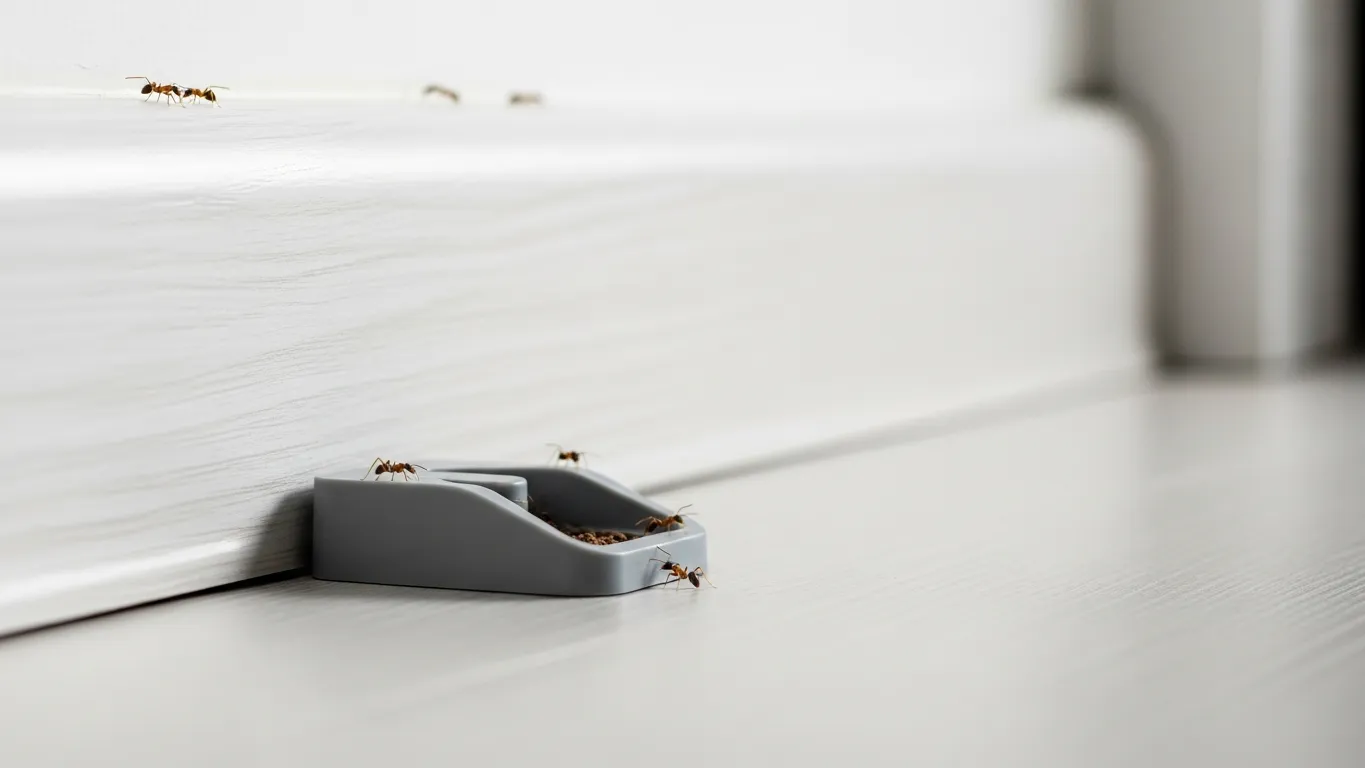
Professional-grade baits are formulated to match the dietary preferences of specific ant species. Workers carry the bait back to the nest, where it is fed to the queen, brood, and other colony members. This is the most effective way to eliminate a colony without ever locating the physical nest.
Direct nest treatment is used when nests can be located, inside wall voids, under slabs, or in landscape features. Technicians apply products directly to the nest using injection tools or dust applicators.
Granular treatments are applied to landscape beds, turf areas, and perimeter zones for broad outdoor control, particularly effective against fire ants and pavement ants.
Ongoing Protection vs. One-Time Treatment
A single treatment can resolve an active infestation, but Phoenix’s climate means new colonies are always nearby, ready to move in. Ongoing pest management plans provide scheduled treatments (typically quarterly) that maintain a protective barrier around your home and catch new activity before it becomes an infestation.
Ongoing plans also cover other common Phoenix pests, including scorpions, roaches, and spiders, providing full protection with a single service.
What to Do Before and After Treatment
Before treatment: Clear items stored against exterior walls, trim vegetation touching the house, and address any standing water. Inside, clean up food debris and fix leaky faucets so ants are not competing food sources with baits.
After treatment: Avoid cleaning treated baseboards or perimeter areas for at least two weeks. You may see increased ant activity in the first few days (this is normal and indicates ants are encountering the treatment. Activity should decrease significantly within one to two weeks. Uni-Tech Pest Control provides professional ant treatment throughout the Phoenix metro area) contact us for a free inspection.
Ready to get rid of ants? Call Uni-Tech Pest Control at (602) 962-8935 for a free inspection, or contact us online to schedule service.
Frequently Asked Questions
How much does professional ant treatment cost in Phoenix?
Costs vary based on the size of the home, severity of the infestation, and the species involved. Most single treatments fall within a predictable range, and ongoing plans reduce per-visit costs. A free inspection provides an accurate quote designed for your situation.
Is professional ant treatment safe for my family?
Licensed technicians use EPA-registered products applied according to label directions. Products are placed in targeted areas (along baseboards, in wall voids, or outside the home) minimizing exposure to household members.
How often should I have ant treatment done?
For most Phoenix homes, quarterly treatments provide consistent protection. Homes with heavy landscaping, irrigation systems, or a history of recurring infestations may benefit from bimonthly service during peak activity periods.
Can I do anything between professional visits to prevent ants?
Absolutely. Keep food stored in sealed containers, fix leaks promptly, and avoid leaving pet food out overnight. Report any new ant activity to your pest control provider between scheduled visits so targeted spot treatments can be applied quickly.
Do you treat both the inside and outside of the home?
Yes. A thorough treatment addresses both the exterior perimeter (where most colonies originate) and interior areas where ants are active. The exterior barrier is the primary line of defense, while interior treatments address ants that have already found their way inside.